







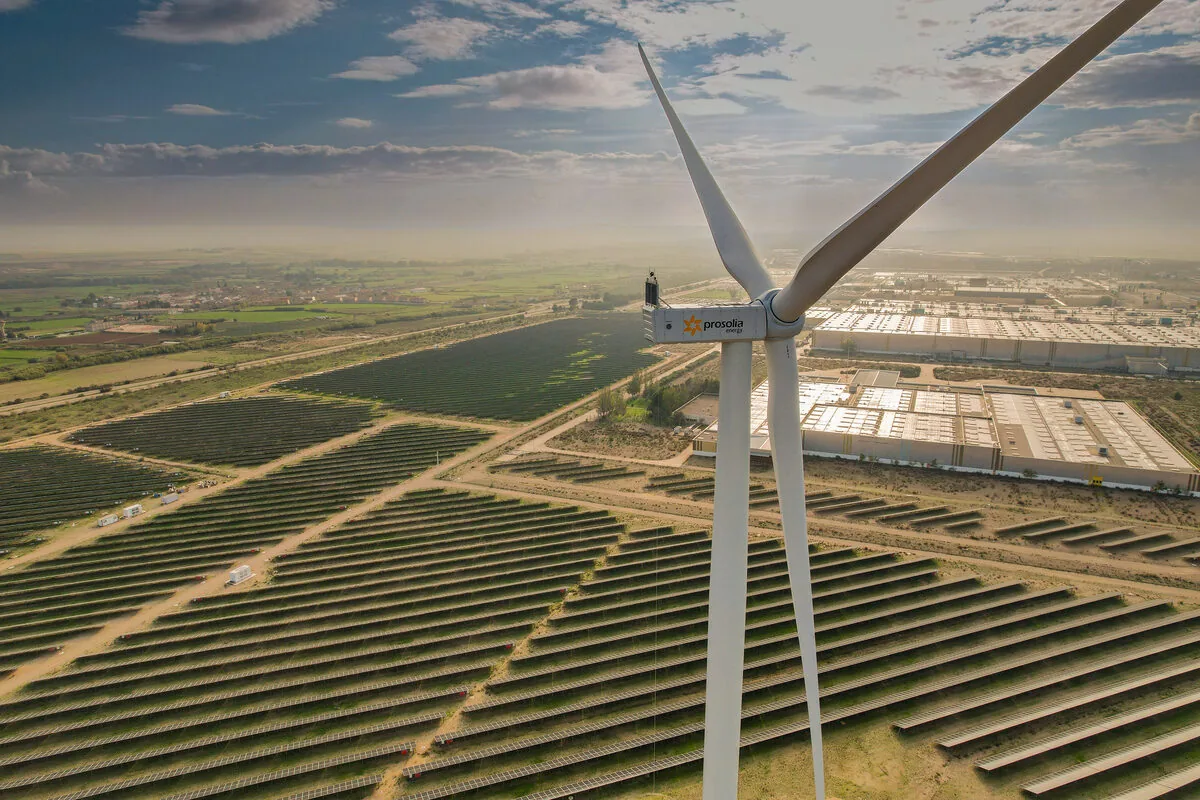
Stellantis accelerates the adoption of solutions for the generation and storage of renewable energy within its European industrial network. The goal is to advance towards carbon neutrality in the long term. Energy management thus becomes a strategic lever both to reduce CO2 emissions and to strengthen the competitiveness of the plants. In this journey, the group focuses its efforts on three directions: reducing overall energy consumption, increasing the share of low-carbon sources, and ensuring the energy availability necessary to preserve production continuity.
Read more New problems for Mercedes: this time Norris’s McLaren stops
Stellantis focuses on decarbonized energy
Operationally, Stellantis’ European production sites already cover 68% of electricity needs with decarbonized energy, aiming to bring on-site self-consumption to 31% by 2026 (with some more advanced plants targeting up to 80%). The transformation is also accompanied by a structured governance: 89% of European production sites are certified according to the ISO 50001 standard for energy management. In parallel, the expansion of photovoltaic generation occurs through partnerships with energy operators, often following the on-site Power Purchase Agreement (PPA) model, where the partner builds and manages the plant according to the site’s needs, transferring ownership to Stellantis at the end of the contractual period.
Not just photovoltaic
Alongside photovoltaic, Stellantis is implementing battery storage systems (BESS) to maximize the use of renewable energy and contribute to grid stability. The program, according to a note, will involve 20 sites in Europe for a total capacity of approximately 200 MWh, with seven plants expected to be operational by 2026 and full deployment completed within three years. In parallel with BESS, Energy Management Systems (EMS) dynamically optimize battery usage based on energy demand and availability, improving efficiency and making plants more resilient to market volatility. This energy mix diversification strategy also includes the expansion of low-emission technologies such as geothermal energy and the adoption of biomass-based solutions for industrial heating.
Read more Red Bull rises in Monaco, Verstappen: “Positive day, but Ferrari is really strong”
Click here to add Formula Passion as a favorite source on Google Discover: you’ll find our content more easily!
Read more McLaren flop, Monaco Friday is a disaster: “We are far off”