




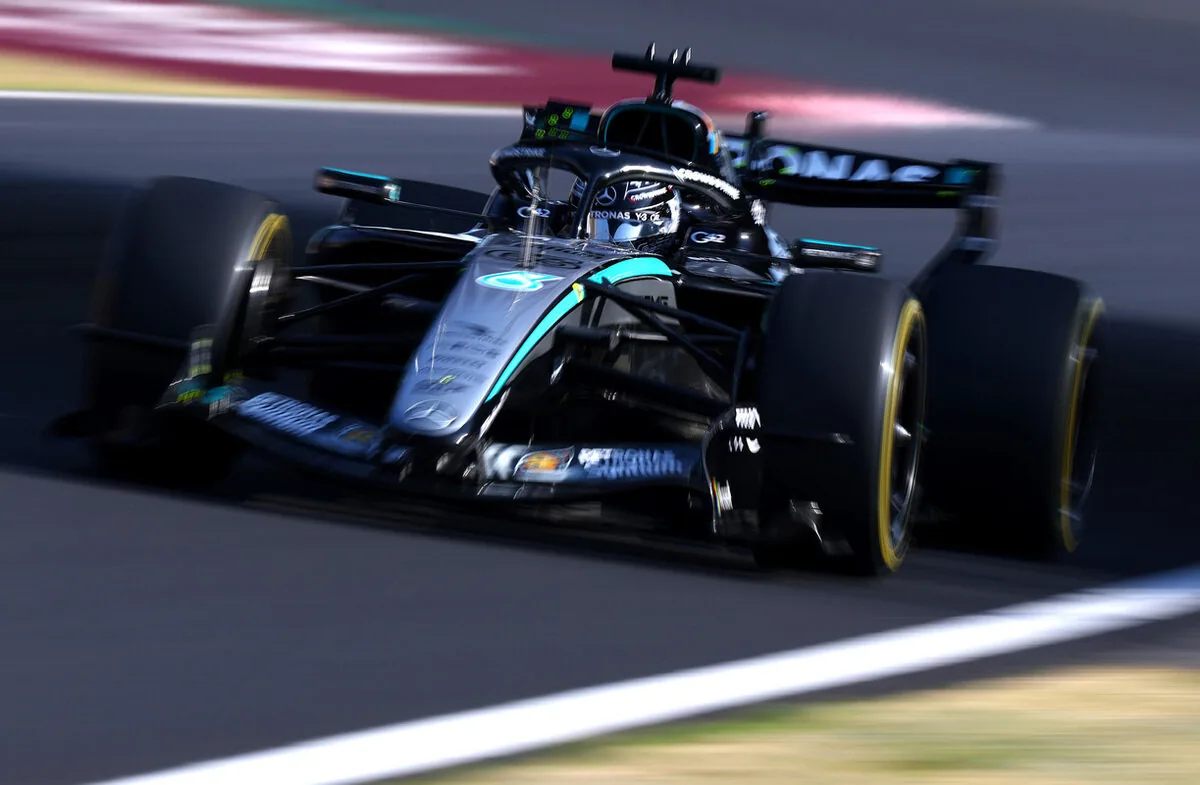
Antonelli and Russell are ready to fight for the lead of the standings at Suzuka. Much will be decided at the start, in a race where Pirelli expects a low level of degradation, also thanks to falling temperatures. Graining, on the other hand, should not be particularly critical, shifting the emphasis to managing thermal degradation on both axles. Simone Berra, Pirelli’s Chief Engineer, illustrates the strategic picture for the Grand Prix.
Read more Mitsubishi, three-way agreement for chip development
The best strategies
In Japan, a one-stop race is expected, similar to the previous ones. Berra explains: “Considering the degradation levels observed in free practice, it will almost certainly be a single stop, also because temperatures on the asphalt are expected to be 5-10°C lower during the race compared to when the simulations were done. This should help keep thermal degradation under control, which is the main source of degradation over long distances.”
Even with one stop, however, Pirelli considers all three compounds in play: “We do not exclude any of the three. On paper, the fastest strategy is the medium-hard single stop, with the pit stop around lap 19°-25°. Alternatively, one could think of starting on the soft to have extra grip at the start and then going onto the hard. In that case, the first stint on the soft would need to be shortened a bit and the one on the hard lengthened.”
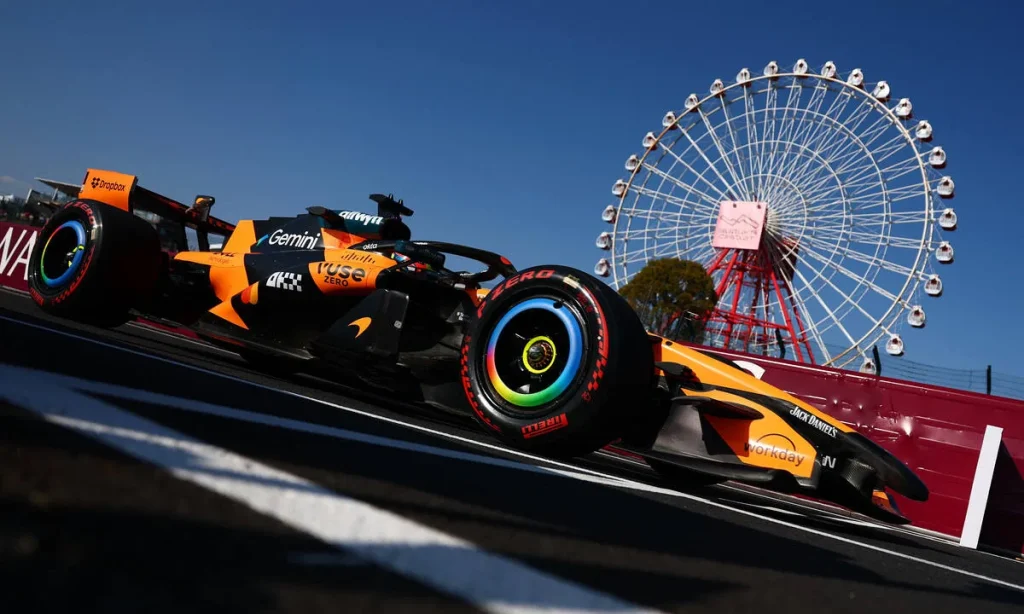
Berra continues: “The advantage of going with the medium and the hard is having more flexibility in case of a Safety Car, while the soft forces you to stop earlier. We don’t even exclude the use of soft and medium, but it is a much more aggressive strategy and requires more management. On a severe circuit like Suzuka, it is probably not the winning strategy and on paper it is slower than the other two mentioned.” Even setting the race on three stints does not seem advantageous: “Two-stop strategies are significantly slower, about 12 seconds more. They can only be an option in case of a Safety Car in the second part of the race.”
Read more 2026 Americas GP: Qualifying report
The keys to the race
Graining was the main limiting factor in Australia and China, but at Suzuka the race situation will be different: “We haven’t seen significant graining phenomena, only some relative cases from some teams in particular, but not in a generalized way for everyone. It is linked to the balance of individual cars and the driver’s driving style; we don’t consider graining a big problem. It could occur for some teams with a full fuel load if they are in traffic or if they do little management.”
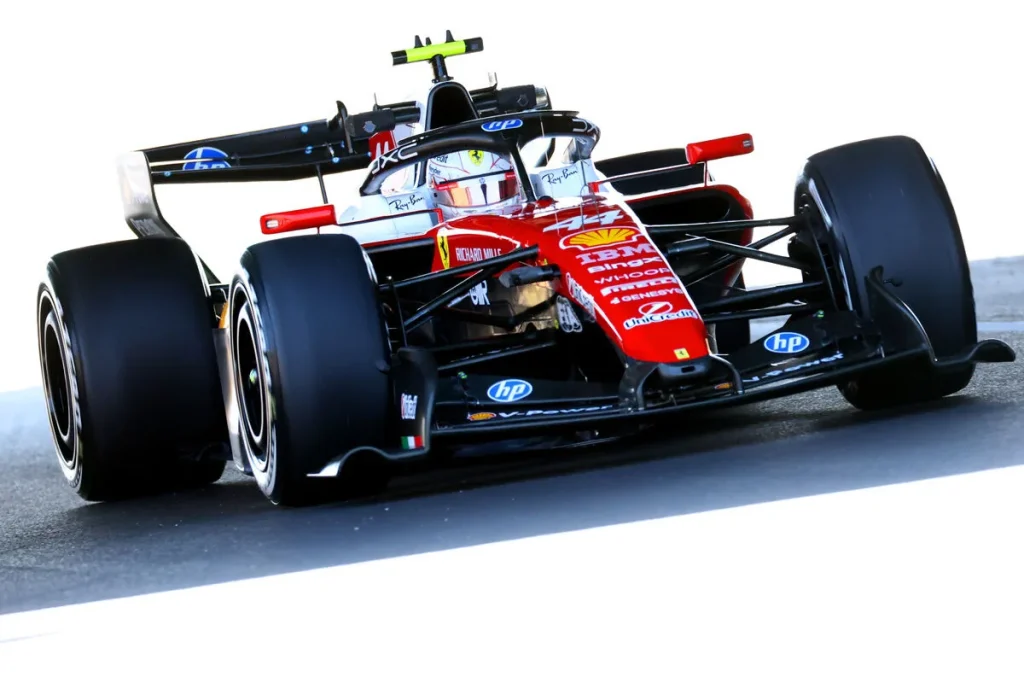
The game will be played mainly on the management of thermal degradation, which will require attention in all sectors. The Pirelli Chief Engineer explains: “At Suzuka, as usual, both axles see particularly high energies.Regarding temperature and degradation management, the front is very important in the S-curves of the first sector, while in the second and third, where there are more traction zones, it will be important to manage the rear to avoid overheating and thermal degradation. Wheel spin must be avoided,” Berra concludes.
Read more Hamilton: “When McLaren finds more power from the engine we will lose further ground”