
It is a very different Monza compared to what we were used to, but it could confirm the tradition of a one-stop race. Strategic options, however, are not lacking, with all three compounds in play. It will also be interesting to follow Antonelli’s comeback, which will probably differ from the strategies of the competition. Simone Berra, Pirelli’s Chief Engineer, illustrates the strategic picture a few hours before the start.
Read more Leclerc ‘parks’ Hamilton in the gravel at the First Corner at the start: “He pushed me out”
Contained degradation and graining
“We are quite in line with what we expected on the eve, that is particularly low degradation, being a track that allows the tires to breathe thermally,” explains Berra. “In terms of lateral loads it is not particularly severe, the energies involved in the single lap are among the lowest of the year. This allows temperatures on the rear axle to remain stable, both with the hard and the soft compounds.”
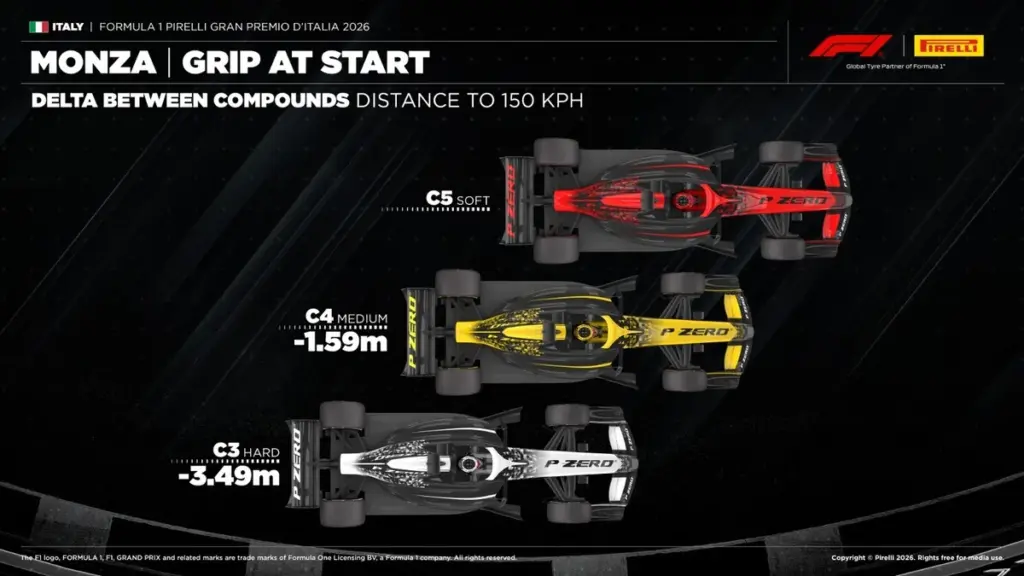
All this opens up the use of the softest compound in the race: “The biggest surprise was the C5 (the soft tire), which we expect to be a usable tire in the race. In Friday’s simulations it was a very consistent tire during the stints.” Thermal degradation at the rear will be the main limiting factor for race pace, but attention must also be paid to mechanical degradation: “We had some graining on the front. We expected it, the asphalt is particularly smooth and tends to cause superficial tears, because there is much more adhesive grip compared to rough asphalts. However, the graining is very localized in the inner area of the left front and is not felt as limiting. It does not cause a significant drop in performance, it only generates a bit more understeer.”
Towards the single stop
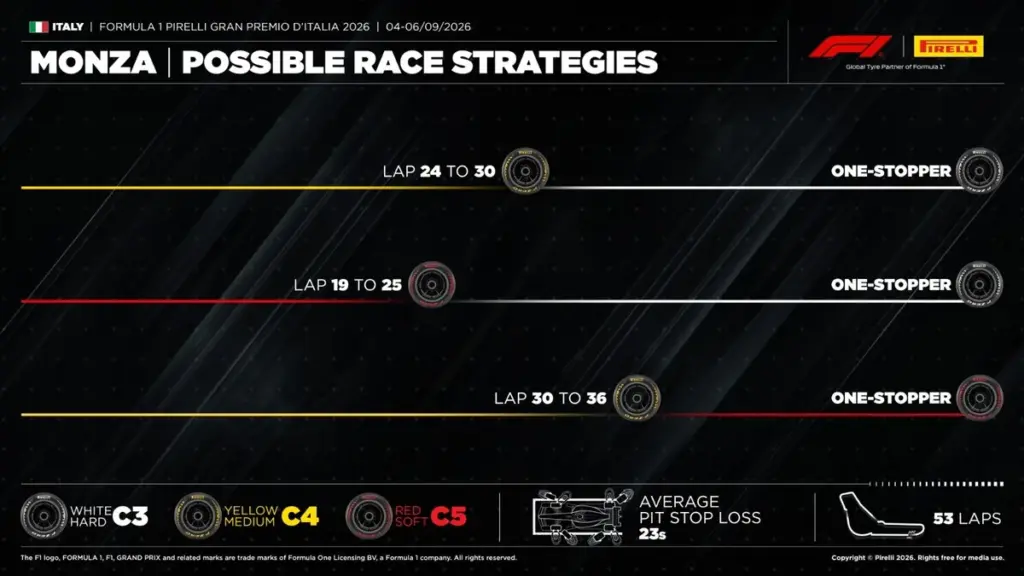
Contained degradation directs the strategy towards the single stop, also due to a particularly long pit lane: “The time lost in the pit lane is high, we are talking about about 24 seconds. This will push everyone towards the single stop, I see no alternatives. From the race time point of view, the two-stop strategy is ten seconds slower, so it could be an option only if there were Safety Cars or Virtual Safety Cars.”
“On paper, the fastest strategy that allows more flexibility should be medium-hard, with the stop around the 24th-30th lap,” continues Berra. “The other two options, which are soft-hard and medium-soft, are a couple of seconds slower. We expect most drivers to start on the mediums, because they give you good grip at the start. Also, it is a compound that allows you to extend the stint and be sufficiently flexible. If there should be a Safety Car around the 10th-15th lap, it would allow you to mount the hards and go to the end. Conversely, if the Safety Car should come in later, for example around the 30th-35th lap, you could still do a long stint on the medium and then mount the soft towards the end.”
Read more Leclerc, total disaster: pushes Hamilton out, loses two positions and then crashes at the Parabolica
Mercedes favorite
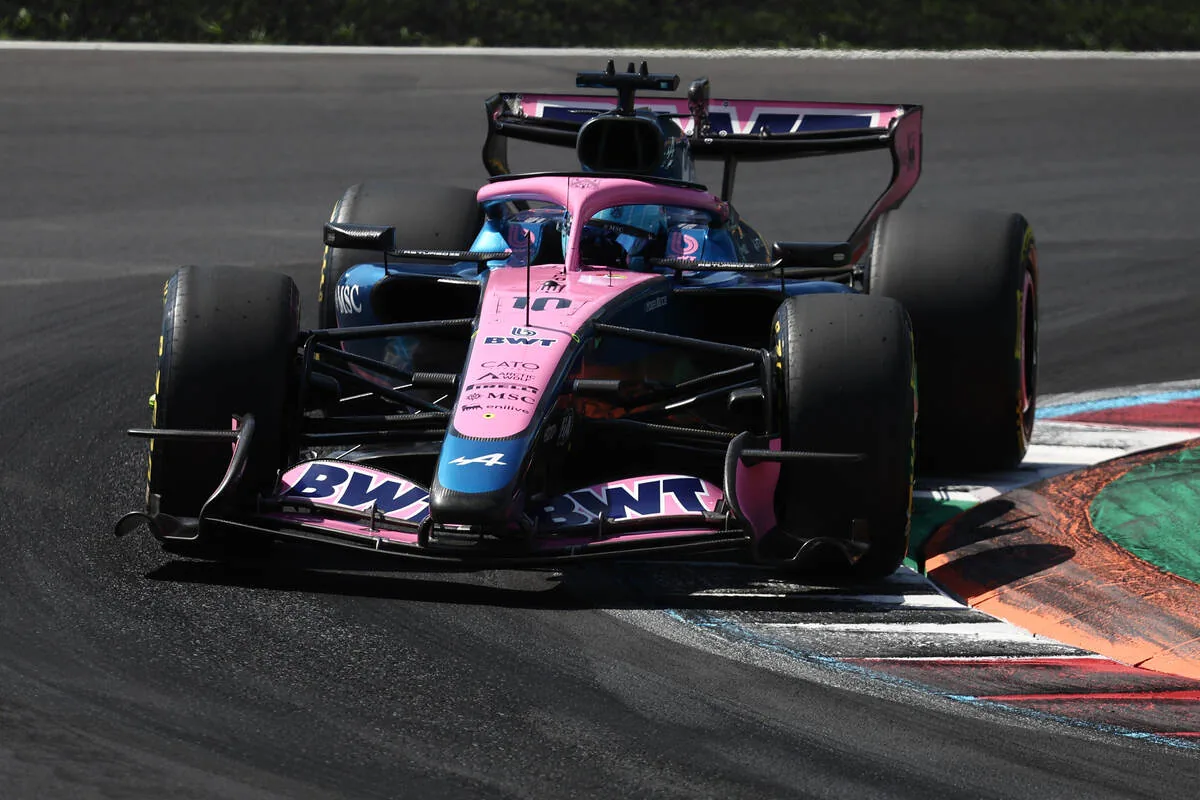
Pierre Gasly dreams of repeating the feat he achieved in 2020, trying to win the Italian Grand Prix aboard the Alpine. Judging by the race pace tests, however, the prediction is not in his favor: “Looking at Friday’s data, Mercedes seems faster than Alpine and also Ferrari, which has a problem in terms of overtaking, being slower on the straight. I see Mercedes as the favorite. Clearly Alpine has the Mercedes engine, which is very powerful, so we will have to see how well it can defend itself.”
Berra adds: “On Friday there was a difference between Gasly and Russell, but I don’t know how much Alpine held back in terms of engine mapping, because we did not expect it to be so fast in qualifying. It has shown to be a low drag car, but in the race it could suffer a bit, because with closed wings it produces less aerodynamic downforce. It could therefore go out of the optimal window for tire use, while Mercedes could exploit the extra downforce.”
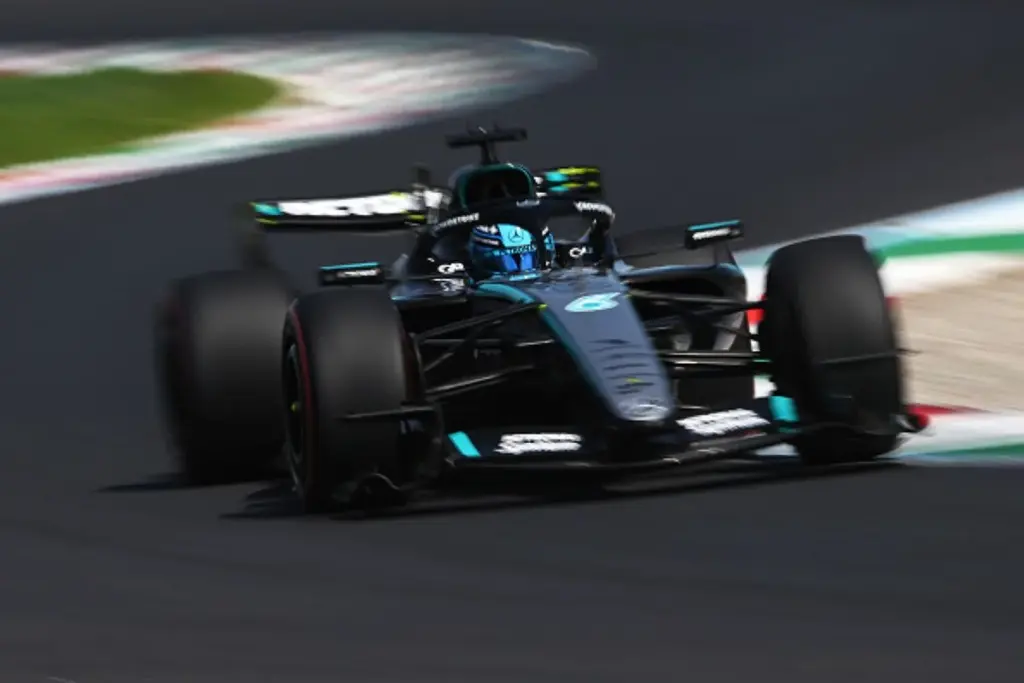
Antonelli’s comeback
The spotlight will also be on the sidelines to follow Antonelli’s race, for whom Mercedes may have prepared an alternative strategy: “Kimi’s situation is interesting, because he could opt for different strategies. Considering the new regulations, I expect that here it will be possible to overtake more than in the past, when the effect of DRS was little influential and so you risked being stuck due to lack of top speed. The Mercedes engine is very strong, so I expect Kimi to be able to overtake and make a good comeback. In terms of tires, it is more likely that he will start with mediums or hards to try to extend the first stint as much as possible. Starting with the soft would allow a bit more grip at the start, so let’s say both options are open,” concludes Berra.
Read more Magny-Cours 2026, Superpole Race: 25th seal of Bulega. Montella on the podium