Teams and drivers are preparing for one of the races with the most unknowns ever. No one really knows how much the new cars will offer overtaking opportunities, on which the possibility of implementing multi-stop strategies will depend. The impression, moreover, is that this year even the softest compound could be a valid option for the race as well, as Simone Berra, Pirelli’s Chief Engineer, explains to FormulaPassion
Read more Alpine A110, new award awaiting the electric
Three compounds in play
The feeling is that graining will be a phenomenon to keep an eye on in the race, as per tradition in Australia. “In the race pace simulations we saw a bit of graining, which is a factor that we have already encountered in Melbourne in the past”, confirms Berra. “It is not particularly aggressive, we categorize it between light and moderate, but it is present especially on the front axle. That said, basic graining is not a major limit, we have seen very consistent simulations on all three compounds, even the softest. The level of graining is very similar between the compounds, there are no particular differences in severity, as well as regarding wear.”
What will make the difference between the various compounds will rather be the sensitivity to thermal degradation, which however appears contained, suggesting a one-stop race: “We expect a one-stop race, without considering the intervention of Safety Car or Virtual Safety Car. The least risky strategy is the classic medium-hard one, with a pit-stop between the 20th and 26th lap. We do not feel like excluding, however, a possible start with the softs. What is interesting compared to last year is that the C5 does not seem to be just a qualifying compound, but can also be used in the race. It proved to be quite consistent. Mercedes, for example, has done successive laps in FP3 with contained degradation on the C5, despite the asphalt temperature being around 37-38 °C, which is what we expect tomorrow.”
The alternatives
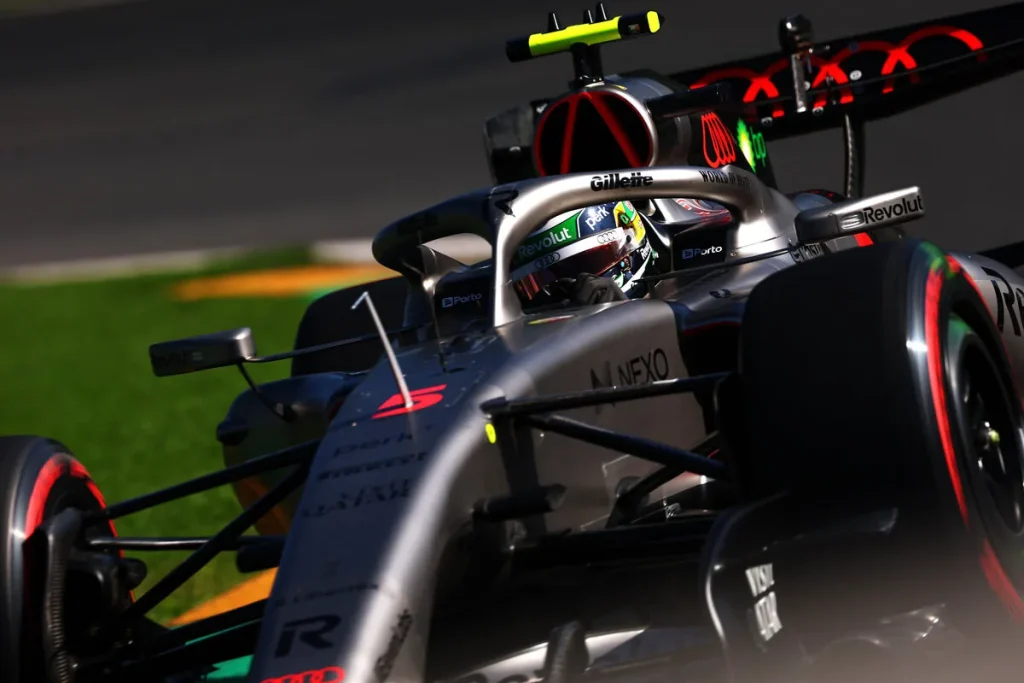
The findings from practice therefore keep the door open for the use of the soft even in the race: “All in all, the soft tire is consistent and can also be used in an initial race stint. It gives you extra grip at the start, with the possibility maybe of making up some positions. I expect that someone might try the C5 move at the start, and then switch to the hard tire. This would also be a one-stop strategy, bringing it forward slightly to the 15th-21st lap.”
Simone Berra does not exclude the possibility of a double pit-stop, although he does not consider it the best combination: “The two-stop strategy does not seem to be particularly advantageous. From our calculations it is around 6-7 seconds slower. Obviously, if there were to be a Virtual or a Safety Car, it would absolutely come back into play. The possible options in case of two stops could be medium-hard-medium, otherwise there is the very aggressive soft-medium-soft, with a first stop in this case between the 12th and 18th lap and a second between the 36th and 42nd lap.”
Overtaking opportunities
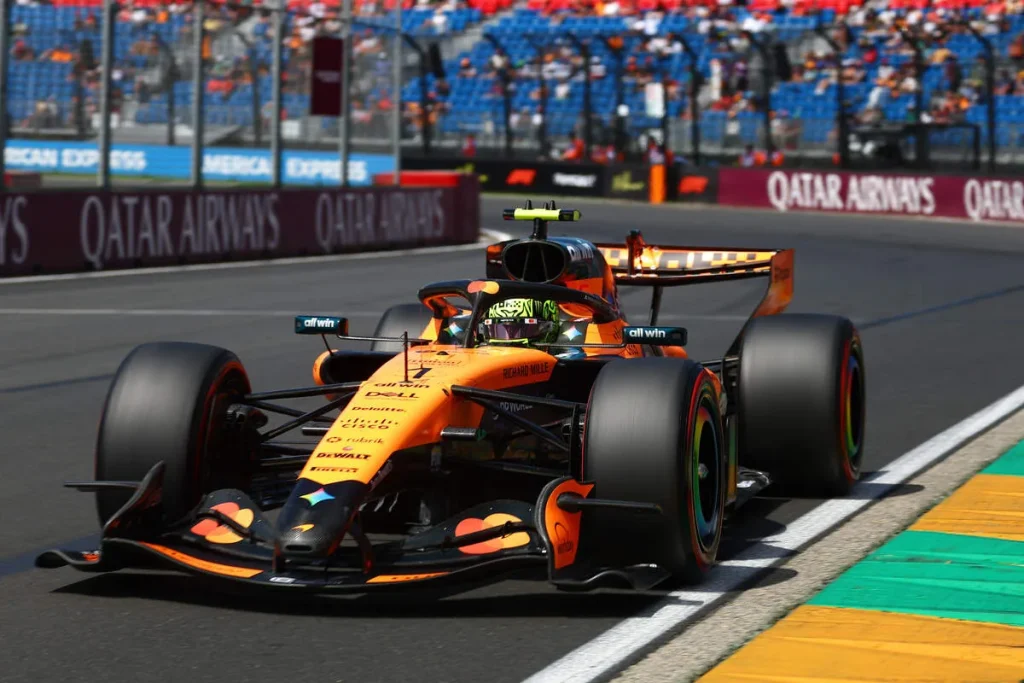
The chances of seeing multi-stop strategies will also depend on the importance of track position advantage, strictly linked to the ease of overtaking, about which no one has certainty at the moment. “The new regulation must be verified and tomorrow will be the confirmation”, comments Berra. “It is a circuit where there are straights and I expect that it will be possible to overtake, as there are also important braking zones such as at turns 1, 3, 9 and 11. In short, it is a track particularly favorable to overtaking, so I obviously expect that there will be the possibility to do them. How much the new cars and the new regulations favor them compared to before is difficult to say at this moment. It will also depend on how close the cars will be in terms of race pace and if there will be significant gaps.”
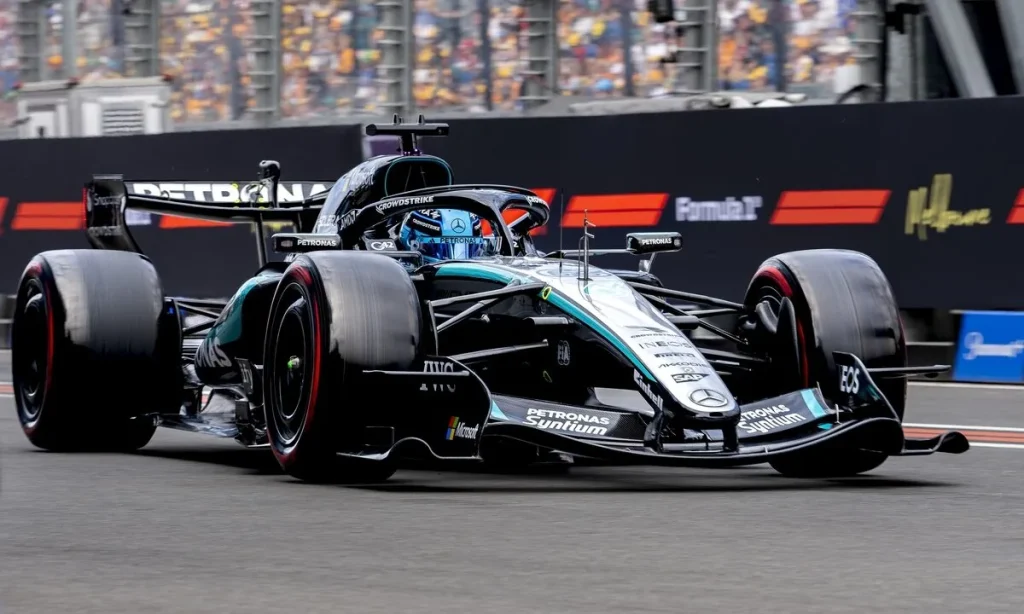
Friday’s simulations by Mercedes, moreover, highlighted large differences in pace between Russell and Antonelli. It is proof that with the same car the driver plays a non-negligible role, but not so much on tire performance. Berra concludes: “In my opinion it is more linked to energy management, because the tires are quite consistent. Since there is still a lot of development to be done on these cars, which are still in an embryonic stage, at this moment we are a bit conservative on the tire side. I therefore believe it is a topic more linked to energy management and recovery during braking: there the driver can make a substantial difference”.
Read more Leclerc: “After what we saw in FP3, perhaps Mercedes wasn’t even at maximum power in qualifying…”