



Of the three tracks that opened the season, Formula 1 immediately experienced two of the worst scenarios of the year. Melbourne and Suzuka proved to be particularly critical tracks for energy management, but the calendar includes other tracks that are even more difficult from this point of view. However, there will be no shortage of circuits at the opposite extreme, although the classification of the best and worst tracks will also depend on the decisions that the FIA makes from time to time.
Read more Cigarini: “Vasseur? Better to focus on ideas than on a change of team principal”
The most critical events
The severity of a circuit for energy management depends on many parameters, of which two in particular stand out. The first is the time spent with the throttle wide open, directly linked to the length of the phases in which it is necessary to cut electrical power, having exhausted the available energy. The other is the time the braking system is used, an indicator of the energy recoverable during braking. The lower this is, the more the battery needs to be recharged in other ways, for example with the electric motor absorbing power from the internal combustion engine on the straight, further aggravating clipping.
| FULL GAS TIME (2025) | THEORETICAL RECHARGE DURING BRAKING (BRAKING TIMES 2025) | |
| Spa | 66 s | 4.2 MJ |
| Monza | 60 s | 3.3 MJ |
| Silverstone | 58 s | 3.9 MJ |
| Qatar | 55 s | 3.2 MJ |
| Melbourne | 53 s | 2.9 MJ |
| Barcelona | 50 s | 3.0 MJ |
| Austria | 42 s | 2.9 MJ |
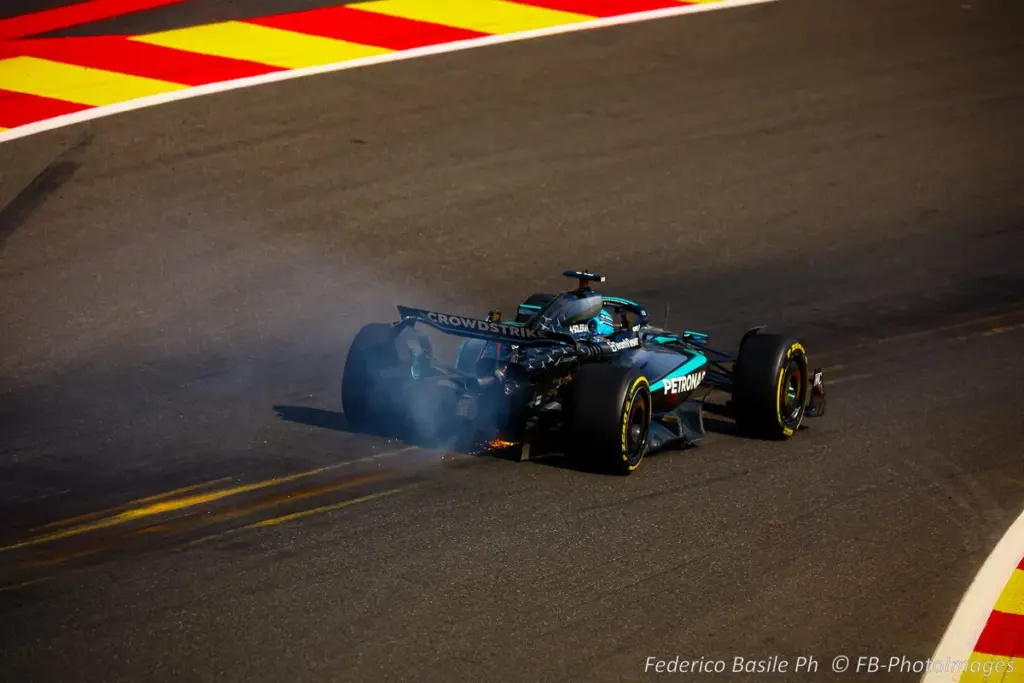
At the moment, the only data in the public domain are those from 2025. The energy recoverable during braking on the various tracks can be calculated starting from the braking times provided by Brembo last season, about 1% higher than the new cars, but still useful as a reference. It turns out that Spa and Monza will be the worst tracks for energy management, with a time with the throttle wide open of 66 and 60 seconds respectively and limited recharge during braking, especially for the Italian event. Watch out also for Qatar and Barcelona, with just 3.2 and 3.0 MJ theoretically recoverable during braking respectively, despite still prolonged full gas times. The negative record for rechargeable energy during braking, however, belongs to Austria, which is at levels similar to those of Melbourne, with the difference that at the Red Bull Ring the full gas distance is not particularly long.
Read more Historic car races, news on the starting grid
The best tracks
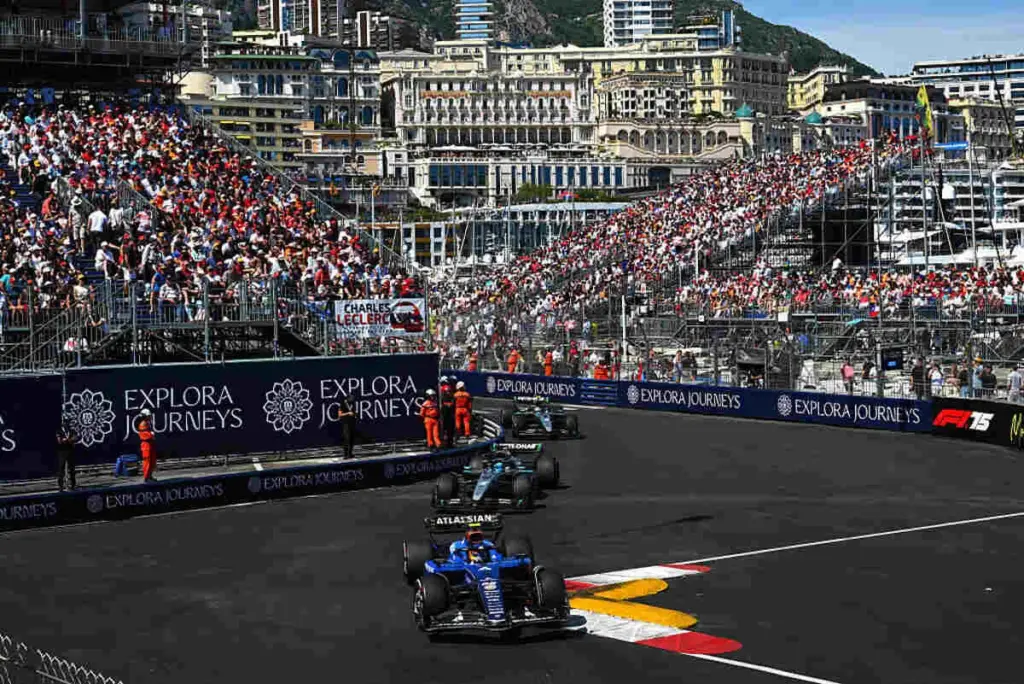
Fortunately, the calendar also includes events that are far less critical for energy management. It is certainly no surprise to discover that Monaco will be the best track, with a theoretical recharge during braking of 5.9 MJ and just 30 seconds spent with the throttle wide open. Singapore also holds up well, with 42 seconds full gas in 2025 and a potential recovery of as much as 6.0 MJ during braking. In general, the easiest circuits for energy management will be the more technical ones, such as Mexico City, Zandvoort, Budapest and Interlagos.
| FULL GAS TIME (2025) | THEORETICAL RECHARGE DURING BRAKING (BRAKING TIMES 2025) | |
| Monaco | 30 s | 5.9 MJ |
| Singapore | 42 s | 6.0 MJ |
| Mexico | 32 s | 5.5 MJ |
| Zandvoort | 39 s | 4.4 MJ |
| Budapest | 40 s | 5.3 MJ |
| Interlagos | 41 s | 5.5 MJ |
| Shanghai | 50 s | 5.7 MJ |
| Baku | 61 s | 7.1 MJ |
| Las Vegas | 62 s | 5.2 MJ |
Finally, there are the cases of Baku and Las Vegas. Both street circuits have the handicap of a throttle usage time exceeding 60 seconds, partly compensated however by a high use of brakes. In particular, in Azerbaijan it will be possible to recover more energy during braking than on any other circuit, around 7.0 MJ, drastically reducing the recharge phases on the straight. In general, however, the classification of the best and worst tracks will also depend on the decisions that the FIA makes from time to time, particularly regarding the Megajoules recoverable each lap.
Read more Alfa Romeo at the New York Auto Show: two SUVs on display