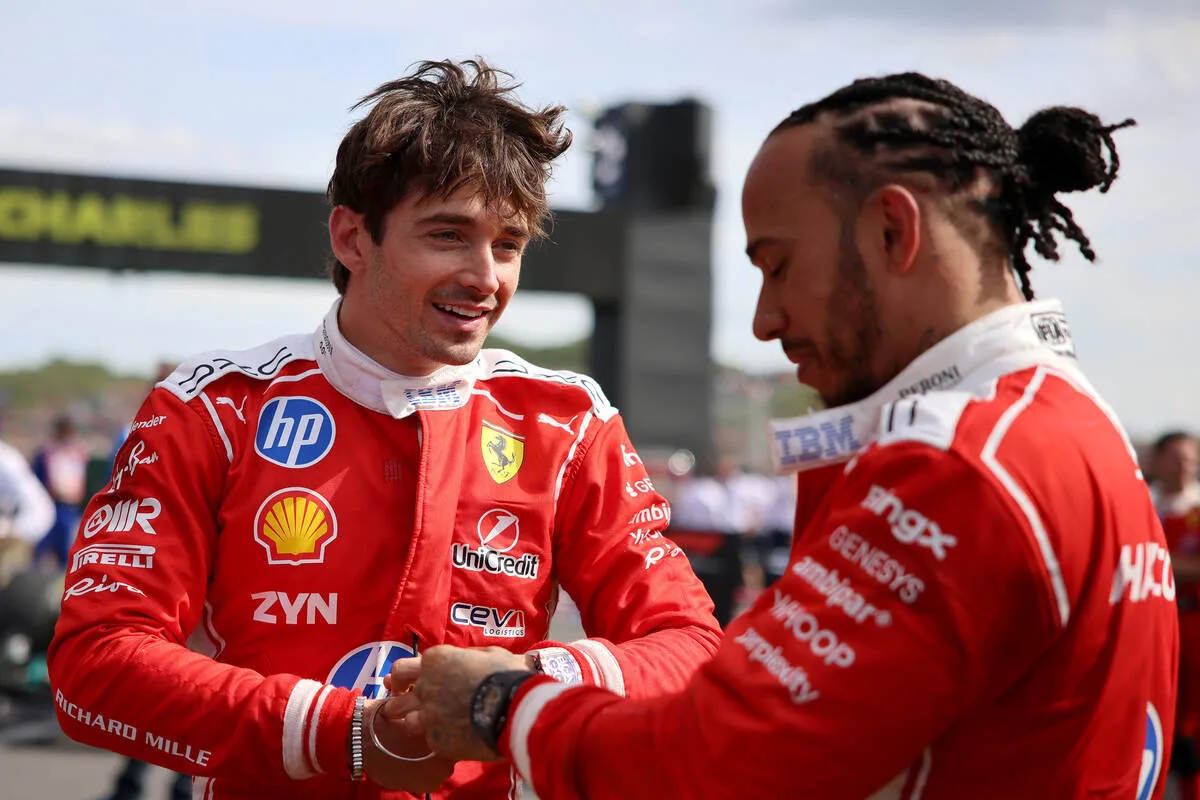
Charles Leclerc’s loyalty to Ferrari is not simply dictated by the heart. The Monegasque driver is convinced that the Scuderia is the best option to become world champion, also thanks to Vasseur’s leadership, under whom the team has changed a lot, developing a calmer atmosphere. However, change is always ongoing in Maranello, to which Leclerc and Hamilton are giving a push in the same direction, as Charles explains in the exclusive interview for Italy with FormulaPassion.
Read more Patrese: “Leclerc wins at Monza ahead of Norris and Antonelli”
We are approaching the Italian Grand Prix. A few days after the 2018 edition, you were announced as an official Ferrari driver for the following season. How much do you feel you have changed since then?
“A lot, because among the various races and experiences lived, both good and bad, you grow a lot as a driver and as a person, you learn to manage these situations. I practically grew up in Italy, where all the kart races were held, and I took a lot from the Italians regarding passion and emotions. Over the years I have learned to manage those emotions a bit better when things go very well or very badly. I have grown a lot in this. I would say the passion has remained intact. The love for Ferrari and for this sport is the same as the first day.”
Have you also observed an evolution of the team over these years, not only in terms of people but also environment?
“Enormously and probably in those same things I mentioned referring to myself. The whole environment is less prone to being emotionally influenced and breathing a calmer atmosphere has helped me a lot. There is a lot of passion in Ferrari and this is a great strength, because when things don’t go the right way, there is a lot of motivation. To turn the situation around, we don’t count the hours [of work]. However, passion can backfire, because when things go badly people live it deeply and the same when things go well.”
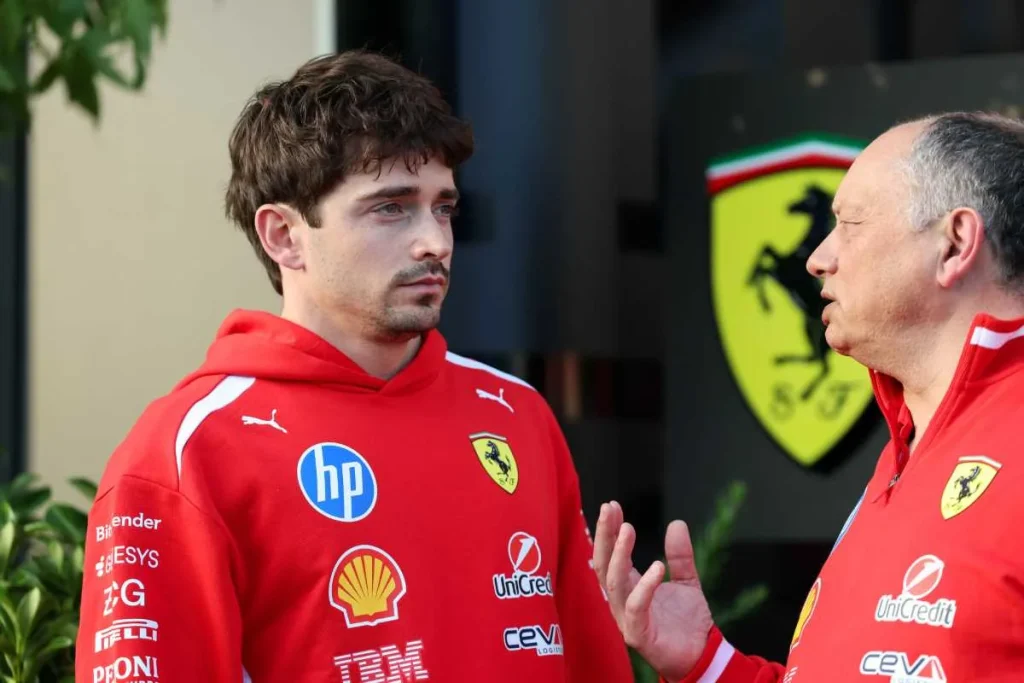
“Having these [emotional] swings can be difficult to manage, especially during the weekend. I think Fred has brought greater coolness, if you can say so, a greater detachment in front of certain situations. He has that calm that, whatever happens in a weekend, he is always the point of reference. Emotionally speaking, he is quite constant, at least with us, and I think that for Ferrari it is a positive thing.”
Why did you choose to renew with Ferrari for such a long time?
“I have a close relationship with Fred and he shares a lot of the vision he has for the team, the choices we made for this year’s car and what will happen in the coming ones. It was not a decision I made after talking only with Ferrari, nor simply for the pleasure of staying here. There were conversations and in the end the project that excited me the most was always Ferrari’s. Winning here is my dream, but the decision did not depend only on love for Ferrari, but also on the project. I wanted to make the most of the opportunities to make the right decision, the one that gave me the highest probability of becoming world champion and I firmly believe that Ferrari is the team to do it.”
Can you explain better?
“There is a need for a clear vision, of where we want to go and what we want to do with our project. When I negotiate with Ferrari it is a bit like an open book, because it is the team I currently race for. I know exactly what the vision is, what I want from the car and how the future looks. This gives me a lot of optimism.”
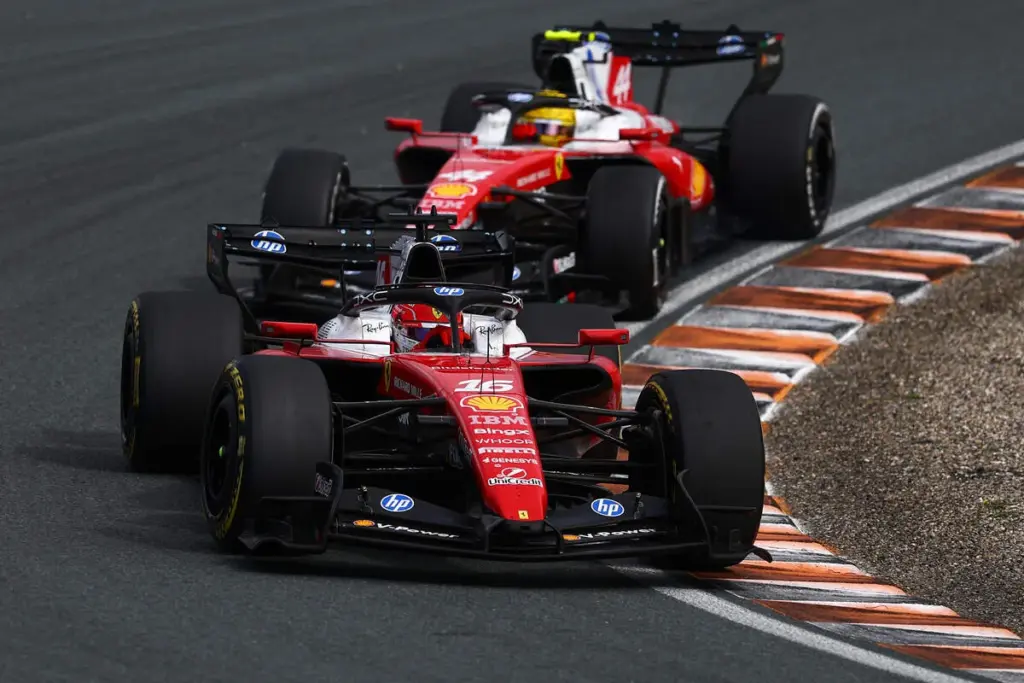
How transparent have the other teams been in sharing with you the information about what they were planning?
“It’s difficult, because you are still talking to opponents who don’t want to give you too much information, but who have to sell their project. In the end, talking to people, you manage to get a feeling and understand the direction they are going. Also, I sit every day in front of a computer looking at my data but also theirs, and for this reason there are things we also know. The paddock is a small environment and you somewhat know the direction the various teams are going. You make your decision based on that.”
How do you see the second part of the season, after saying there was a lot of negativity around you in the first half?
“I think the negativity came mid-season, around Montreal, when things didn’t go the right way. It’s normal that there is negativity when someone is not doing their job, as was my case. Simply, I didn’t feel right with the car. There were aspects I struggled with and I didn’t have good feelings. Then we changed and being able to react the way we did at Silverstone was incredible. The feelings were really good. It wasn’t that I had lost confidence in myself, because that inner confidence, that when you work hard things go well, is always there. However, you still have to prove it on track and doing it so quickly was a great feeling.”
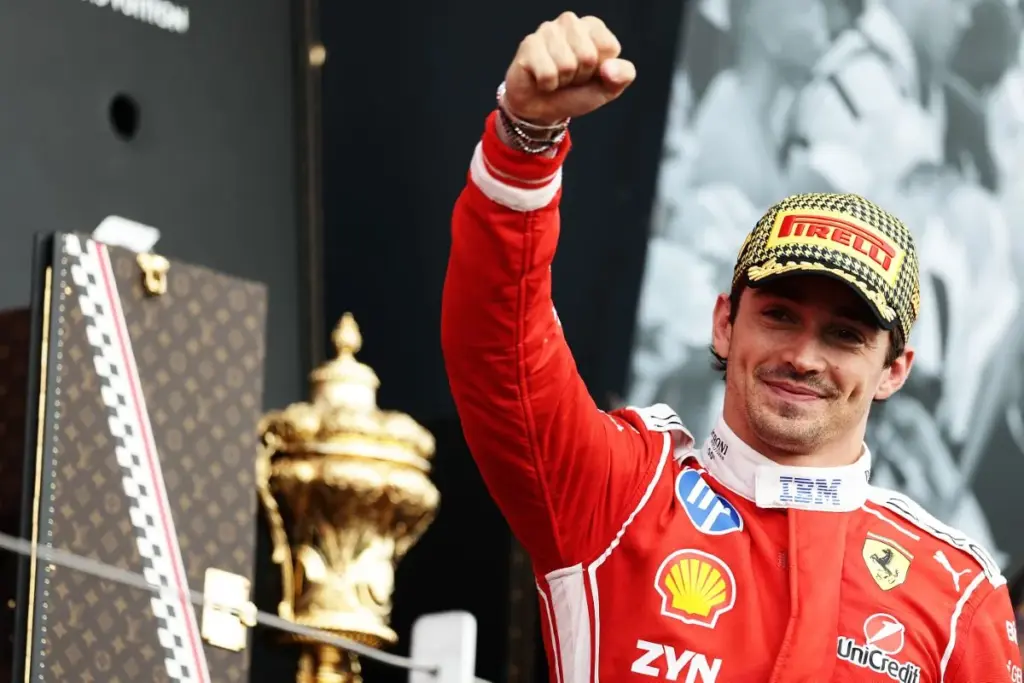
Now have you understood the problems you had to face?
“There are some things I still have to work on and these cars will continue to be very atypical. I think it is a Formula 1 we have never seen before and I believe that, with this generation of cars, it will always be so. There are things, related to the electric motor, that require a driving style focused on efficiency, which is a bit the opposite of what we learned in the feeder categories, where the more you pressed the accelerator, the faster you went and the better the lap time. In some specific situations, it is no longer like that. Because of this, I have to reprogram my mind, because I am particularly aggressive when driving. You have to do a reset and I think I have already done it. At the start of the season I felt fine, then, at some point, characteristics of the car emerged that were difficult. Probably, I am not yet as comfortable as with the cars used until last year and it is something I am continuing to work on, even if it is much better.”
Read more Ferrari: Thierry Baritaud, the head of ERS, leaves
Do you think this generation of cars has eroded your advantage in qualifying one-lap pace, where you used to attack high-speed corners?
“The fact is that this year consistency pays off much more, because the software knows what to expect and optimizes the delivery of electric power based on what you will do. Every time you do something unexpected, especially in Q3, the energy management is recalculated, but not optimized over the entire lap. It’s hard to explain, but overall, being consistent pays off more than being brave and more than trying something in Q3 that no one has ever done before.”
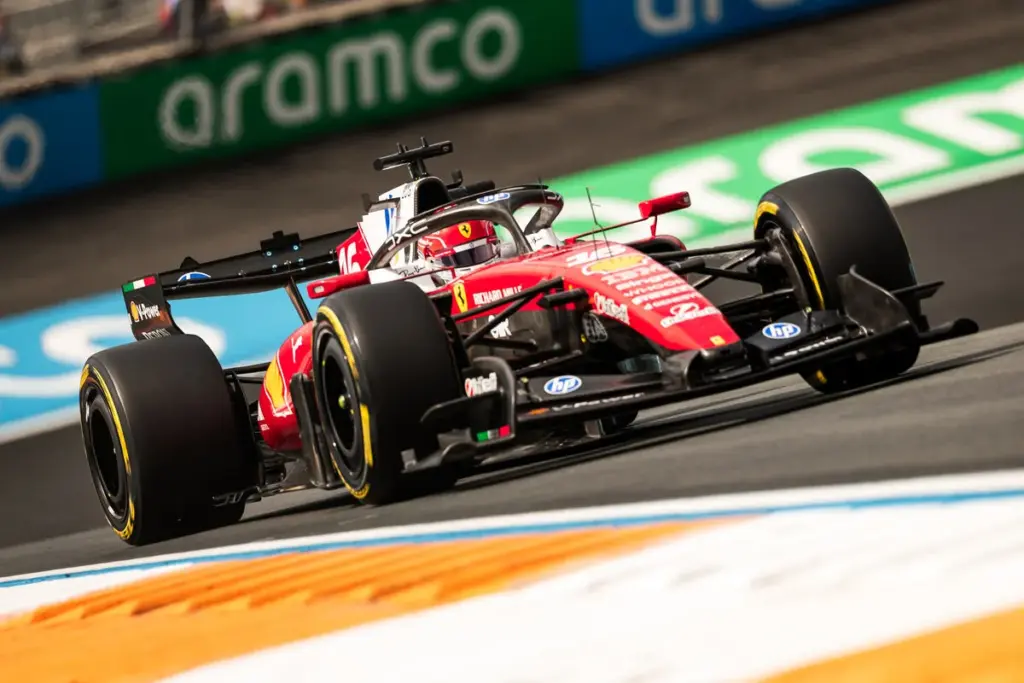
Speaking of driving styles, how much has having Vettel, Sainz, and now Hamilton as teammates contributed to shaping yours?
“I would say they have influenced me a lot as a driver and in the way I work. The driving style, however, is much harder to replicate. I have driven in a certain way throughout my entire career. That said, you always try to improve, but my driving style is unique. I don’t think a driver can drive exactly like another: I will never be able to do exactly what Lewis does in the car, because these are natural, instinctive things. I think, however, that a characteristic of a great driver is being able to refine the driving style and find a way with a new car to drive slightly differently. I think this is what we are all working on at the moment, because I believe no one is yet able to exploit the potential of these cars 100%. This new generation of cars has very peculiar behaviors; every time you think you have discovered every possible scenario, there is always some new aspect that comes up and needs to be managed and optimized.”
Is that why you can’t simply copy what Lewis does with this car…
“Exactly. Obviously, I can look at his data and I always do. Sometimes there are some things in specific corners where I say to myself ‘Ok, I should try it like this’. Overall, though, I prefer to work on my driving style, to make things come naturally to me. In Formula 1, when you think too much, things don’t work. In any sport, athletes often talk about flow state, in Italian we might call it a ‘state of flow’ perhaps, but it only happens when things come naturally and then everything becomes easier. That is the point I have to reach. At the moment I still have to think a bit too much compared to what I would like and that is the peculiarity of these cars, because they are complex, with many variables at play. To make everything feel as natural as possible, I have to keep working to find my way.”
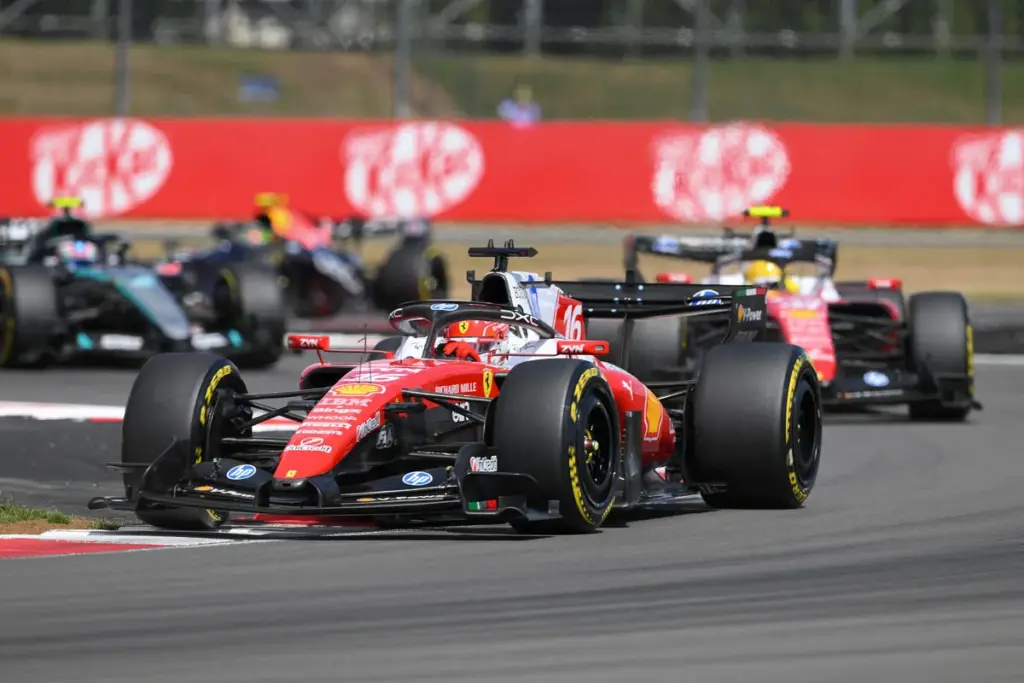
Do you feel like a leader for this team?
“Obviously. I have been part of this team for a long time, but I have Hamilton as a teammate and he is a seven-time world champion. I think we are both leaders and we are very aligned on the direction we want to take as a team. It is clear that today both drivers lead the team with a clear vision of where we want to go. We have different driving styles, but what we ask from the car is similar and this is very important.”
When you talk about the team’s vision, are you referring to the car’s characteristics or something bigger?
“It’s not just about the car’s characteristics. In Formula 1 there are many other things, like processes and the way we work. There are many people who actually work on just one car, because the two cars are the same. It’s about thinking about the project and how we can be more efficient as a team. If you put an employee in better conditions and extract 1% more from what they do, scaling it across the thousands of people working at Ferrari can represent a big change. Expressing oneself on the car’s characteristics is the heart of what we do, but there are many other things we can influence. It’s also interesting that Sebastian, Carlos, and Lewis brought experiences from their previous teams. We all have the same priorities, but with processes that may be very different.”
With Lewis’s arrival, has the way you ask these things from the team changed?
“I think every driver has unique requests. When Carlos arrived in the team, he needed different things. When I arrived at Ferrari, I had particular needs and the same goes for Lewis. Obviously something has changed, but not abnormally compared to the past. Every time you join a new team, there is always an adaptation period to try to understand how the team works and how you want to improve it, based on your previous experiences and what you would like to implement in the team. That process was similar, but the requests were different.”
This is your ninth season. Where do you see yourself in nine years? Will you still be racing in Formula 1 or would you like to try other experiences?
“I’m not sure. I love Formula 1 and what I do, but I also have a family, which is very important to me. I’m not sure how my life will evolve in the coming years, I really don’t know. I like what I do so much that I would love to be here, even if it keeps me away from home a lot. At some point, you have to find a balance. In nine years I will still be racing, that’s 100% certain, but if at that time Formula 1 has 40 races a year, probably it will be something to think about. I consider myself very lucky to do what I do. It’s hard to understand, because if forty years ago I had been told this before arriving in Formula 1, I wouldn’t have believed it. At some point, though, the time spent at home and with family is important too. In nine years I will be 37, expressing myself would be speculation. I will still be racing, we’ll see if it will be in Formula 1.”
Do you think having a title in your pocket would make the decision to leave easier?
“I don’t know. I think if one day I ever won a world title, I would already be thinking about the second and that would be another reason to continue. In our sport, you don’t look back much. If I think about how I looked at my career ten years ago and you had told me I would be a Ferrari driver, that alone would have been a career beyond all my expectations. Then I became a Ferrari driver and at that point I wanted to win the first race and I did. Then I wanted to win the second and then the championship. So I don’t think winning a title could influence my decisions about leaving or continuing.”
Read more Vasseur: “Team order? 1 hour call to give explanations to Leclerc and Hamilton”