

It is a frustrating start to the season for Ferrari, aware that they have built an excellent chassis-wise car, but cannot capitalize on the advantage. The reason is not only the lack of horsepower from the power unit, but also a regulation that does not value cornering performance. The result is a car that cannot fully exploit its good potential, to which several original solutions borrowed from the competition contribute, telling of a renewed atmosphere in Maranello.
The battery slows Ferrari down
The arrival of the first wave of updates in Miami did not change the early-year picture. Ferrari is still the benchmark in the driven sections, both at high and low speed, where it builds an advantage that quickly evaporates on the straight. Unfortunately for the Prancing Horse, the new regulations prevent maximizing cornering superiority, where, more than the grip limit, it is the energy management that dictates the lines and trajectories.
Despite the regulation changes making driving slightly more traditional, the priority is still to save energy in corners to have electric power on the straight. Daring more in the driven sections or anticipating the throttle return is penalizing, as it consumes the battery and loses more time on the straight than gained in the twisty parts. In successive direction changes, the most common practice now is to carry as much speed as possible into the first corner and avoid touching the accelerator in the following ones. At Suzuka, for example, McLaren had instructed its drivers not to go on the throttle after the first Degner corner, but to coast until the second.
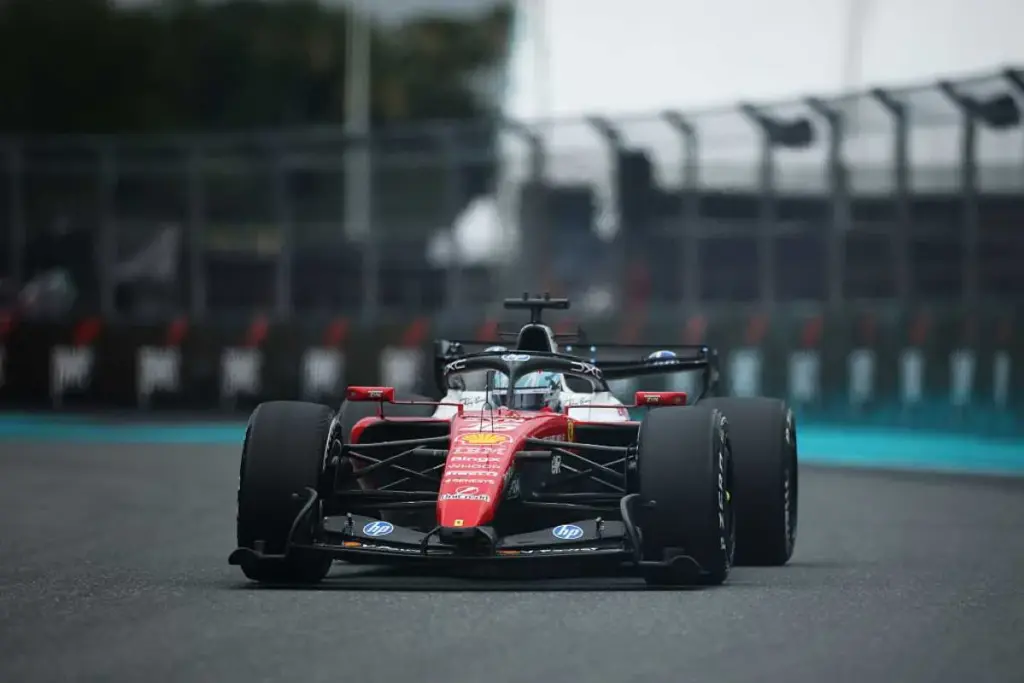
“You have to exaggerate in the first part and not return to the accelerator in the second,” explains Esteban Ocon. To be clear, expressing a high aerodynamic load is still an advantage for those who manage it, like Ferrari. Unfortunately for the Prancing Horse, however, energy management logics prevent fully exploiting the grip that the SF-26 has to offer, having to hold back from abusing the throttle, even when the car invites it.
The SF-26 sets the standard
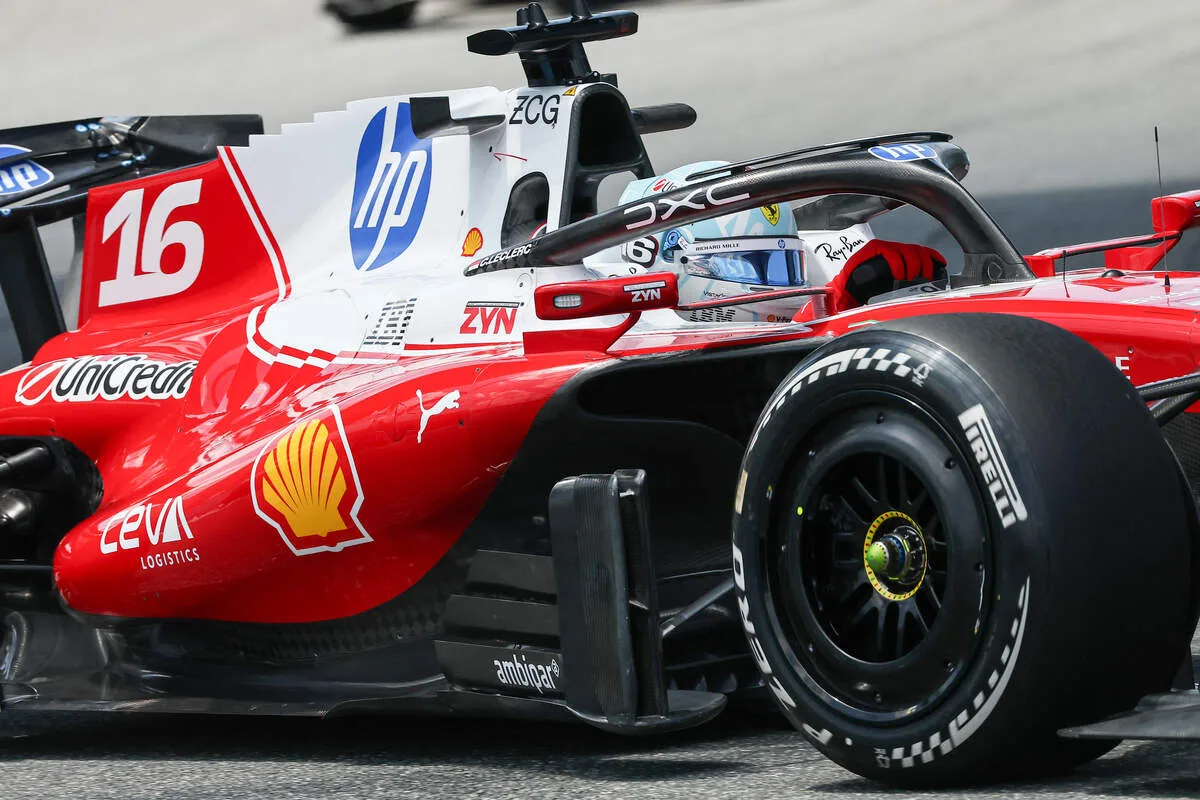
Ferrari is living a paradoxical situation. It has finally presented itself at the starting line with an excellent chassis-wise car, but cannot exploit it to its full potential. A testimony to the quality of the SF-26 is the work of the competition, which is freely drawing inspiration from several solutions devised in Maranello. The mind immediately goes to the FTM, the appendage mounted behind the exhaust, and the inverted movable wing, developed so far only by Ferrari and Red Bull. The examples do not stop here, because McLaren has taken from the SF-26 the horizontal element between the flow channels at the floor entrance. Red Bull, instead, has replicated the front brake ducts delimited by the wheel fairings, an idea first proposed by Ferrari, Mercedes, and Williams.
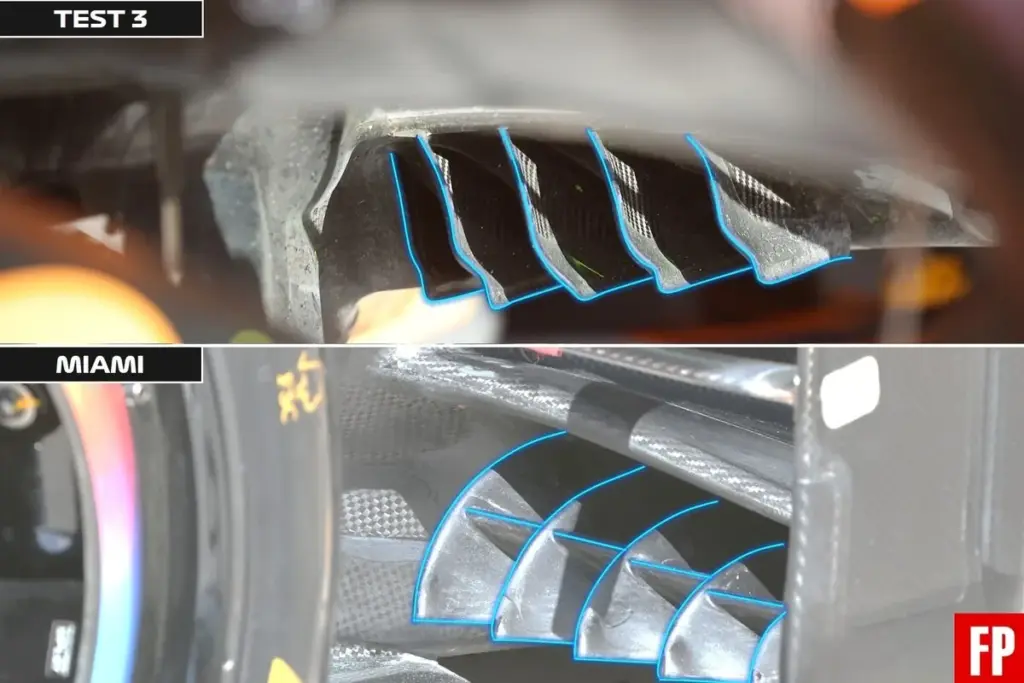
The feeling is that there is now a calmer working atmosphere in Maranello, encouraging experimentation, risk-taking, and possibly making mistakes. This was already hinted at during the SF-26 launch, when a finally more aggressive front suspension layout was seen, after years in which the Reds were often the most conservative cars on the grid. Unfortunately for the Prancing Horse, however, all this takes a back seat, as the aerodynamic strengths are not enough to compensate for the power unit’s shortcomings.
The cost of the engine
Ferrari’s main problem is the big deficit on the straight, only partly a side effect of the abundant downforce and aerodynamic drag that the SF-26 carries. The limit remains the power unit, whose lack of horsepower, besides being felt on the stopwatch, complicates attack and defense maneuvers. This was seen in Miami when, right after the Safety Car, Leclerc ended up asking too much of his tires in an attempt to keep Norris and Antonelli at bay. The Monegasque thus faced overheating and a rapid drop in performance, which encouraged the Ferrari pit wall to bring forward the stop to cover Russell’s, then losing time fighting through traffic.
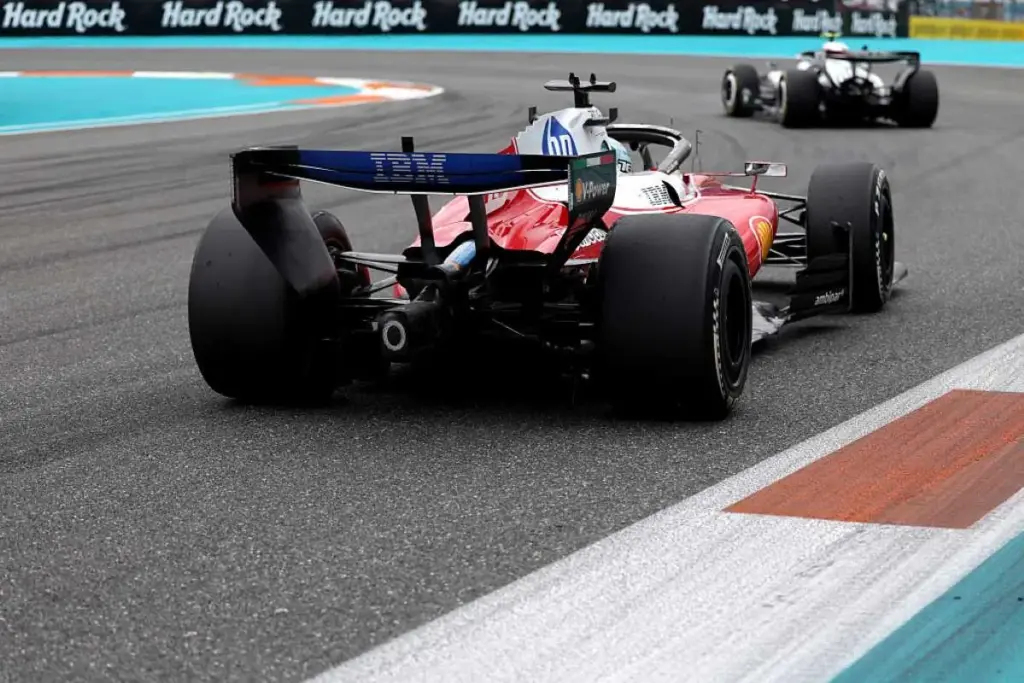
The Prancing Horse now clings to the hope of being able to intervene on the engine with the ADUO. Falling back within the 4% range would be important, not only to be able to introduce two updates this year and two more next year, but also to enjoy more hours for bench testing and budget cap relief. It will then be necessary to understand whether to close the gap from Mercedes it is enough to develop the current engine or if Ferrari must start from a different concept, as Audi has already chosen to do, with the target set for 2028.
Click here to add Formula Passion as a preferred source on Google Discover: you will find our content more easily!