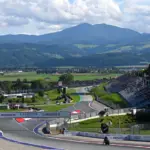
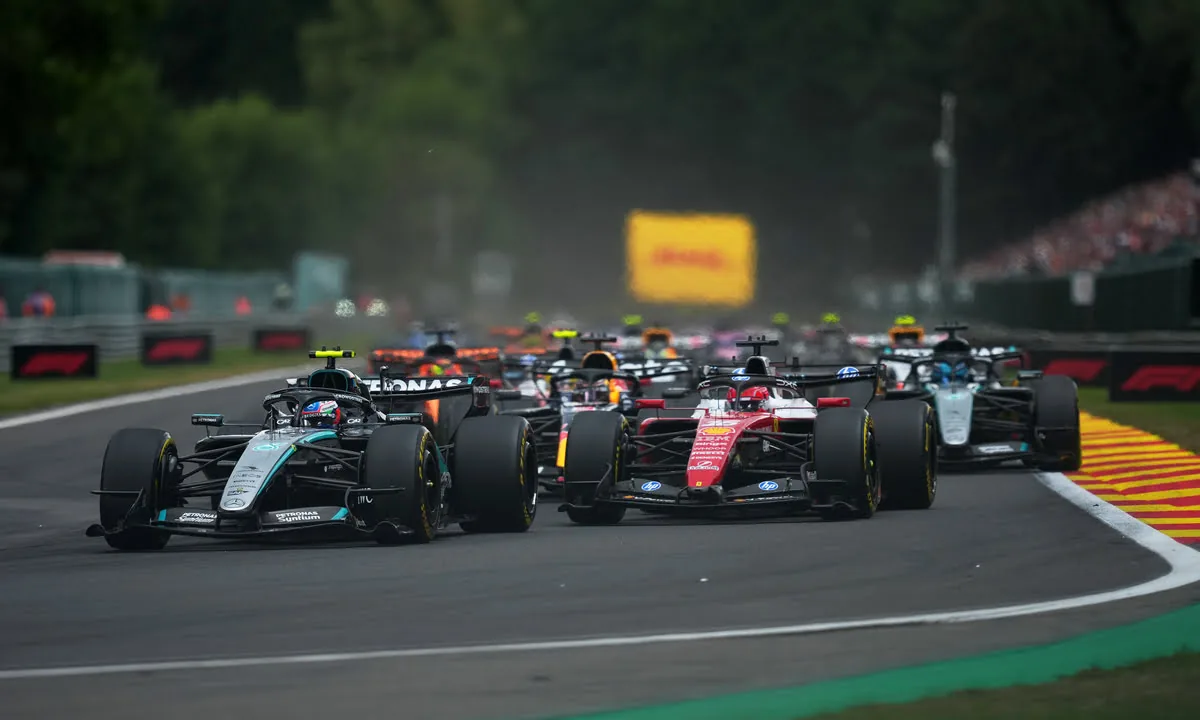
The 2026 Belgian Grand Prix was somehow different from previous editions. A “useful” weekend from a technical point of view, because it showed with further clarity many of the main characteristics of the various single-seaters and, in general, of this year’s regulations, although not always what emerged was particularly exciting. The historic and beautiful Ardennes track, with its 7 km covered at high average speed, was actually the worst possible scenario for the 2026 engines: scarce possibilities for recharging the electric part, very long straights, and a chronic “hunger” for energy to fight every lap. A terrible bottleneck for performance, which ended up becoming the main driver of every decision, conditioning both the setups and, unfortunately, the techniques and driving styles of the drivers..
Read more Albon disappointed at Spa: “Frustrating day, our race pace dropped drastically”
Antonelli is one of the best interpreters of these single-seaters
We will return shortly to the general problems, but first let’s focus on what the Spa weekend told us in terms of hierarchy among top teams and drivers. The winner, relaunched in the title race and generally the dominant force this season, is once again Andrea Kimi Antonelli. The young Italian shows he has a great variety of arrows in his quiver, but among these are also the most important ones. Few have really understood how to squeeze the best out of these cars like Antonelli does, who also adds a speed born of a clearly extraordinary talent and an increasingly winning mentality in races, now able to calmly face difficulties and regain the lead without ever losing composure, pushing to the limit but never making mistakes. His teammate Russell drowns in problems, between some issues in the electronic management software that does not provide ideal solutions (but which Mercedes quantifies as a minimal part of the gap seen on track between the Englishman and the world championship leader) and a driving approach that fails to maximize the car’s potential.
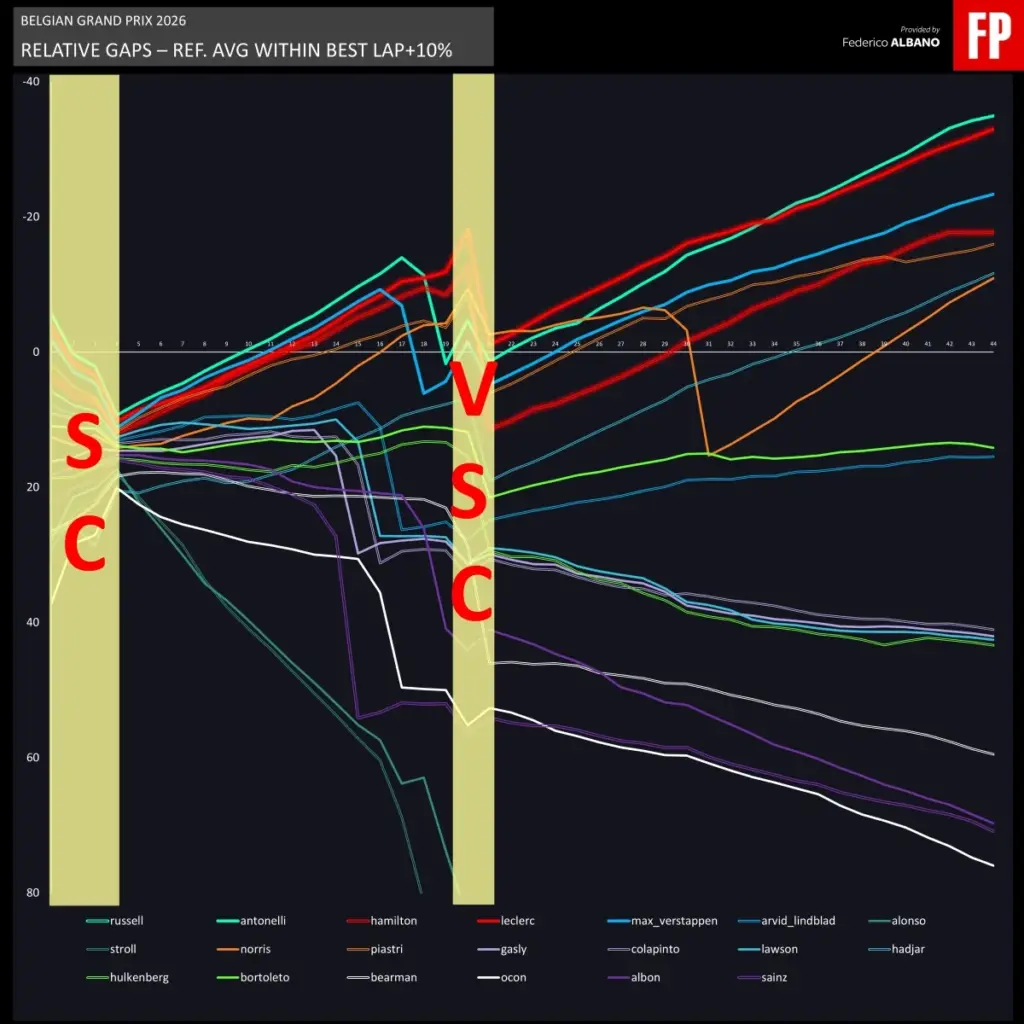
A clear example came in qualifying, with Russell suffering an energy drop in the last sector, losing three tenths to Antonelli just on the straight. At first glance, it might seem like a Power Unit problem, but it was not in that case: Antonelli passed Stavelot 8 km/h faster than his teammate. Russell’s Power Unit then focused the hybrid delivery low to maximize traction (time in Formula 1 is made from 0 to 300) and shortly after, at Blanchimont, Russell found himself with less energy than Kimi, who benefited from the surplus given by saving energy during acceleration thanks to the higher cornering speed. A clear example of how driving technique has a fundamental impact on energy management and, on tracks so selective from this point of view, on final performance. Mercedes, if driven by Antonelli, confirms to be the best package, with an excellent chassis, although probably not the best, and certainly with the best Power Unit. The low downforce package proved on Friday to be too extreme on a track that, unlike Silverstone, rewarded a more loaded aerodynamics, also considering the 5 zones where active aerodynamics were usable. Once the W17 was put back into a correct downforce window, Antonelli no longer had real rivals, then having to face Leclerc in the race, who remained in contention for the win only thanks to the about ten seconds gained with the stop under VSC.
Ferrari: overall a great weekend for both the SF-26 and its drivers
If Antonelli comes out a winner, this time it cannot be said that Ferrari came out defeated from the Belgian weekend. The track exposed without any possible defense the criticalities of Maranello’s Power Unit in terms of energy management, and the red team comes away with a deserved second place for Leclerc and a fourth for Hamilton, who overall would certainly have deserved the podium. Once again, the red team’s engineers find the ideal optimization in terms of energy delivery and the great chassis of the SF-26 does the rest, guaranteeing, for example, a high cornering speed in all critical curves from the energy point of view, helping considerably to contain the gap from Mercedes. The only point where the red team was really struggling was traction downhill out of the Source, a thorny issue, reminiscent of the rear difficulties seen in Austria and which caused some trouble for the downhill acceleration to Eau Rouge. On the other hand, the delivery strategy on the first lap was great: the perfect use of the Power Unit, combined with an equally effective slipstream management, projected Leclerc ahead of Verstappen. The Monegasque was author of a great race and it is clear how he managed to find the right working direction, with a race in Belgium as an important confirmation of what was seen in Silverstone. However, Lewis Hamilton’s performance should not be underestimated, who really experienced a bit of everything during the race, but showed a pace that would have earned him a deserved podium with fewer vicissitudes, and maybe even a wheel-to-wheel fight with Leclerc, against whom he did not seem particularly slower despite the car being damaged from the first lap. A Ferrari that therefore comes out very well from Spa in all respects: car, engineers’ work, and drivers.
Red Bull and McLaren similar in value but technically opposite
The podium for Verstappen is not unexpected: the endless straights of Spa indeed suit a Red Bull Power Unit that works particularly well in the upper part of the power curve, but some aerodynamic shortcomings were still noticed, well minimized by the driver and the team. The race also confirmed our impression after qualifying: the Dutchman’s best absolute second sector was more due to an aggressive use of energy, made possible by Hadjar’s subsequent slipstream in the third sector, than to an actual aerodynamic downforce advantage. Some balance and tire degradation problems, in fact, emerged during the race but, once positions were settled, Verstappen was able to manage the race, while Hadjar, behind, was author of a brilliant comeback from the first laps with a very smart strategy. The Frenchman is so far undoubtedly the best teammate we have seen in these years for Verstappen, confirming his qualities and a generation of young drivers who have very quickly found the key to interpret these cars. McLaren instead opted for quite different setups between the drivers, choosing a high downforce option for Norris, who showed podium pace throughout the race, ruined not only by 10 grid positions but also by a very long pit stop, which realistically prevented him from finishing ahead of teammate Piastri, who showed something better at Spa compared to recent races but who this season is regularly proving to be much inferior to Norris.
Energy: a pervasive issue to be considered on par with tires
As already said several times, the energy part was an incredible headache for the entire Belgian weekend, becoming the main differentiating factor starting from setups and continuing with the drivers’ own driving. If 2026 Formula 1 had somehow “saved itself” on many tracks so far, Spa offered no shelter to the congenital problems of these engines and the spectacle suffered, including the fact that most analyses had to necessarily focus on this aspect. Until last year, we had a somewhat similar topic to debate, represented by tires. The “black” in our title refers precisely to tires, because just as until last year drivers sometimes chose in which corners to push to avoid overheating or excessive wear of the tires, so much so that we nicknamed it “tire-sport,” this year we are seeing the same thing, with an effect at least equally pervasive, in energy management. Tires conditioned, and continue to condition, every aspect of performance: from the power delivered to the rear in traction to aerodynamic and mechanical setup, up to driving. The situation of Power Units today is analogous, which on the most demanding tracks from an energy point of view become as limiting as a soft tire on a particularly hot track. From Budapest onwards, things should be much more focused on the more traditional aspects of performance, such as downforce, mechanical setup, and drivers’ driving, to reach the summer break with a little less bitterness, after having seen a Formula 1 currently not up to a splendid track like Spa-Francorchamps.
Read more Spa 2026, the other podium