




With the debut of the Madring, the calendar welcomes a new city circuit, or almost. The new layout of the Spanish capital winds through a mix of urban streets and permanent sections built ad hoc, a combination that gives the Madrid track an intriguing variety. The picture that emerges is profoundly different from that of Monza, which could once again expose Mercedes to attacks from the competition.
The track
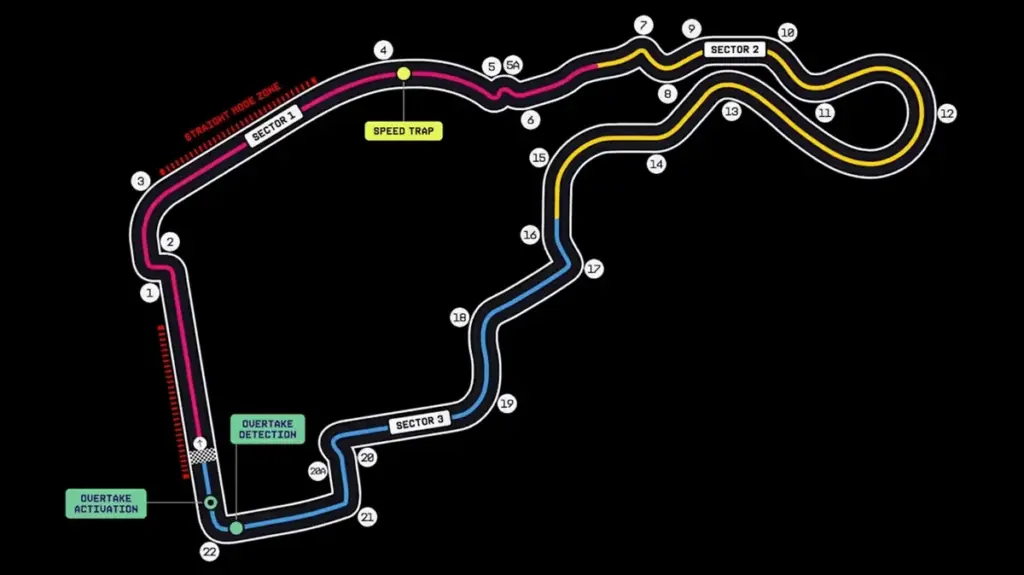
The design of the Madring immediately gives the image of a complete track. It starts with two straights, where the Federation has placed the only active aerodynamics activation zones, then embarking on a long guided section. There are a total of 22 corners, 8 of which will require braking, with Brembo estimating a usage time equal to 15% of the total. This is good news regarding energy management, as there are several points to recharge the battery, without long straights where it risks discharging quickly.
The corners are of various types, from the classic 90° bends typical of city circuits to high-speed chicanes, where some have already noticed a similarity with Jeddah. There are also high and medium-speed long corners, where it will be important for the driver to rely on a stable car. Overall, the Madring presents itself as a challenge both for the drivers, called to brush the walls surrounding the track, and for the teams, forced to find a balance on a particularly varied track. Added to all this is the altitude, about 700 meters above sea level, similar to that of the Red Bull Ring in Austria. The thinning of the air will again be a topic, as it will lead to a reduction in aerodynamic downforce, the power produced by the thermal engine, and cooling efficiency.
Watch out for the tires
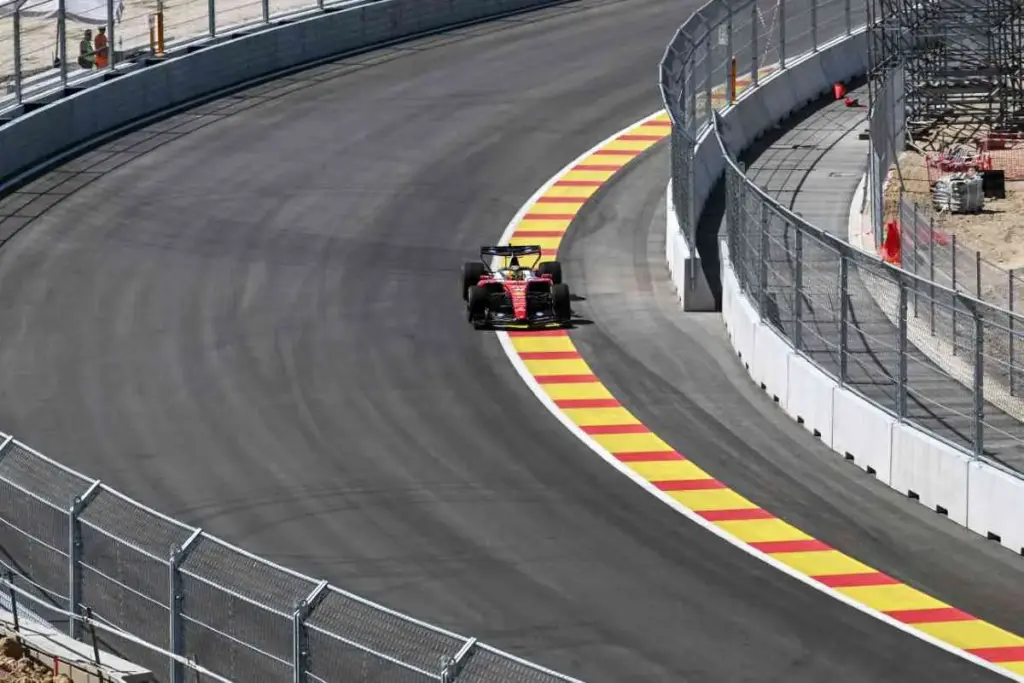
Usually, city circuits are among the gentlest on tires, often having low-speed corners that stress the tires little. This is not the case with the Madring, which Pirelli has already classified as one of the five toughest tracks in the entire championship regarding the energy discharged on the tires. The credit also goes to the Monumental (12), the longest banking corner on the calendar, with a 24% incline and a length of 550 meters. Simulations say that here the vertical loads on the tires will be the highest of the year, maintained for a prolonged time, while it is still unclear if the cars will be able to take it flat out.
With the forces at play in Madrid, the challenge will be managing tire temperatures, especially on the rear axle. Heating the tires for the flying lap in qualifying should not be a problem, while in the race thermal degradation will be a protagonist, but mechanical degradation is not excluded either. The new asphalt, in fact, is smooth and low grip, conditions that often cause sliding and graining phenomena. Pirelli offers the C2, C3, and C4 compounds, considered a good compromise between durability and degradation, hoping to see a two-stop Grand Prix. This, however, remains to be verified, as the estimated time loss in the pit lane is particularly high, around 25 seconds.
Qualifying becomes relevant again
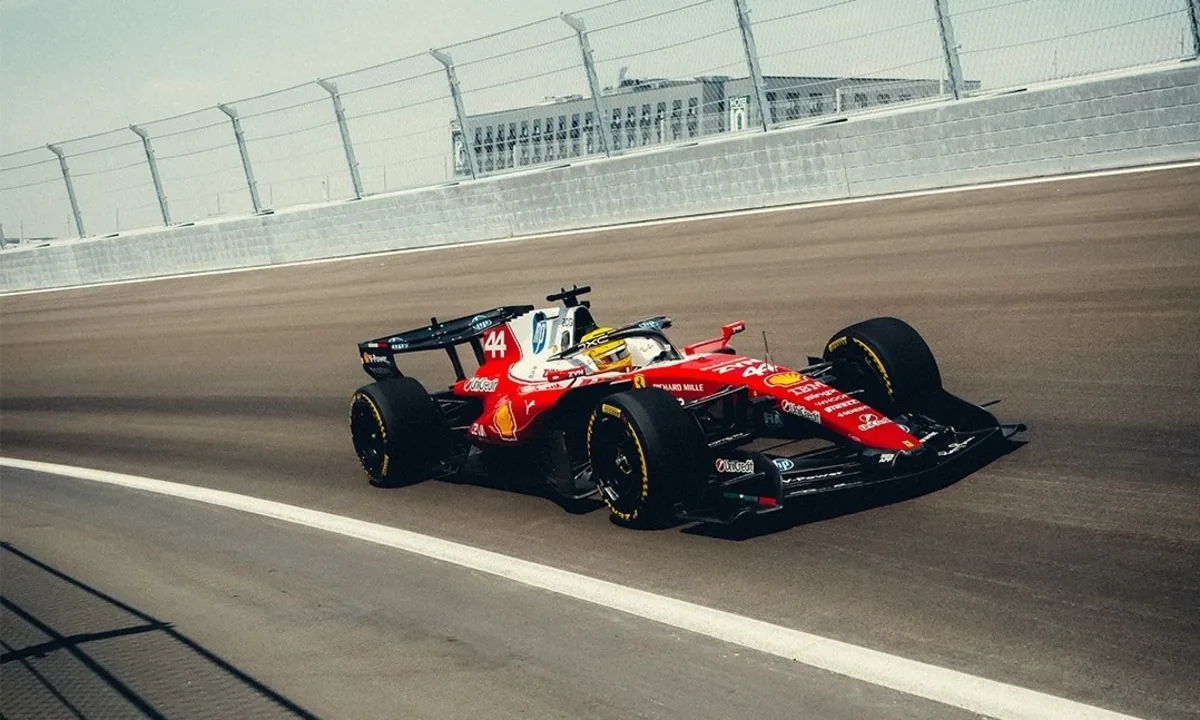
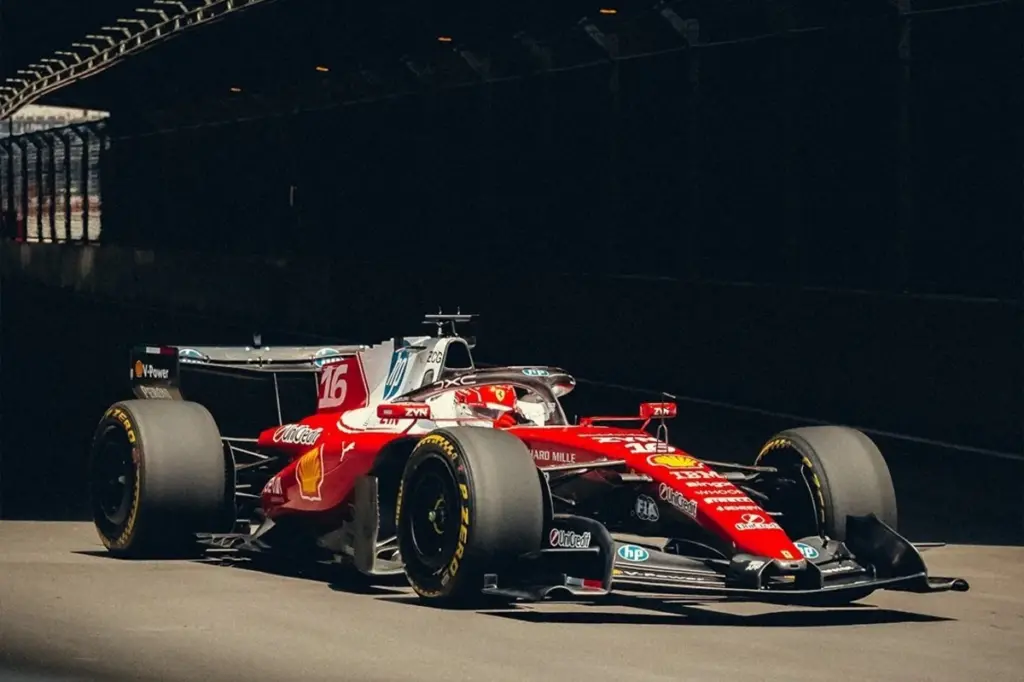
To date, Ferrari is the only team to have run on the Madring, having conducted a Filming Day in July with the SF-26. The data collected on that occasion, however, were not very representative, with asphalt still extremely dusty from construction sites. Like everyone else, therefore, for the Prancing Horse the priority will be to maximize track time during free practice. Teams will be hungry for information, necessary to strengthen and correlate simulation models of the track. Drivers, on the other hand, will have to find the rhythm to get closer and closer to the walls, as is customary also in Monte Carlo.
Madrid could once again be a weekend more focused on the flying lap than on race pace. Energy management should not be critical, with delivery strategies more similar among teams than what happened in Monza, which tends to complicate overtaking opportunities. In qualifying, a lot will be at stake, and care must be taken not to be caught off guard by the strong evolution of the track, inevitable when debuting on new asphalt. In any case, knowing how to manage the tires will still be important in the race. Delaying the stop would put one in a position to exploit possible neutralizations, quite likely judging by the abundance of walls.
Mercedes vulnerable, watch out for McLaren
The hierarchical picture looks different from last weekend in Monza, where Mercedes made a strong statement, exploiting their superiority on the straights. In Madrid, however, the Silver Arrows could be in a position more similar to that found in Budapest and Zandvoort, that is fighting for the win, but not necessarily the benchmark. McLaren, on the other hand, has all the cards to perform well, while Ferrari’s competitiveness with the updated engine on a more traditional track remains to be discovered. In any case, it is now established that in this Formula 1, the winner is the one who manages to put everything together, especially on a new circuit where uncertainties abound.