

From Monaco
Antonelli and Mercedes continue to amaze, conquering yet another pole position on the circuit least suited to the Silver Arrows. The championship leader has leveraged what is now a true symbiosis with the W17, thanks to a driving technique that enhances the qualities of the Brackley single-seater. The same cannot be said for Leclerc and Ferrari, whose disappointment stems mainly from the incompatibility between the Monegasque’s style and the SF-26’s brakes.
Antonelli’s magic touch
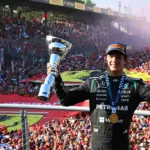
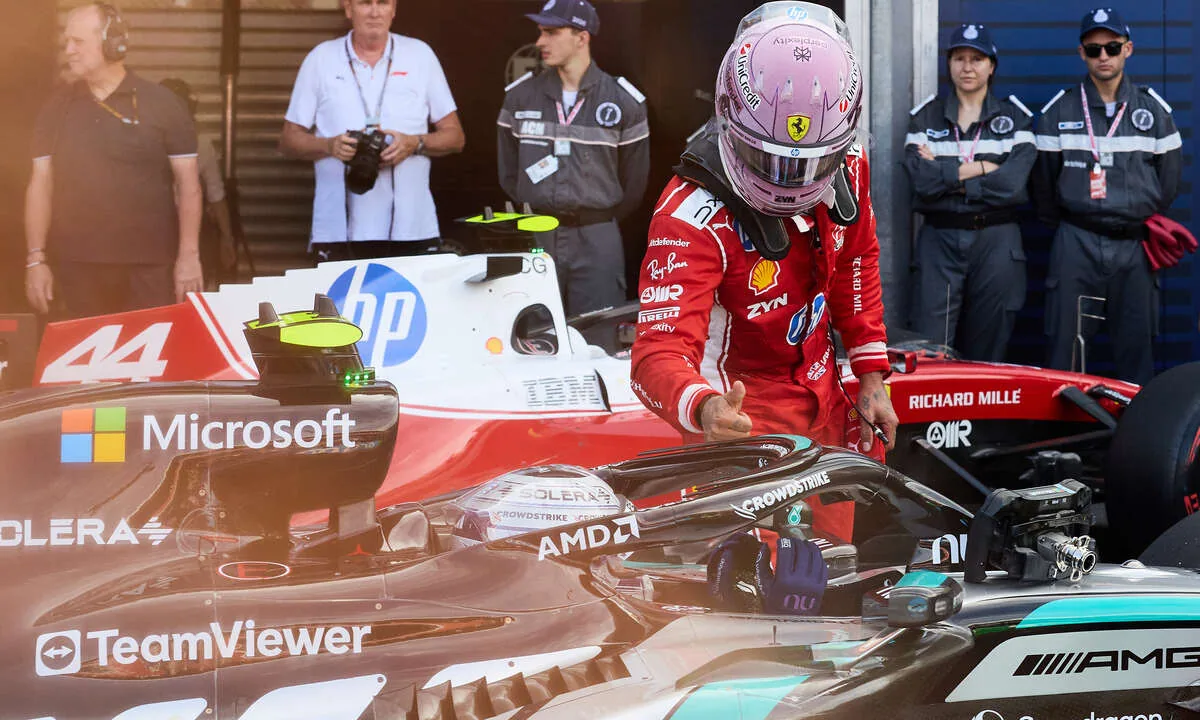
Mercedes celebrates a pole position in Monte Carlo again, demonstrating that the W17 is much more than just the engine. The Silver Arrow is also an excellent car from a mechanical and aerodynamic point of view, as well as in tire exploitation, behind which hides a team capable of extracting the maximum from the car. Up front, however, there is only one Mercedes, and it is Antonelli’s, who skillfully outsmarted Verstappen by a thousandth on the first attempt, then being able to face the second lap, which was worth pole, with more serenity.
What is impressive is the comparison with Russell, 6th at almost 4 tenths, who provides his own explanation for the gap to his teammate: “I think there’s a clear difference between our driving styles. It was there last year too, but it played in my favor, whereas now it’s clearly to his advantage.” Antonelli is a driver who demands more from the car, especially on corner entry, and therefore needs a stable rear that supports him. Ground effect cars were very difficult to balance when transitioning from slow to fast, while the 2026 cars, particularly the Mercedes, seem to give the Italian driver more confidence to attack corner entry.
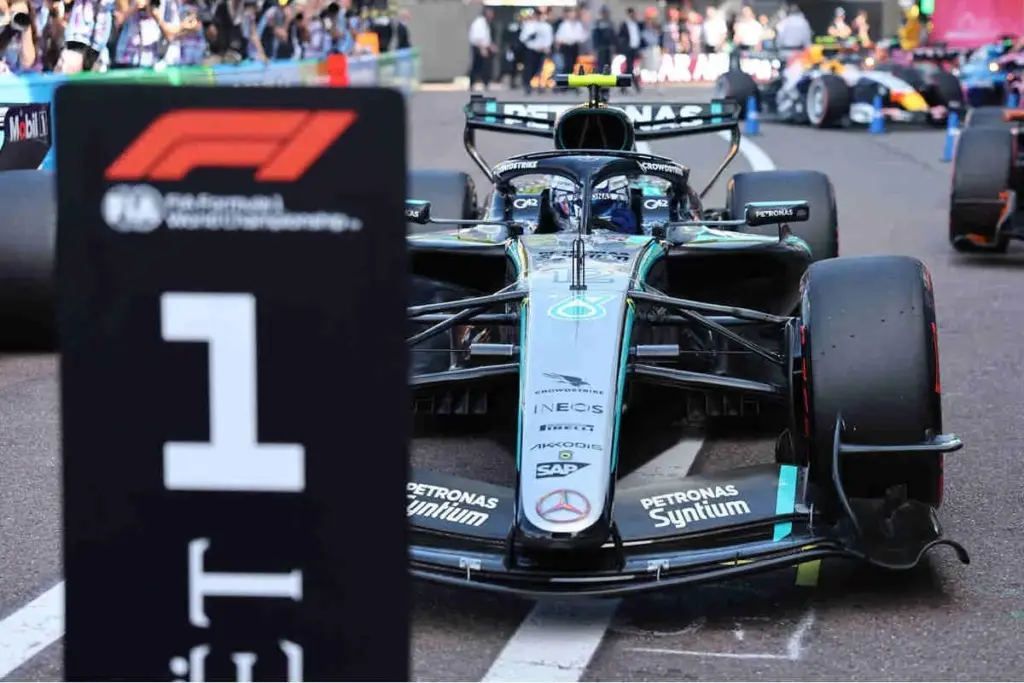
“It’s clear in the data,” explains Russell. “The difference lies in the way we drive, which also has an impact on the tires. He manages to get them into a better window than me.” The one between Antonelli and the W17 is a perfect symbiosis, whose advantages are amplified in a virtuous circle. Being able to drive without too many corrections and slides is the secret to keeping the tires in the right temperature window, allowing Kimi to continue experiencing an extraordinary period.
Verstappen outsmarts Ferrari
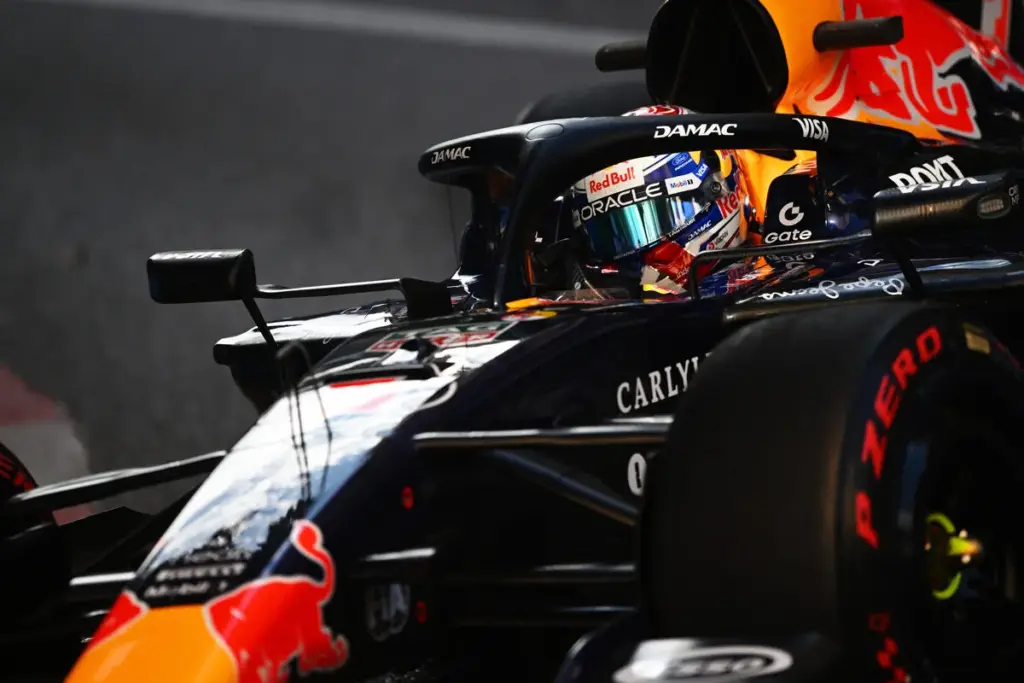
Max Verstappen’s second place certifies Red Bull’s growth, both over the season and during the Monaco weekend. The RB22 has improved significantly in slow corners compared to testing, while in Monaco the team progressively mitigated bump absorption problems, although the almost 2 tenths lost in the second sector suggest that Mercedes was better in this regard. Verstappen and Red Bull, perhaps, have something to complain about in the preparation laps, when on both occasions in Q3 the Dutchman had to get rid of Gasly and Hamilton, without being able to warm up the tires optimally. In any case, Max’s front row and Hadjar’s fifth place once again certify the quality of the debuting Red Bull-Ford power unit, on a demanding track not so much from a power perspective, but from driveability and engine braking.
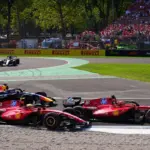
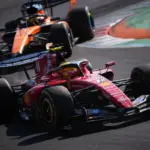
Ferrari has to settle for third position with Lewis Hamilton, an outcome that tastes like a wasted opportunity. The Prancing Horse showed it had all the cards to perform well in Monte Carlo, but failed to convert potential into results. Hamilton credits the competition, particularly Mercedes, for making a bigger leap overnight, while Ferrari is paying for some imperfections. Lewis, for example, reports that he had to progressively correct the incidence of the front wing to shift the balance to the rear, evidently struggling with a car that was too nervous and unpredictable. The English champion can still rejoice in the duel won with Leclerc, who in turn is even more in crisis with the SF-26.
Leclerc and braking problems
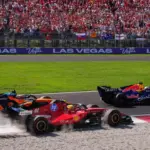
Charles Leclerc was among the big favorites on the eve of the race, and even on Saturday in Monaco, he occasionally showed he had the speed to aim for pole. The home hero, however, struggled to put everything together, with many ups and downs culminating in an accident on his last attempt, triggered by dirt picked up at Tabac. The incident was a consequence of a very troubled Q3, which began with an error on the first attempt and the need to make two more on the same set of tires. According to Leclerc, however, the harmony with the Ferrari in Monaco was not there from the first practice session: “From one corner to another, it doesn’t behave the same way, it’s extremely treacherous. We’re talking about details, but I think being in or out of the tire window all the time makes a huge difference.”
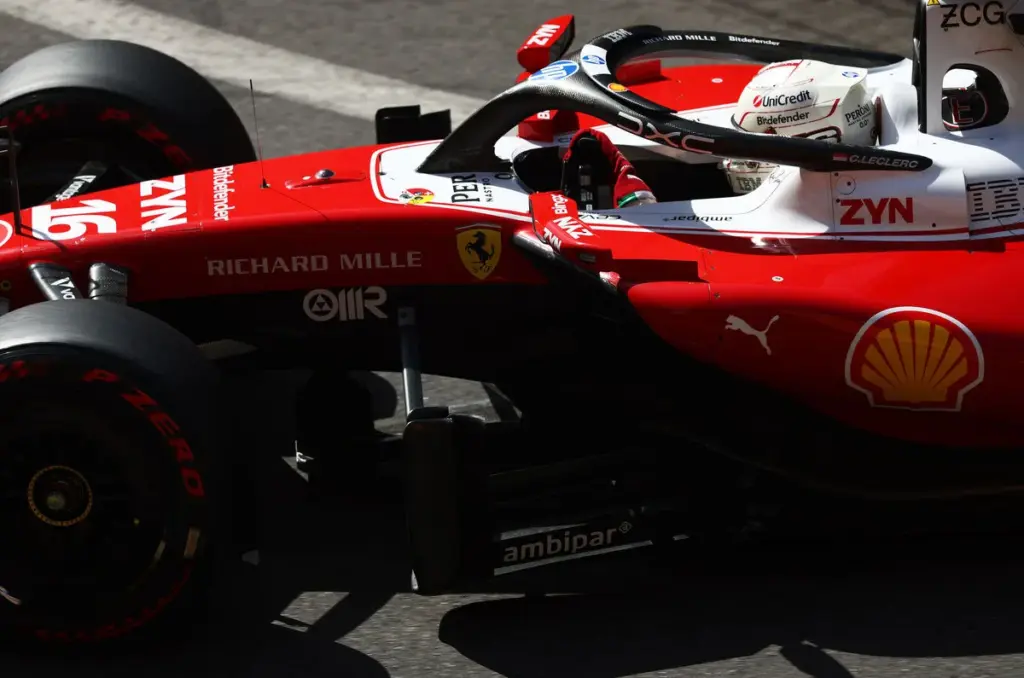
Leclerc lacked the symbiosis with the car that, instead, was established between Antonelli and Mercedes. The Ferrari driver paid the price also with the tires, often outside the operating window due to repeated corrections. Charles, however, complains mainly about the braking sensations, an aspect never mentioned by Hamilton. The problem arises from the difficulty in getting the rear discs up to temperature, which are little used on a generation of single-seaters equipped with the powerful electric brake of the MGU-K.
Leclerc, in particular, relies heavily on engine braking, unlike Hamilton, who relies more on the discs. In general, every driver has their own preferences, which is why the same behavior can elicit very different reactions. The only certainty is that since Canada, Leclerc has not had the right harmony with the Ferrari under braking, an aspect that Maranello will have to work on in the coming weeks, seeking a different management of the regenerative braking software.
McLaren hunting for correlation
Even more subdued is McLaren, relegated to a dismal fourth row. Despite the progress made overnight, the world champions can only note the lack of downforce and grip of the papaya single-seater, as well as a decidedly penalizing characteristic in Monaco, as Andrea Stella explains: “The MCL40, partly due to how it was designed and partly because we can improve, is very gentle on the tires. When there are events where you need to be skilled at putting energy into the tires, we struggle a bit.”
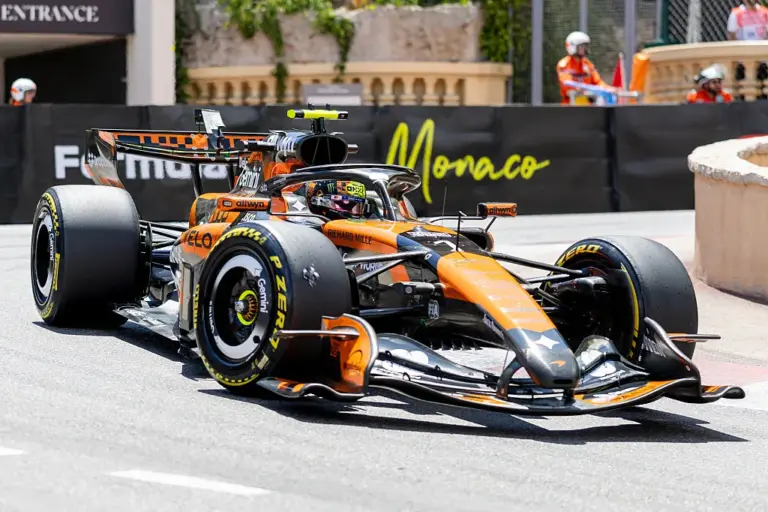
McLaren, however, used the Monaco weekend to test a modified version of the front wing introduced in Canada and then shelved. The feedback is positive, although Andrea Stella does not hide that there is still work to be done to find the right correlation with the design tools. Making the new wing work will be crucial, as it embodies a new aerodynamic concept on which some of the updates in the pipeline are based. McLaren aims to close the gap to Mercedes, which at the moment, thanks to Antonelli, continues to look down on everyone.
Read more F1 GP Monaco 2026, Race: Antonelli from pole, Ferrari hopes for chaos. The start at 15:00 – LIVE