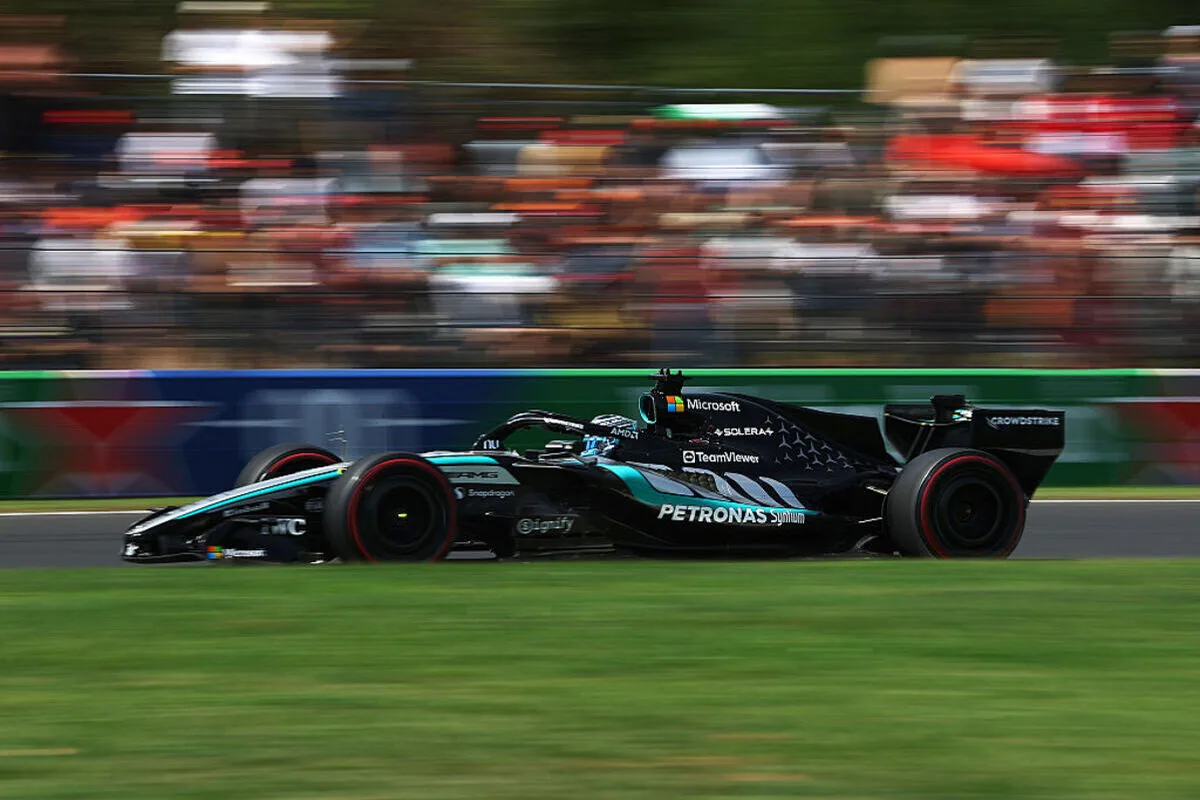



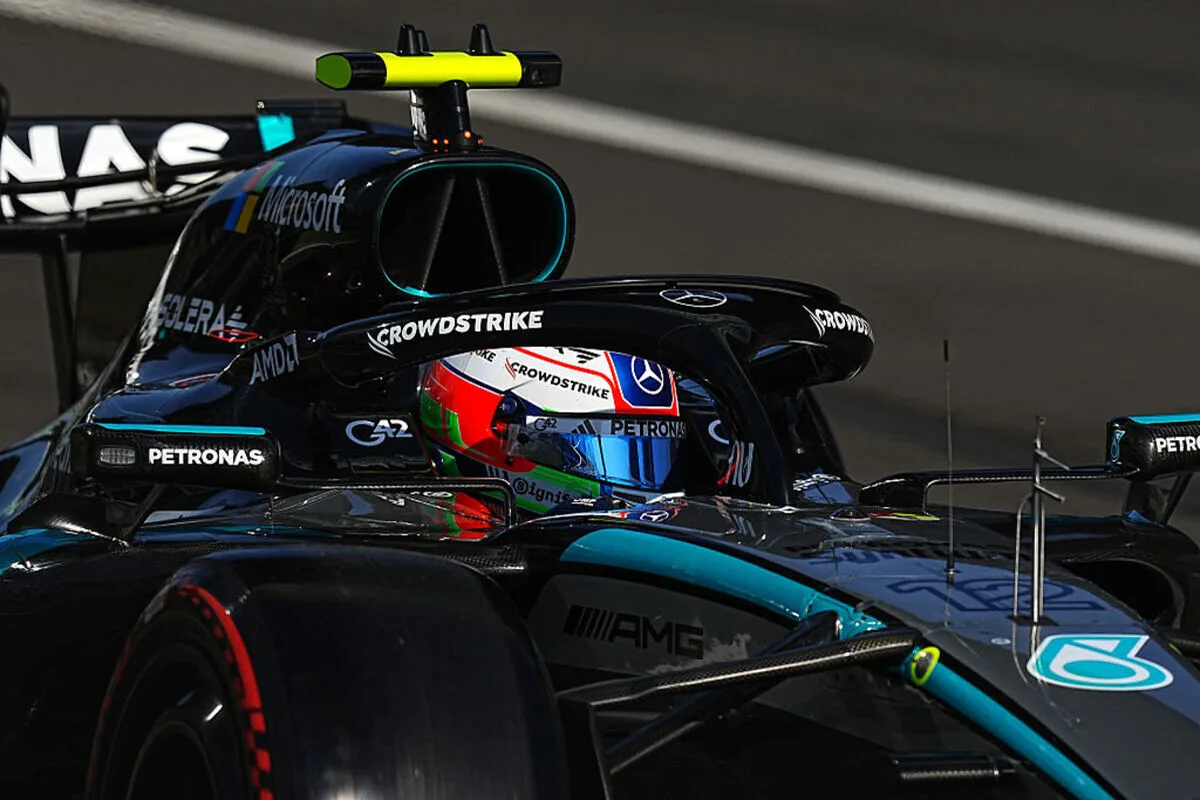
Andrea Kimi Antonelli is enjoying the lead in the world championship standings, a more than deserved reward. The Italian driver has worked hard on himself, studying the regulations and his teammate. The Bolognese driver has thus managed to automate the counter-intuitive mechanisms of this Formula 1, while learning to push at the right time without taking too many risks. The wait is now great to witness a direct confrontation with Russell, who was never truly in sync with Mercedes in Japan.
Read more Sainz: “I feel that we will make real progress during this early break”
Making the unnatural natural
Whether you like it or not, energy management is the cornerstone of today’s Formula 1. Drivers do not spare criticism and Antonelli himself does not show great enthusiasm, but, unlike other colleagues, the Italian has accepted the situation, learning in time how to adapt. “Many things are cumbersome, they don’t come naturally, but if you manage to click, you can make a difference,” says Kimi. For the Italian, the winter break was more intense than the previous one, spending a lot of time in the simulator to relearn the way of driving.
“The difference, for now, is having forced myself to make unnatural things more natural”, says Antonelli. It is a Formula 1 that goes against the drivers’ instinct, forcing them to lift off and hold back from going faster so as not to be penalized on the next straight. As many are discovering at their own expense, including Leclerc, daring more in corners can be counterproductive. Anticipating the return to the gas or spinning the tires are dynamics that increase energy consumption and disorient the battery management software, leading to losing more time on the straight than gained in the corners.
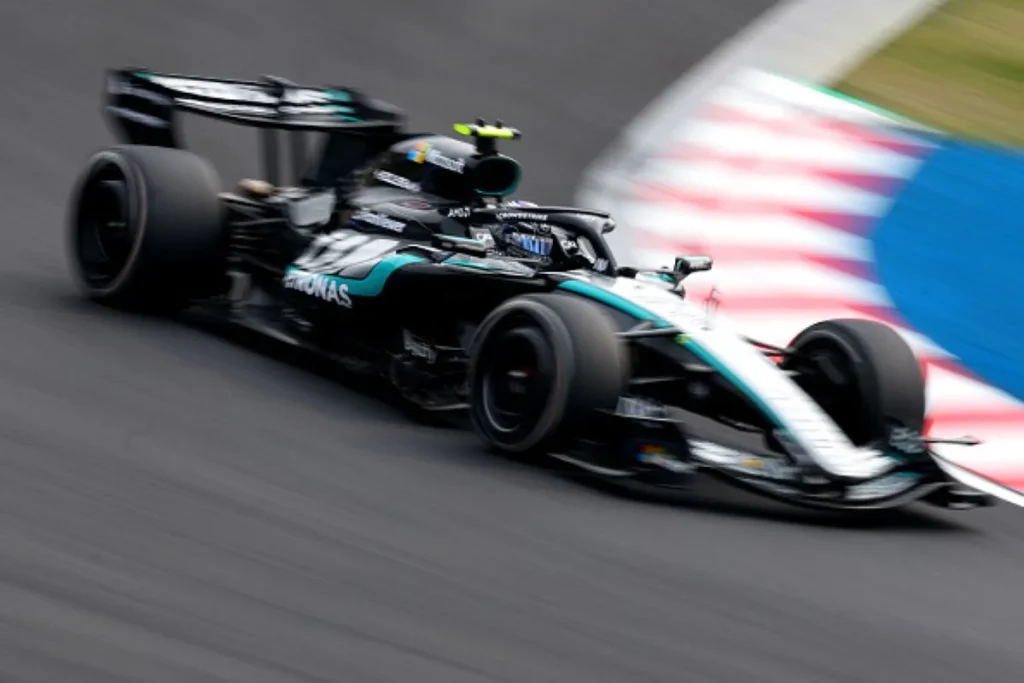
“It is very important that the driver’s inputs are constant and precise, because this makes the difference”, commented Kimi on the eve of the Chinese Grand Prix, admitting to having made a mistake in qualifying in Australia in the use of the accelerator. To win in 2026, a driving style that is nothing short of frustrating is needed, which Antonelli, however, seems to master. This was perfectly seen at Suzuka, where on the flying lap he managed energy better than his teammate, benefiting on the straight: “In my lap I gained a tenth on the straights compared to him [Russell], but it was also because of the driving style, which is a bit different.”
The approach to qualifying
Energy management is nothing short of invasive in driving, but to be the best there is still a need to take the car to the limit. This is especially true in those corners where, based on FIA prescriptions, the use of the accelerator is detached from that of the battery, being able to drive without too many second thoughts about energy. From this point of view, Antonelli has grown a lot in his approach to the weekend, pushing already in free practice so as not to arrive at qualifying with too many unknowns. The difficulty lies in doing it without revealing too much of one’s hand and without taking too many risks, a mistake made in the last free practice in Australia.
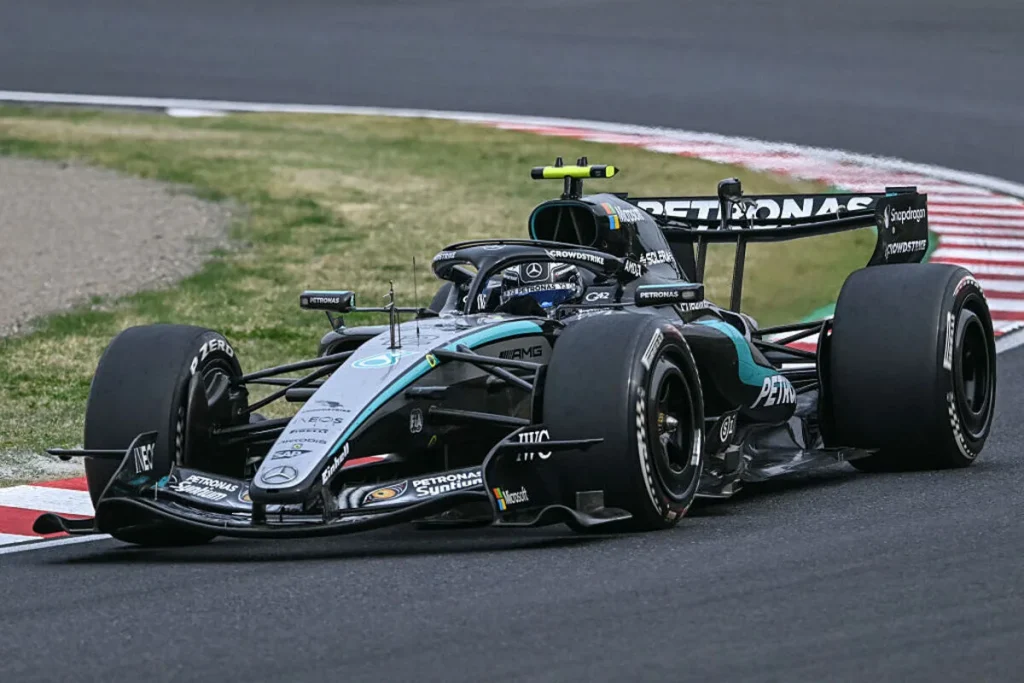
Kimi, however, has carefully studied Russell’s approach, learning how to improve lap after lap, moving the bar higher and higher. To succeed, Antonelli understood that he shouldn’t push everywhere and unconditionally, but that the secret lies in evaluating the risk-benefit ratio. The Italian is learning to identify the points where there is more margin for error and the potential gain is greater, refraining from committing imprudence in the less profitable corners.
In China and Japan, in qualifying the Mercedes Italian finally managed to improve lap after lap. The next step, now, will be to put everything together in the weekend more and more often, especially at the start. In Shanghai, at the start of the Sprint, Antonelli paid for the lack of boost from the turbo due to a procedural error, while at Suzuka the opposite happened, starting slowly due to rear wheel spin, caused by his finger slipping from the clutch lever.
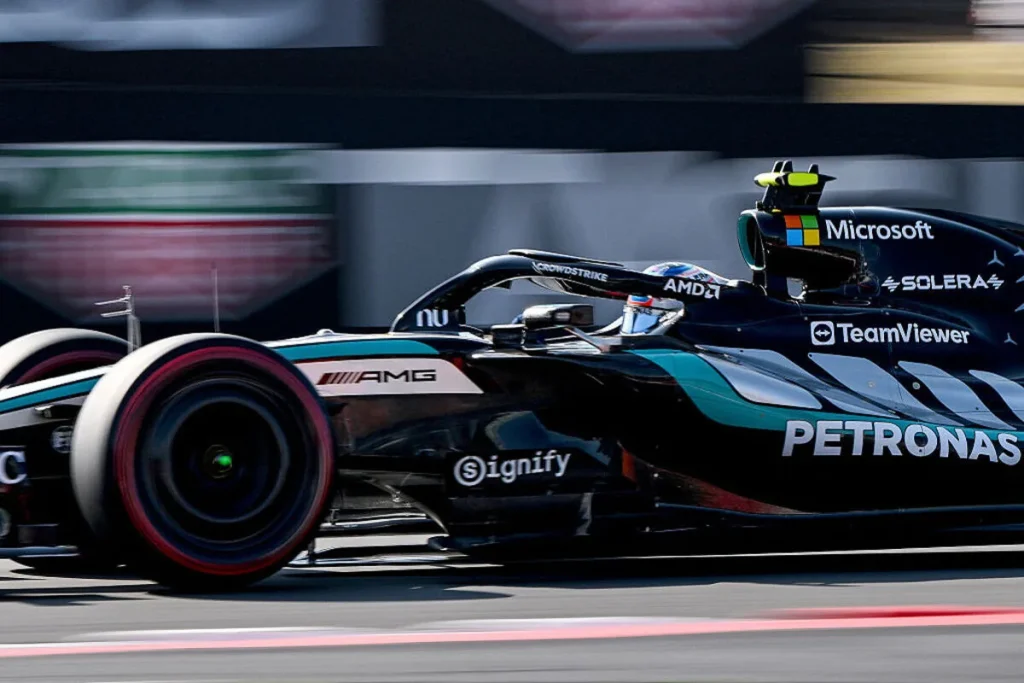
Russell will return and not just him
Waiting for the resumption, Kimi enjoys the lead in the standings, pervaded by that renewed confidence in his own abilities that only victories can give. All this does not erase the awareness that the experience gap still makes Russell the favorite for the title, recognizing his superiority in some areas. “George still makes a bit of a difference in the fast corners compared to me”, Antonelli admitted after the pole position achieved at Suzuka.
In Japan, Russell struggled with the balance of the W17 all weekend, reporting exacerbated oversteer caused by the setup changes made after the third free practice session. In China, however, it had been a technical problem that compromised his preparation for the decisive lap in qualifying, forcing him to settle for second position on the grid. Between the two Mercedes drivers, this year, there has not yet been a comparison at the best of their respective possibilities. In Australia, for example, Antonelli had raced without the team being able to fully restore the setup, having little time to reassemble the car after the crash in practice. On that occasion, Kimi had still expressed an excellent race pace, fueling the wait for a direct challenge between the two, perhaps already in Miami.
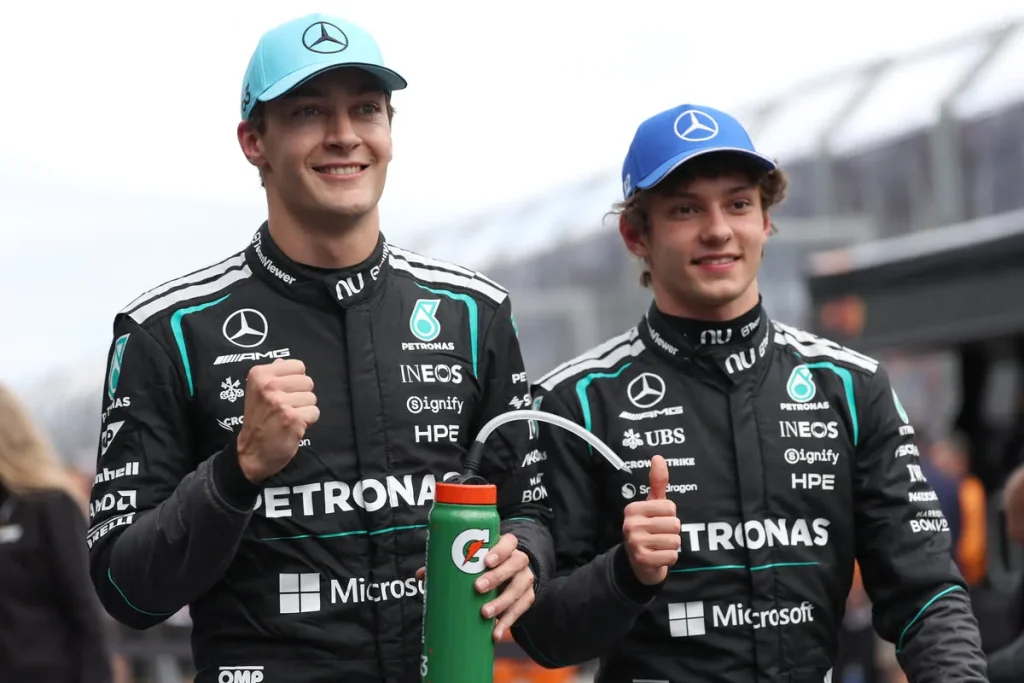
However, it is still too early to state that the world championship fight will be a private matter between the Mercedes drivers. Between ADUO, developments, and possible FIA regulatory interventions, the competition will have its opportunities to climb back up, in particular the reigning world champions. “McLaren is still using the Barcelona aerodynamic package”, observes Kimi. “I imagine the next one they bring will be an important step”. The papaya single-seater, moreover, is learning to exploit the Mercedes power unit better and better, so much so that in Brackley they are confident they can join the fight between Russell and Antonelli in the medium term.
Read more Ferrari engine, the upgrade will arrive not before mid-June