
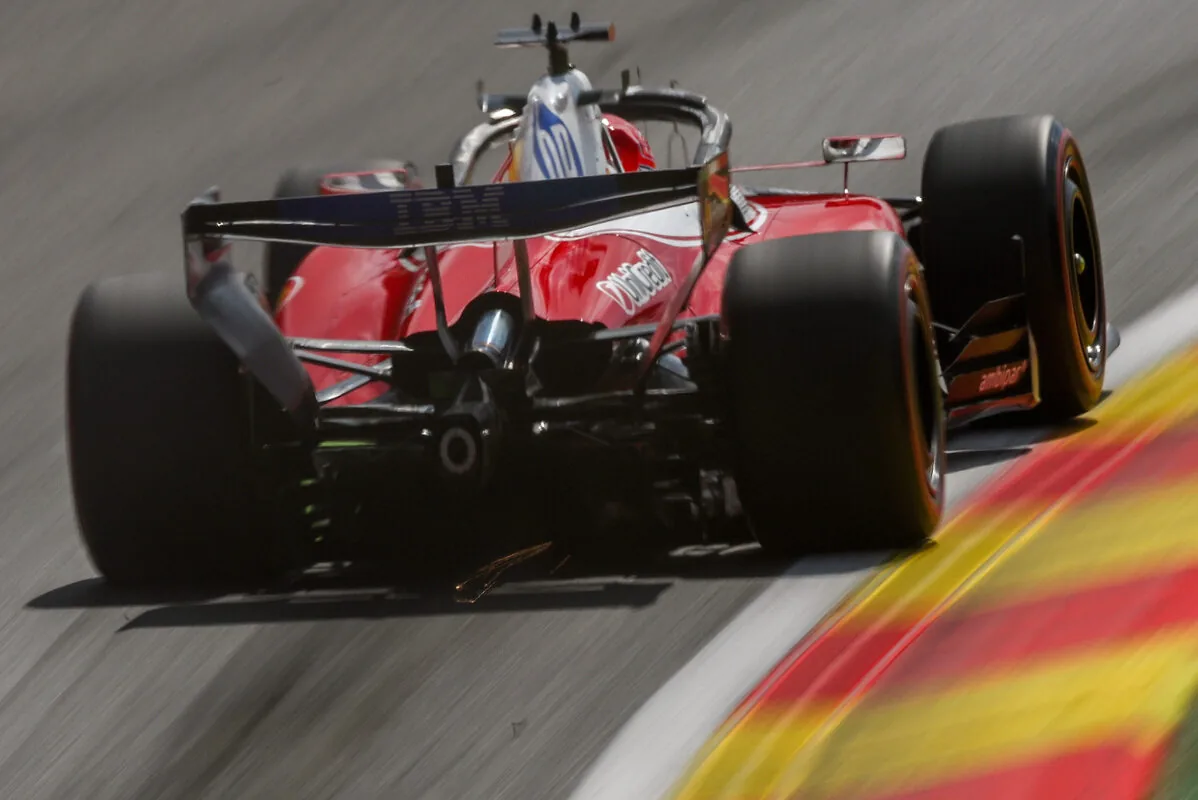
The Belgian Grand Prix could be decided in the first part of the race, unless there is a Safety Car or other twists. The scenario at Spa is that of a one-stop race, with high degradation on the softer compounds in the first stint, without particular problems for the second part. Simone Berra, Pirelli’s Chief Engineer, explains the strategies for the Belgian event, seeing Mercedes as the favorite, but also showing some curiosity about Ferrari’s pace.
Read more Verstappen: “I do not expect to fight with Mercedes and Ferrari today in the race”
Double stop unlikely
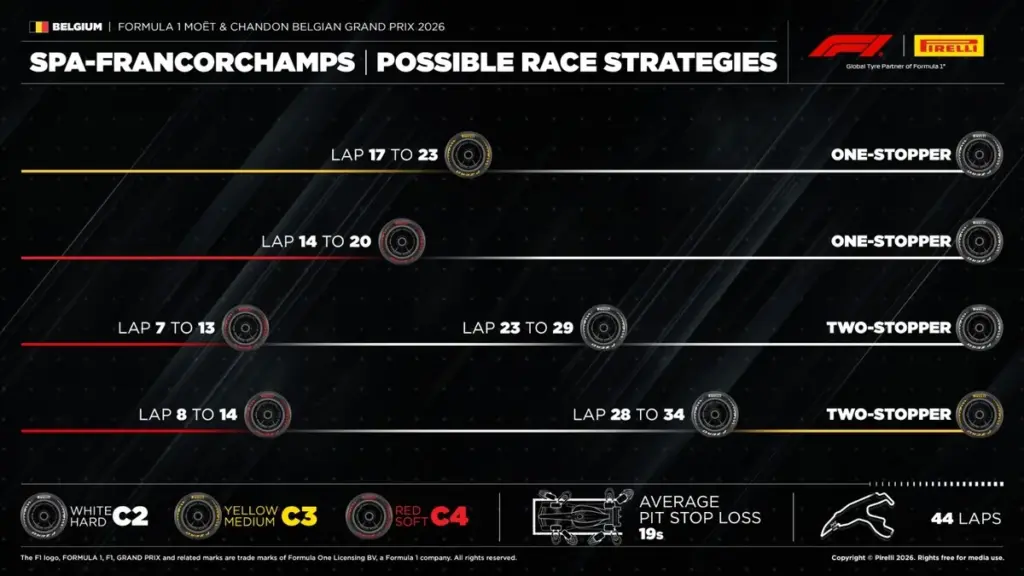
“We expect a one-stop race”, explains Simone Berra. “The double pit-stop is not far off, it is about ten seconds slower. It could come into play if a Safety Car or Virtual Safety Car allows fitting a fresher set of tires and doing a more relaxed final stint. I don’t see other reasons to have two sets of hard tires. With the double stop, you would then have to overtake on track and that is not always easy here. There is a risk of ending up in battles that would make you lose time.”
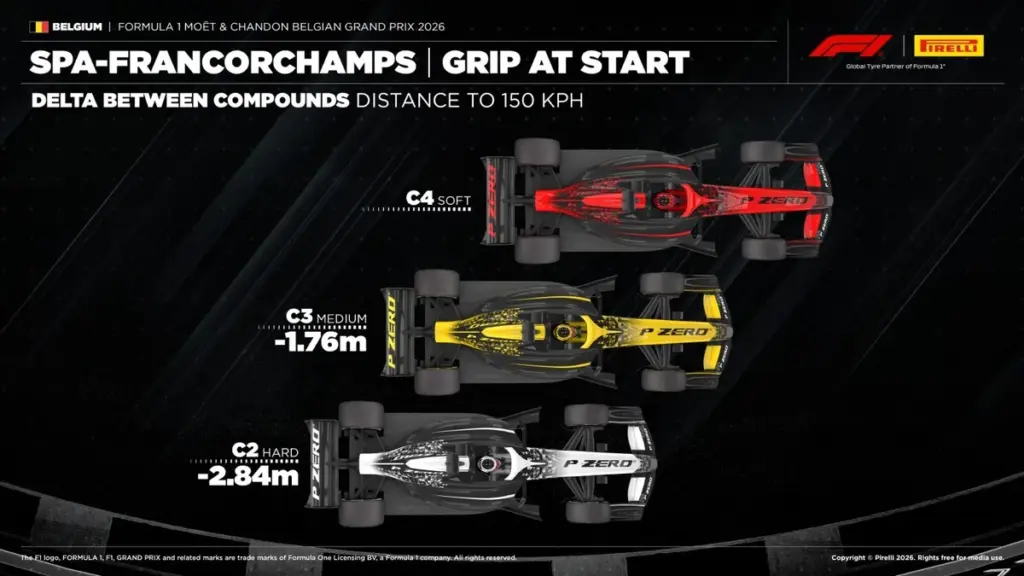
The strategies will be dictated mainly by the first stint of the race, when the softer compounds could struggle: “From what we have seen, the medium and soft have significant degradation, perhaps even higher than expected before the weekend. Both on Friday and Saturday, in race pace simulations, they lost at least one and a half to two tenths per lap. We expect this degradation to reduce a little, but still remain significant. We believe teams will tend to reduce the use of medium and soft. They will probably start on mediums, especially the top teams, then switch to hard. It has been tested little, only by three teams and not top ones. From previous race data, however, we expect the C2 (hard) to be a very consistent compound with very low degradation, allowing pushing without particular problems.”
Soft in play, watch out for the undercut
On paper, the fastest strategy is to start on mediums, then switch to hards between laps 17 and 23. Pirelli, however, keeps the door open to an alternative: “We do not exclude the soft-hard combination either, especially for drivers who have a new set of soft tires. The soft is a compound on par with the medium and for some teams it even gave more confidence and stability in race pace simulation. It is a tire that gives you more grip, so it allows you to reach the limit more easily, while the medium suffered a bit of sliding and in some cases had a more unpredictable behavior.”
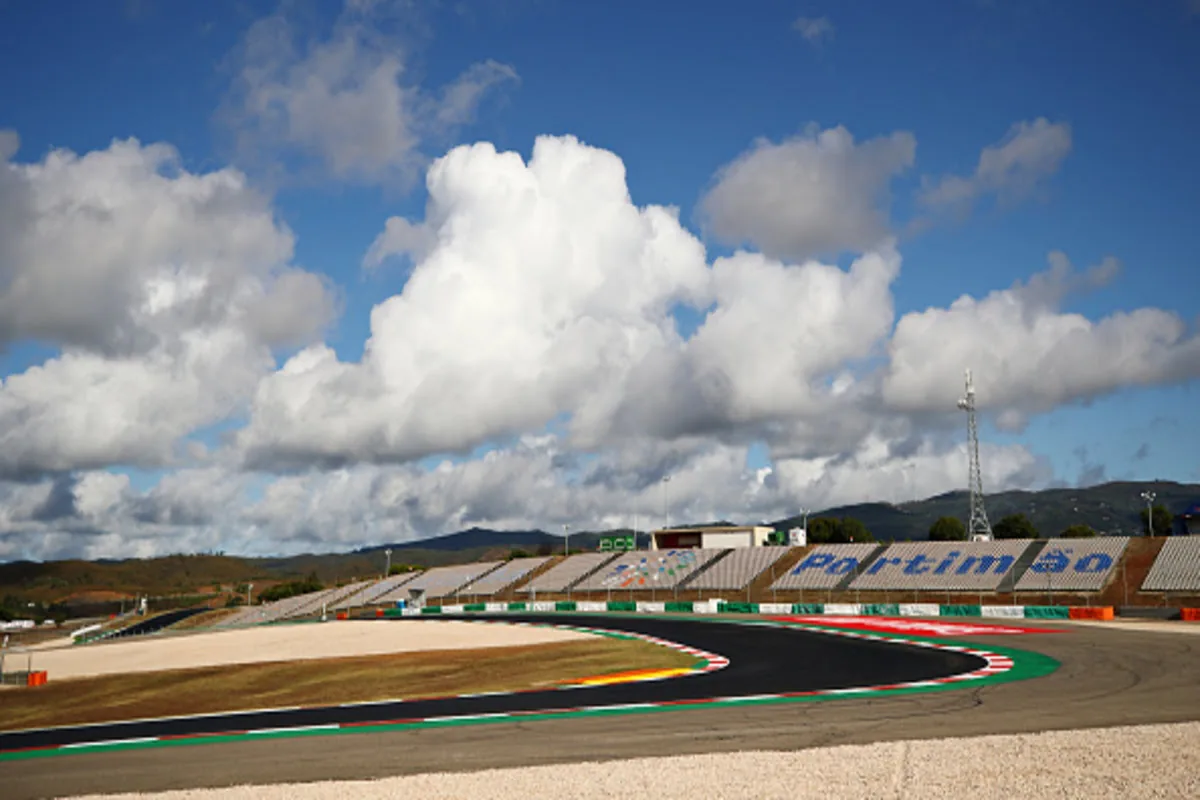
If starting on soft, the pit stop window would be between laps 13 and 19, or even earlier: “I wouldn’t be surprised if someone decides to bring forward the pit-stop a bit, because with the hard you can then extend the stint a lot, so it wouldn’t make sense to manage too much in the first stint.” However, it is not certain that the undercut will work: “The hard tire might take a bit to get up to temperature, also because after the pit exit there is the entire Kemmel straight, so the risk of losing temperature is significant, suffering a bit on the out-lap. However, there are two other points. On soft and medium the degradations are high and when that is the case the undercut is favorable. The lap is also a long 7 kilometers, so in a single lap you can make much more difference than anywhere else.”
The new Spa
According to Pirelli, the priority with the soft tires will be managing temperatures on the rear axle, contrary to previous editions, when it was the front axle that influenced race pace. “In the past, Spa was more limiting for the front axle”, comments Berra. “From the data collected this weekend, however, we see that the rear has become more limiting than in the past. This happens because teams tend to protect the front from possible graining, seen little between FP1 and FP2 and which will not be an issue for the race. Teams, however, know that the front is important to have a precise car on corner entry and that it is capable of sustaining significant loads in high-speed corners.”
The transformation of Spa is also influenced by energy management logic: “With the new regulations, we have seen that Pouhon is interpreted differently by teams. High-speed corners are an excellent source of energy recovery, so they allow managing the tire more in those points, almost for free, and this allows exploiting the rear more. This year we have seen that the rear is more stressed thermally, also due to the electric power delivery on corner exit.”
The prediction
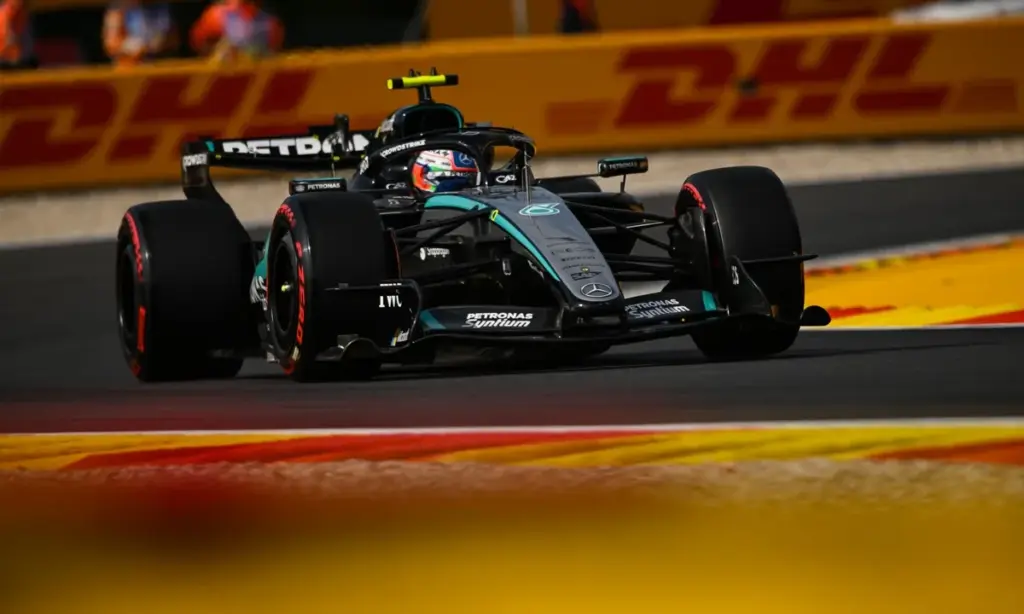
In closing, Simone Berra shares his race predictions: “Mercedes is very consistent with Kimi. He impressed me a lot in the race pace simulations he did in FP1 and FP2. I saw Red Bull with Max more struggling in managing pace, although we don’t have a control test, not knowing the setup changes between Friday and Saturday. Ferrari’s pace with Hamilton yesterday was interesting, when using the soft he maintained a steady rhythm. I don’t know if they worked much with a race perspective, given what happened in Austria, where they had much higher degradation than the competition, but in any case I see Mercedes as the favorite.”