



Smart has released the first images of the Concept #2, which will be officially presented on Wednesday. The preview comes at a significant moment for the brand, as the #2 is indicated as the heir to the Fortwo city car. And, more generally, as the next step in Smart’s lineup for Europe. The project, as already announced, sees the production version already indicated for September. It will arrive by the end of the year as a two-seater designed for the European market, having been jointly developed by parent companies Geely and Mercedes-Benz.
Read more Domenicali: “Marquez will be in shape at Jerez. He can still give a lot to Ducati”
Smart #2 is coming
The concept sketches suggest a strong link to the brand’s roots. The look appears faithful to the original 1998 Smart and even seems to recall the setup of the third-generation restyling, whose production concluded in 2024. This visual continuity leads one to believe that Smart considers the #2 a true continuation of the Fortwo line, and not just a simple stylistic evolution. Among the most evident novelties are the more “bulky” bodywork and wider wheel arches. These details closely resemble the aesthetics of the electric Smart #1, #3, and #5. Despite this, the basic signature with wheels positioned at the corners of the bodywork remains unchanged.
Read more Changes to the regulation: what will be the consequences
City car that recalls the past
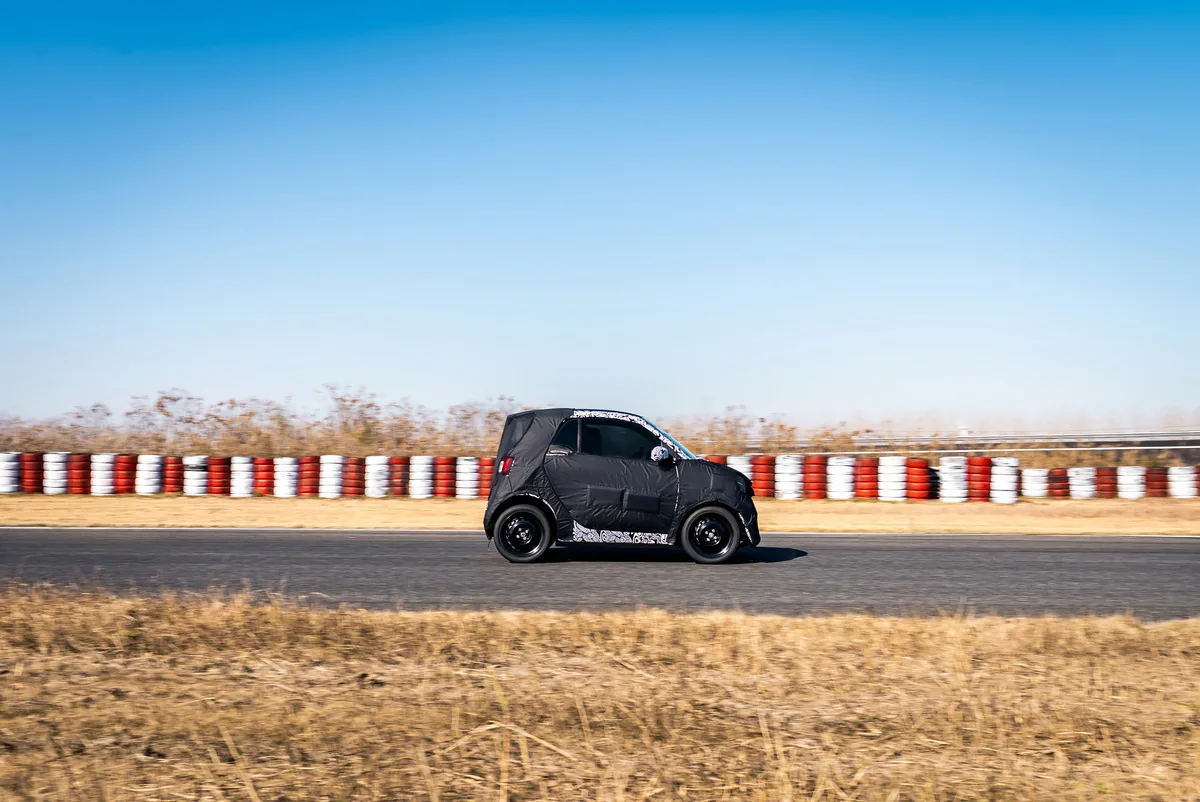
Smart describes the Concept #2 as a “reinvention” of the iconic two-seater city car, with a “new identity” signed by Mercedes but with the will to preserve the brand’s “fundamental genes”. The presentation will take place at the Beijing Auto Show alongside the #6, the first Smart sedan also planned for the UK after initial sales in China. The electric two-seater will also become the brand’s new entry-level and will use the ECA platform, developed for the first time jointly by Geely and Mercedes. During December tests, the platform was coupled with the third-generation Fortwo bodywork to verify proportions and setup. The possibility remains open that, in addition to the planned motorization, this platform could also support more complex solutions, such as a dual motor.