







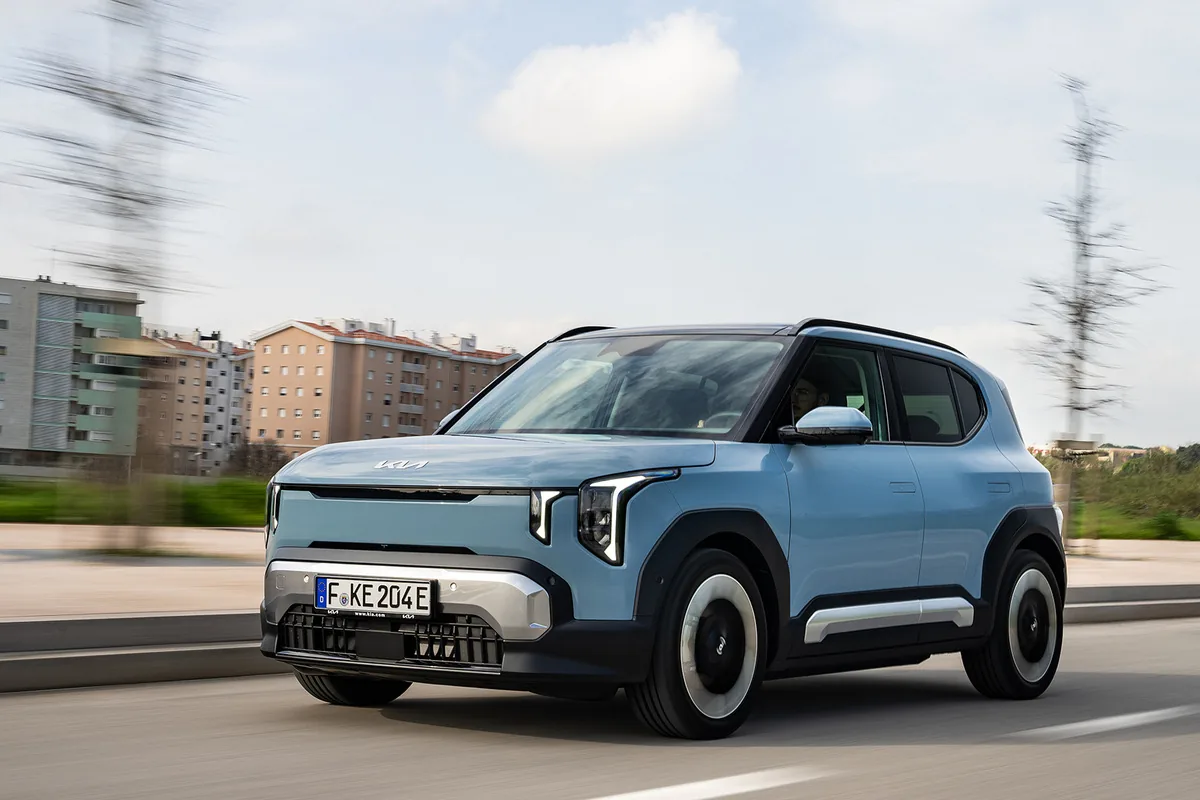
KIA aims to accelerate its growth in the global electric vehicle market with ambitious goals by 2030: reaching one million units sold per year and capturing a 3.8% share of the global EV market. To transform these goals into concrete results, the strategic plan is based on three pillars: increasing the competitiveness of 100% electric vehicles, making them more accessible, and consolidating the supply chain of the entire EV ecosystem.
Read more Piquet Jr: “Piastri and Antonelli’s rookie seasons? Nothing compared to Hamilton’s”
KIA’s strategy in the electric market
On the competitiveness front, the Korean manufacturer aims to expand its electric range to 14 models by 2030, including two passenger cars, nine SUVs, and three PBV (transport vehicles) models. Starting with the new launches, with EV2 and Syros EV, KIA will continue to focus on high-volume offerings, accompanied by a C-segment electric SUV and an increasingly articulated PBV range, so as to offer more choice in the main market segments.
Modular platform
In parallel, the company is developing the next generation of its dedicated electric vehicle platform, the Global Modular Platform, with the goal of improving performance and costs. Among the main interventions, an increase of up to 40% in battery capacity, a 9% improvement in motor power, a cost reduction of up to 30%, and the introduction of fifth-generation batteries with 15% higher energy density are expected.
Read more Japanese Vendetta
Focus on charging infrastructure
To promote accessibility, KIA is also working on charging infrastructure, forming partnerships with operators such as Electrify America, IONNA, and IONITY to expand ultra-fast charging networks in key markets. In Korea, furthermore, the company will participate in the expansion of the Hyundai Motor Group’s E-pit ultra-fast charging brand, while in major markets it claims to have achieved broad coverage: approximately 240,000 charging points in North America, 1 million in Europe, and 480,000 in Korea, for both fast and normal charging. Finally, to strengthen the supply chain, Korea is designated as a global hub for the development and production of EVs across various segments destined for international markets.
Read more From junior categories to F1: the shortest paths besides Antonelli’s