








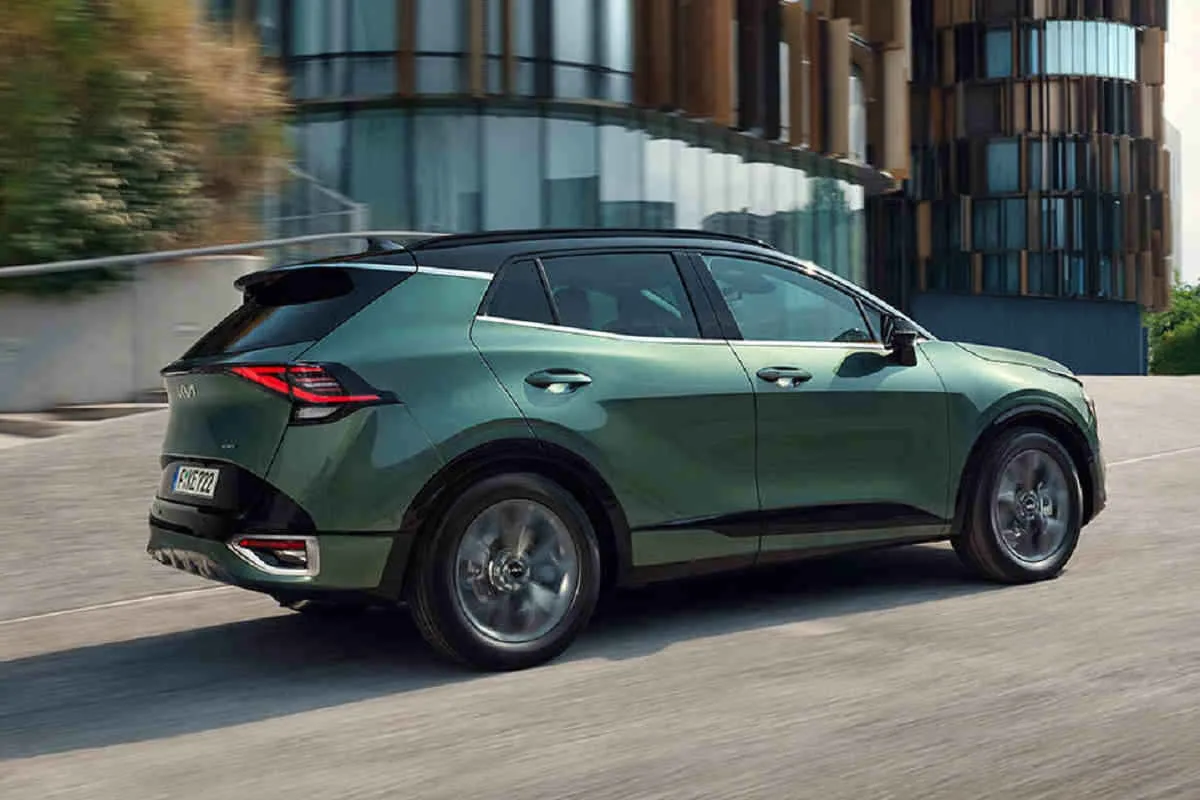
KIA plans to continue the expansion of its range of internal combustion engine (ICE) vehicles and hybrid electric (HEV) solutions, following the electrification rates that change from market to market around the world. The Korean manufacturer aims to build an increasingly broad powertrain portfolio by the end of the decade: with the launch of nine new thermal models and ten new hybrid models, the overall goal is very ambitious. The goal is to reach approximately 1.98 million annual sales of ICE vehicles and 1.15 million annual sales of xHEV models, including PHEVs and EREVs.
Read more The ‘unintentional overtakes’ also worry Brundle: “This is a big problem for the FIA”
KIA focuses on ICE and HEV engines
On the ICE front, KIA intends to strengthen its presence in the SUV category by introducing relevant models such as Telluride and Seltos, already launched this year. At the same time, the offensive on hybrid vehicles continues: starting this year, Telluride HEV and Seltos HEV will arrive, followed by further hybrid proposals such as K4 HEV. The Korean manufacturer also confirms its orientation towards emerging markets with the further development of the pick-up range: after the debut of the Tasman last year, the company aims to add a new pick-up with a Body-on-Frame structure by 2030, with HEV and EREV variants, mainly focused on the main North American markets.
Read more F1 roots for Sinner: parade of drivers at the Monaco Masters 1000 for Jannik
Improving technological competitiveness
KIA’s hybrid strategy is also based on improving technological competitiveness. In this sense, the Korean manufacturer highlights improvements in fuel efficiency and power exceeding 4% thanks to the introduction, earlier this year, of a next-generation hybrid system. Furthermore, typical features of premium electric vehicles, such as Stay Mode and Vehicle to load, are also applied to hybrid models. Looking ahead, KIA aims to increase HEV vehicle sales from 690,000 units in 2026 to 1.1 million annually by 2030, also investing in additional production capacity for approximately 400,000 hybrid units in the medium-to-long term, with plants in Korea, China, India, and Mexico as key supply hubs to support demand in various markets.