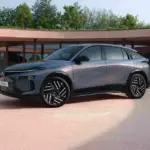






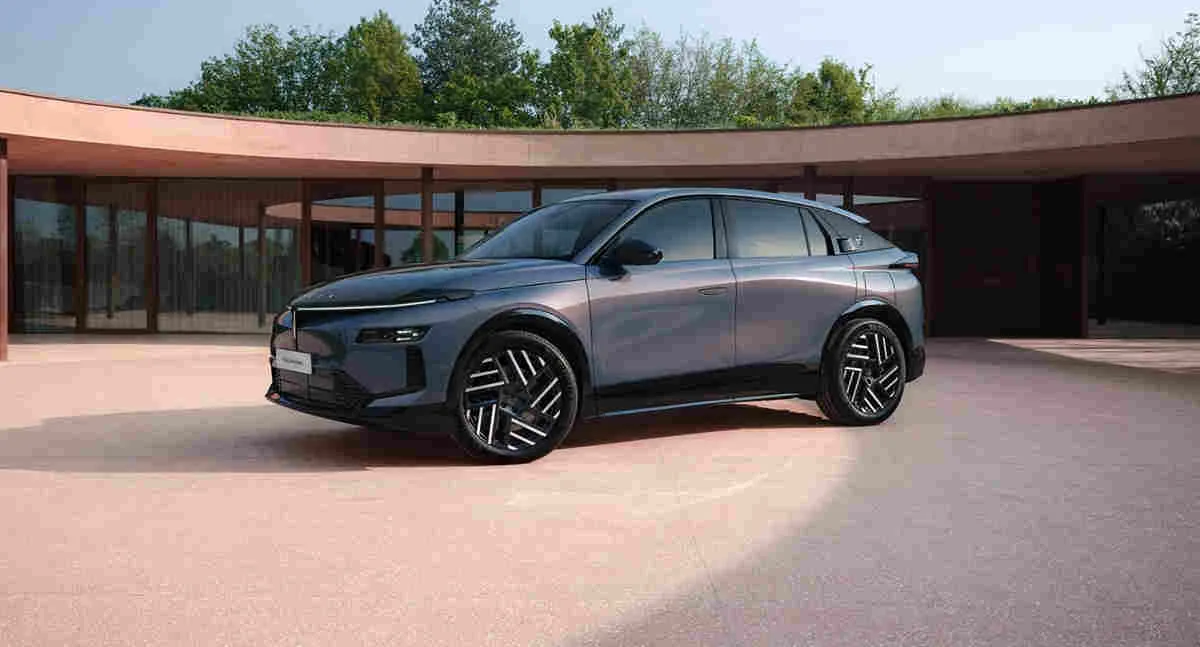
In a room of the Ministry of Enterprises and Made in Italy, the new Lancia Gamma was presented. There were Minister Adolfo Urso, the president of Basilicata Vito Bardi, Stellantis managers Emanuele Cappellano and Antonella Bruno.
The scene is familiar. It talks about skills, the supply chain, European competitiveness, Made in Italy. Melfi is mentioned as a stronghold. It is recalled that Lancia is one hundred and twenty years old, enough time to have been synonymous with elegance, then decline, then absence, and now a return in the form of a four meter and sixty-seven centimeter long fastback crossover.
Lancia, which once offered legendary cars, returns to a segment where today everyone looks alike. Hybrid and electric, range of over a thousand kilometers in the hybrid version, up to seven hundred and forty in the battery one, topped by an all-wheel drive with three hundred and seventy-five horsepower.
But why the presentation at the ministry? This car is born in Turin, developed in Italy, produced in Melfi. Designers, engineers, workers, about thirty Italian suppliers, about ten from Basilicata. The circle closes.
The strategy
Antonella Bruno said that Gamma is “an Italian project in the fullest sense of the term.” Emanuele Cappellano added that Italy continues to have a role in Stellantis’ strategy, but that the future of the European car will depend on today’s rules: support for Made in Europe, compacts, commercial vehicles. Right phrases, said in the right place. The ministry, after all, also exists for this.
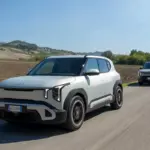
Read more KIA EV2 Long Range, up to 453 km of range
The point, as always, lies in the gap between the ceremony and the road. Melfi, which also produces Jeep Compass and two DS models, is a piece of the industrial geography of a group that has long ceased to coincide with a single country. Lancia at the center of the project, then, but the center is mobile. Turin designs, Melfi assembles, Europe buys – or should buy – and Rome presents. It is a possible Italy, not triumphant. An Italy that holds together the Style Center and the line, the brand that was and the market that is.
The second model
After the new Ypsilon and the return of the HF badge, Gamma expands the offer and seeks a mixed audience, private and business, with Italy still the heart of the brand and the declared European ambition without too many euphemisms. Nothing lyrical. Rather something rarer around here: an attempt at continuity. Not the mythological rebirth of made in Italy, but the more prosaic hypothesis that an ancient name can still fit within a contemporary platform.
Outside the ministry, the Italian car has for years been more talked about than driven. There is discussion about transition, tariffs, Chinese, factories that stay or leave. Then, from time to time, a presentation arrives and for an afternoon the country recognizes itself in a bodywork. Because Lancia, more than other brands, carries with it the memory of when industry could also be style, that is, an idea of itself. Today style is a department, production a site, politics a table. It remains to be seen if, put together, they still make a car that someone desires, or just a launch that someone applauds.
Read more Calendar 2027, Verstappen smiles: no clashes with Le Mans, Nürburgring, and Spa