

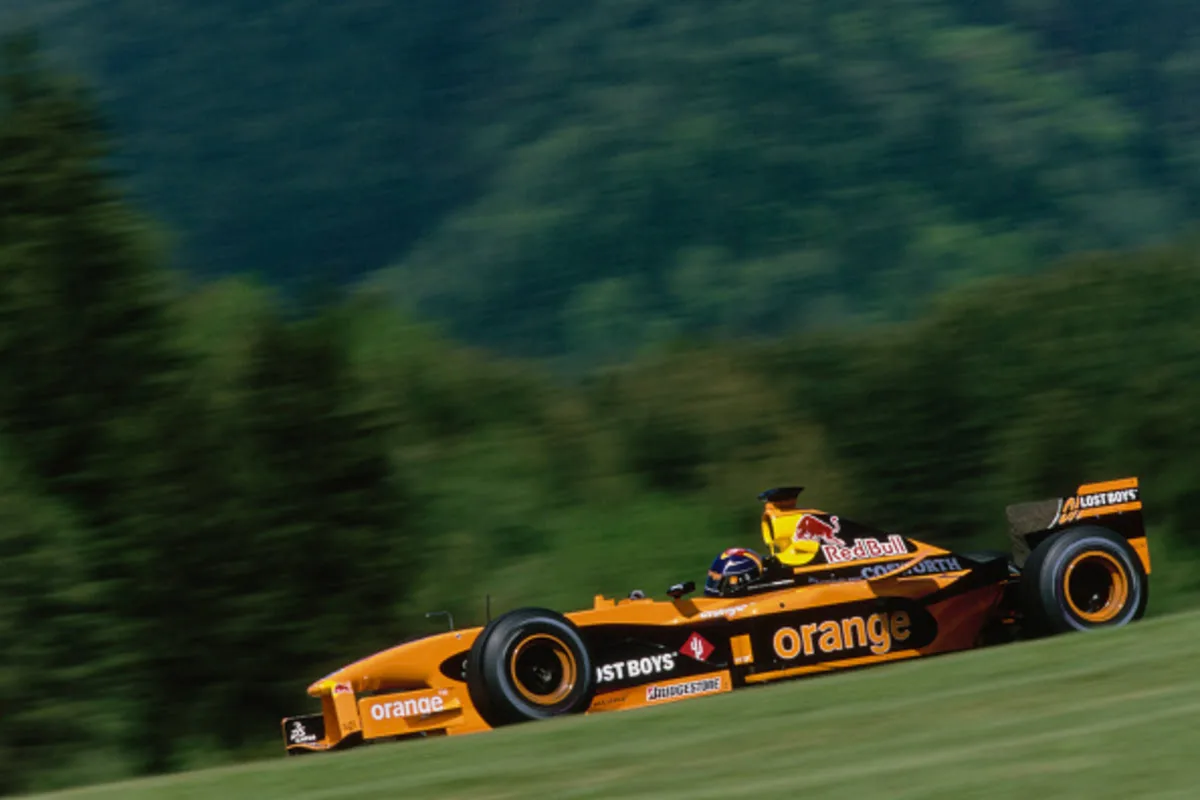
Hockenheim unnatured
2002 German Grand Prix: for true F1 lovers, the edition of that weekend represented a sort of shock. For the first time, in fact, the practice sessions and the race were held on a completely changed layout, characterized by a significant reduction of the track due to the reforestation work of the long straights present in the heart of the forest that canceled the old configuration used since the 1960s (albeit with some subsequent modifications) until 2001. The protests of the fans about this drastic intervention were of no avail, with the 2002 GP also representing another end, this time of a team.
Read more Ralf Schumacher: “Ferrari has been a big disappointment”
The first steps of Arrows
Exactly 24 years ago, on July 28, 2002, the race was the last in the history of Arrows, a team founded in England, more specifically in Milton Keynes (today the headquarters of Red Bull) in 1977. A British team born from former Shadow members such as Alan Reed, Jack Oliver, Dave Wass, and Tony Southgate, but also and above all from the Italian financier Franco Ambrosio. Not by chance, at first, there was a project to name the team Ambrosio Racing Team, based in Italy. Besides the founders, other members came from Shadow, including Riccardo Patrese, who became the first driver in the history of this team along with Rolf Stommelen for 1978. A year that thus represented the debut of Arrows in the Circus, not without difficulties: the first was a lawsuit filed by Shadow (which accused the new team of designing an identical car), followed by Ambrosio’s arrest for financial crimes, as well as the accident involving Patrese at Monza in 1978, the same one that later cost Ronnie Peterson his life (the Venetian driver was later cleared of all charges). Previously, at the 1978 Swedish GP, Patrese brought Arrows to the podium for the first time with an excellent 2nd place, with the team immediately setting a great goal: victory. A milestone that, despite drivers of a certain level, was never achieved.
Very close to the dream
Patrese left Arrows in 1982 (a year after the team’s first and only pole position at the Long Beach circuit), but precisely in that decade the team could count on the 1980 world champion Alan Jones, Thierry Boutsen (2nd at Imola in 1985), as well as Gerhard Berger, Derek Warwick, and Eddie Cheever. The 1980s were definitely brilliant years for the team, which however began its decline in performance in the early 1990s, when businessman Kazuo Ito invested in the team, which took the name Footwork. Even here, despite drivers of the caliber of Michele Alboreto, the dream of victory never came, as in 1996. The team was acquired that year by Tom Walkinshaw, who signed the reigning world champion Damon Hill for the following championship. It was he, at the Hungarian GP, who came close to victory; leader of the race until the last laps, the British driver was betrayed by a gearbox failure, finishing 2nd.
Read more Conflict in the Middle East: Barcelona and Monza ready to replace Qatar and Bahrain
The failure
Since then, step by step, Arrows’ stay in F1 became increasingly complicated. After a series of retirements, Jos Verstappen achieved 4th place at the 2000 Italian GP, which turned out to be the last significant result for the English team. The end came in 2002, with the team losing two lawsuits: Verstappen was the first to sue the team, accusing it of replacing him with Frentzen in that very season, violating his contract. Subsequently, the same happened with Diniz, who moved to Sauber in 1999. For the team, the last presence in the Circus was therefore the 2002 German GP at the new and unwelcome Hockenheim, with retirements for Frentzen and Bernoldi. Five podiums, one pole position, and a total of 382 GPs, all without wins: a negative record in F1 history.
Read more 5 different winners in 5 races: from Formula-Mercedes to Formula-balance