

It is a Spa different from previous years, diminished in several points by the counterintuitive logics of energy management. Yet, Andrea Kimi Antonelli still managed to make a difference, finding half a second at the decisive moment, finishing strong a qualifying that started with difficulties. Ferrari, on the other hand, acknowledges its own power unit limits, but also that it has the right car for the wrong regulations.
Read more Rally d’Estonia 2026, Day 1: Pajari the man to beat. Seven wins out of seven stages
Antonelli’s progression
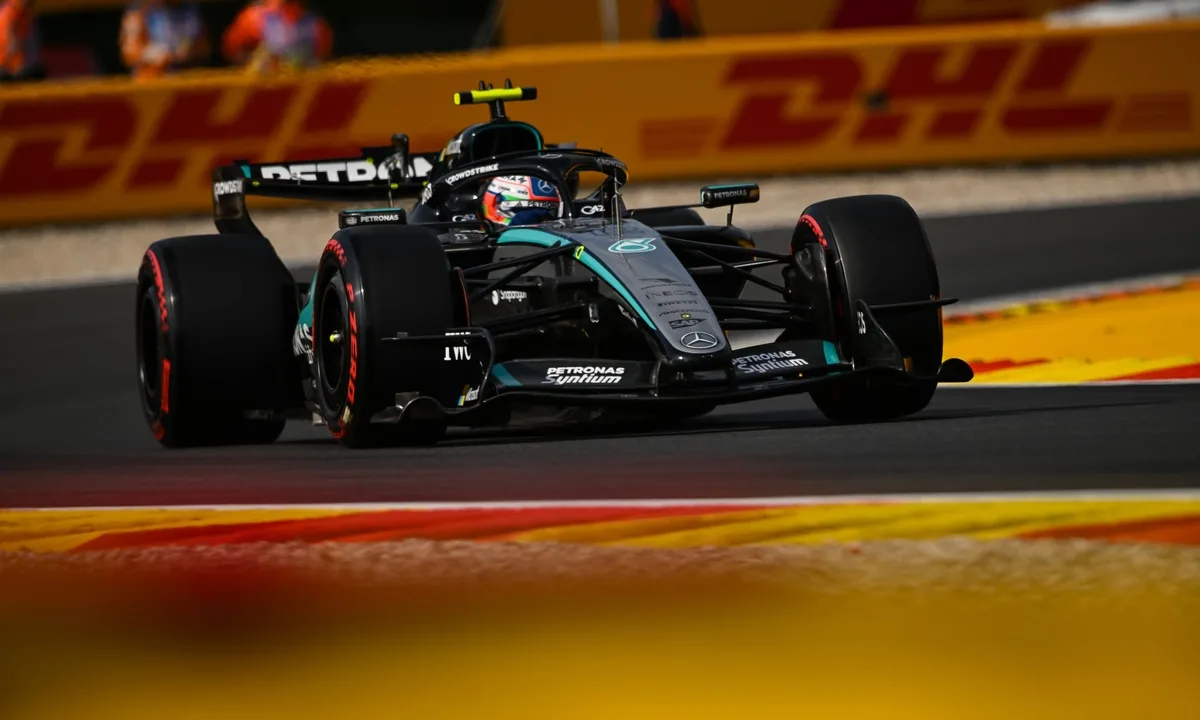
It was well known that Mercedes was the car to beat at Spa, but it took some time before the full potential of the W17 emerged. The start of the weekend was not the best, with the Brackley team guilty of overestimating the grip level of the Belgian track, showing up with a setup that was too low downforce. The team then rushed to fix this, without completely giving up on the new low downforce package, which further strengthened the Silver Arrows’ superiority on the straights.
Work at Mercedes continued during qualifying, after a Q1 in which Antonelli complained about the balance, also due to the increasing wind. The track cooling by as much as 5°C helped in the following sessions, but the credit goes mainly to the adjustments to the front wing angle and some steering wheel settings, including the differential. Kimi thus arrived at Q3 with much more confidence in the W17, setting a good first lap that allowed him to push even more on the next one.
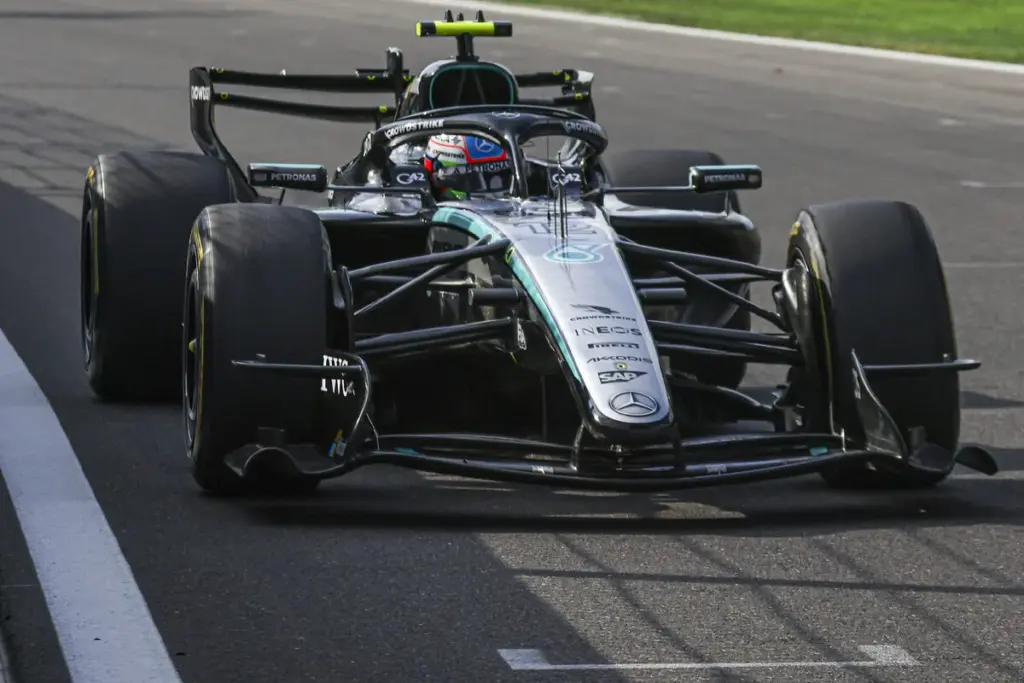
It was precisely at the decisive moment that the Italian made the difference, finding as much as half a second in the central sector alone. Feeling the car in his hands, Antonelli brought more speed through all the corners, managing the side effects. Pushing more, in fact, the ECU intensified the clipping and recharge phases to compensate for the energy strategy, changing the braking reference points, to which Kimi, however, adapted masterfully. The result is a pole position of great importance for the Italian, who put half a second between himself and a Russell increasingly in trouble.
McLaren’s hidden leap
In the usual interviews, George Russell pointed the finger mainly at the time lost on the straights, especially in the third sector. The same dynamic happened to Oscar Piastri, also heavily held back by his teammate. The Australian paid for an anomaly in energy management, quantified in a couple of tenths and which perhaps Russell also suffered from. The suspicion, however, is that the driving style also played a role, which can have a great influence on energy efficiency. Both Russell and Piastri are also drivers who in the past struggled to adapt to driving in low grip conditions, somewhat similar to what is required with these cars, which demand a cautious and smooth approach to avoid upsetting battery management.
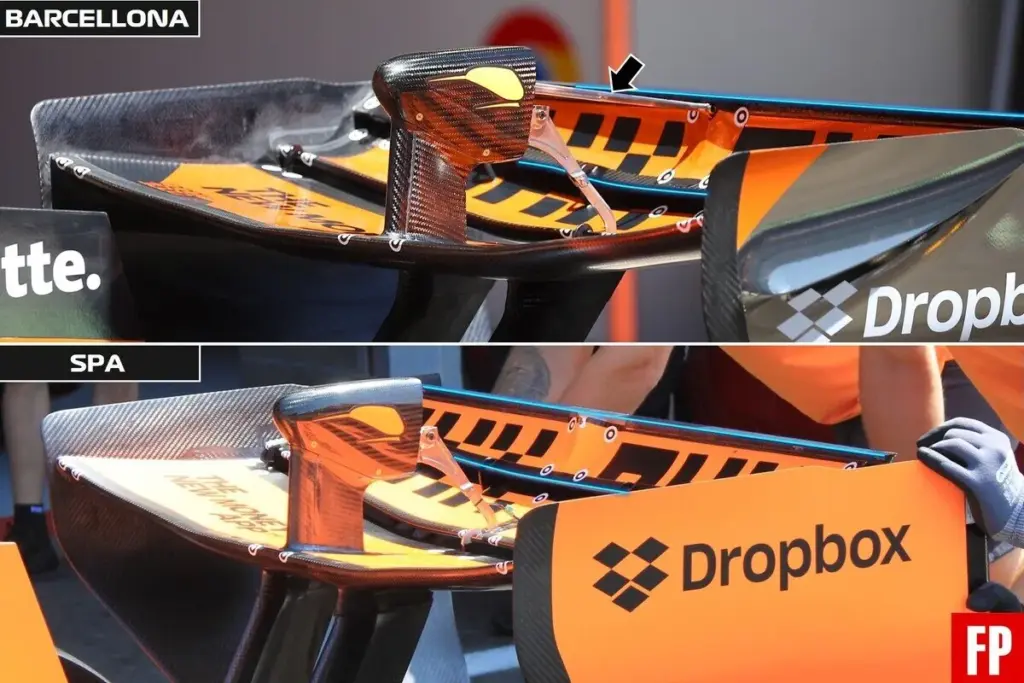
The energy front is precisely where McLaren has made the most important progress, as evidenced by Norris’s virtual third place, net of the grid penalty. The papaya team has finally received from Mercedes some unidentified tools to simulate and optimize power unit control strategies, starting to recover the delay from the start of the year. Besides this, McLaren has shown to adapt well to the Belgian track, where the MCL40’s lack of downforce is less felt. In fact, the world champions even brought a new low downforce wing, which alone yielded between 1 and 2 tenths on the straight. In the third place in qualifying, however, there is also a lot of Lando Norris, who said he delivered one of his best laps in his career and who would hardly have improved even without the mistake on the second attempt.
Read more Kimi flies, Russell insists: “I lost 4 tenths on the straight, we have to admit there is a problem”
Verstappen’s strike
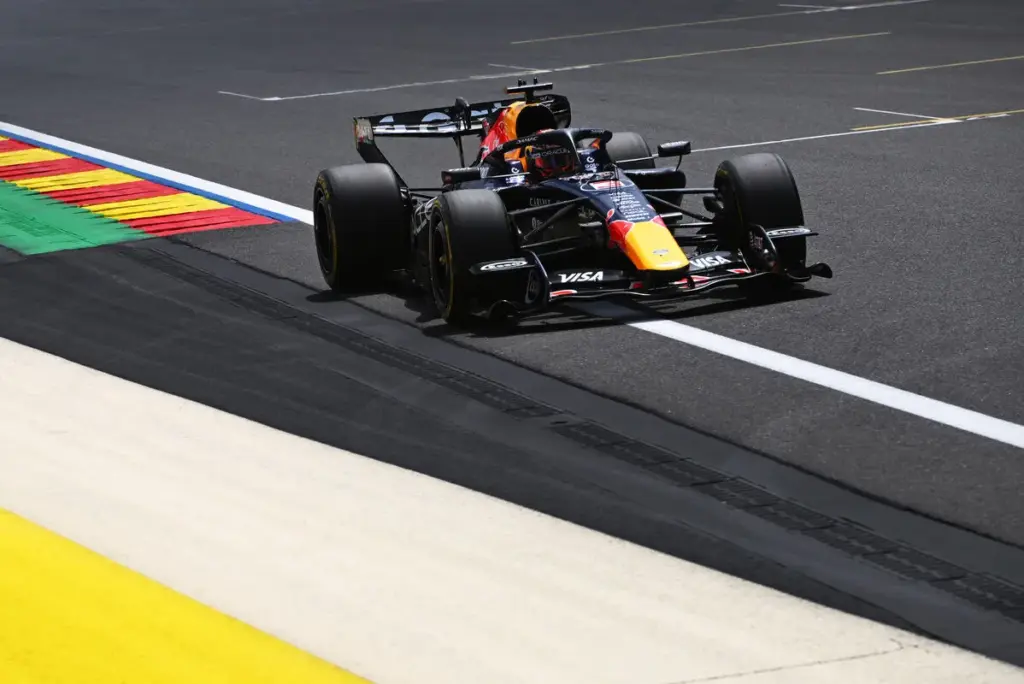
Alongside Antonelli on the front row will start one of Kimi’s greatest admirers. Max Verstappen, however, does not delude himself, acknowledging that he does not have the pace to stay with Mercedes in the race, after losing 3 tenths in qualifying, despite the slipstream from his teammate. The Dutchman quantified Hadjar’s help between 2 and 3 tenths, without which he would have found himself in the third row. For Verstappen, however, the best news is having felt comfortable with the RB22 throughout the weekend, praising its balance from the start, but with some difficulty progressing, improving little with each new attempt, describing his car as capped. It will be Red Bull’s priority to reanalyze the setup choices, evaluating whether it would be better to reduce the aerodynamics a bit more, after Verstappen stated that it was too easy to take some corners flat out.
Satisfaction in the Red Bull galaxy also comes from Racing Bulls, which will start from seventh and ninth on the grid. The standout was especially Lindblad, who by beating his teammate in qualifying at Silverstone earned the right to be the first to receive the substantial upgrade package that arrived in Belgium, including some chassis modifications. The Racing Bulls is a car that has grown a lot during the season, especially boosted by the floor brought in Canada and then consolidated in race pace between the rounds in Austria and England. The team’s goal in the race will be to recover the point that separates it from Alpine in fifth place in the constructors’ championship, a target that just a month ago did not seem within reach.
The Ferrari paradox
Ferrari does not go beyond fourth and fifth position, not without some small regrets. Leclerc laments hesitating in front of the yellow flag in the pit lane, while Hamilton’s SF-26 was not in optimal condition after the frantic rebuild following the FP3 crash. Overall, however, the result can be considered positive for the Prancing Horse, especially compared to Friday’s picture. There has been no official confirmation, but in the power unit rotation logic it is plausible that on Saturday the team put the updated engine in the car, finding some extra horsepower. However, the leap forward also came from energy management, after some unlucky experiments in Friday afternoon practice, when the team tried to exploit the electric part more in the first and third sectors, losing too much in the central section.
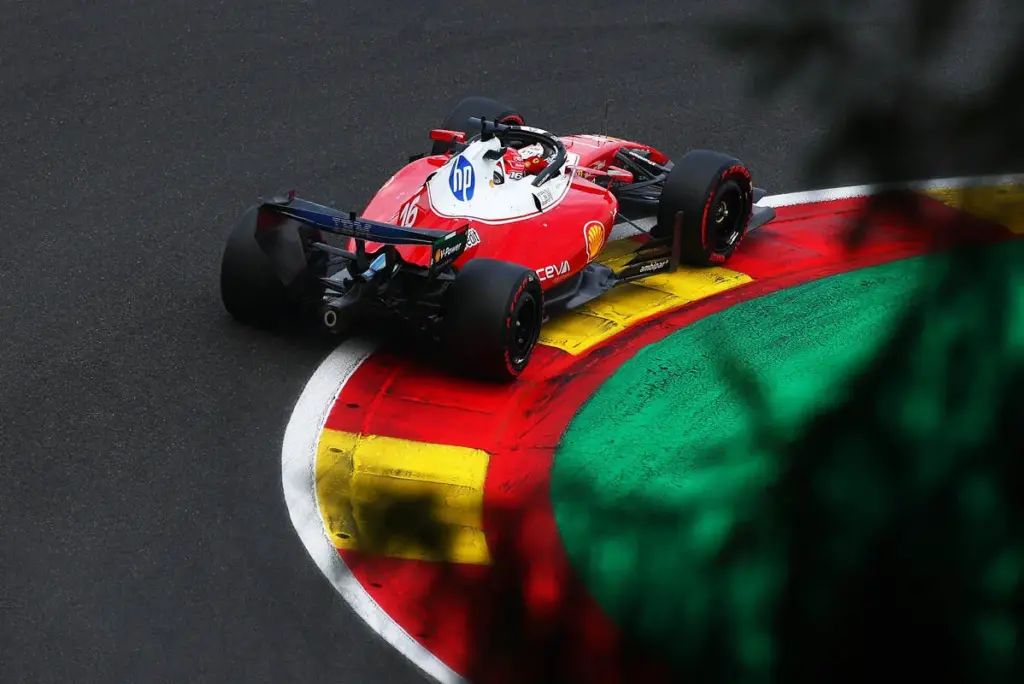
Ferrari now looks to the race with reasonable optimism, supported by good feedback on tire degradation from free practice simulations. Securing a podium would mean limiting the damage on a track unkind to the SF-26, a car that the competition continues to define as the best in corners. Unfortunately for the Prancing Horse, Spa lacks those high-speed corners where Ferrari made the difference at Silverstone, compensating for the lack of power from the power unit. The transformation of Pouhon, which with the new cars has ceased to be a corner and become a full-throttle curve, has further diminished the strengths of the SF-26. The new Spa gives the image of an aerodynamically valid Ferrari, but unable due to energy management logics to express its full potential, increasingly positioning itself as the right car for the wrong regulations.
Read more Aston Martin, embarrassing disaster at Spa: pole is almost 6 seconds away