

From Budapest
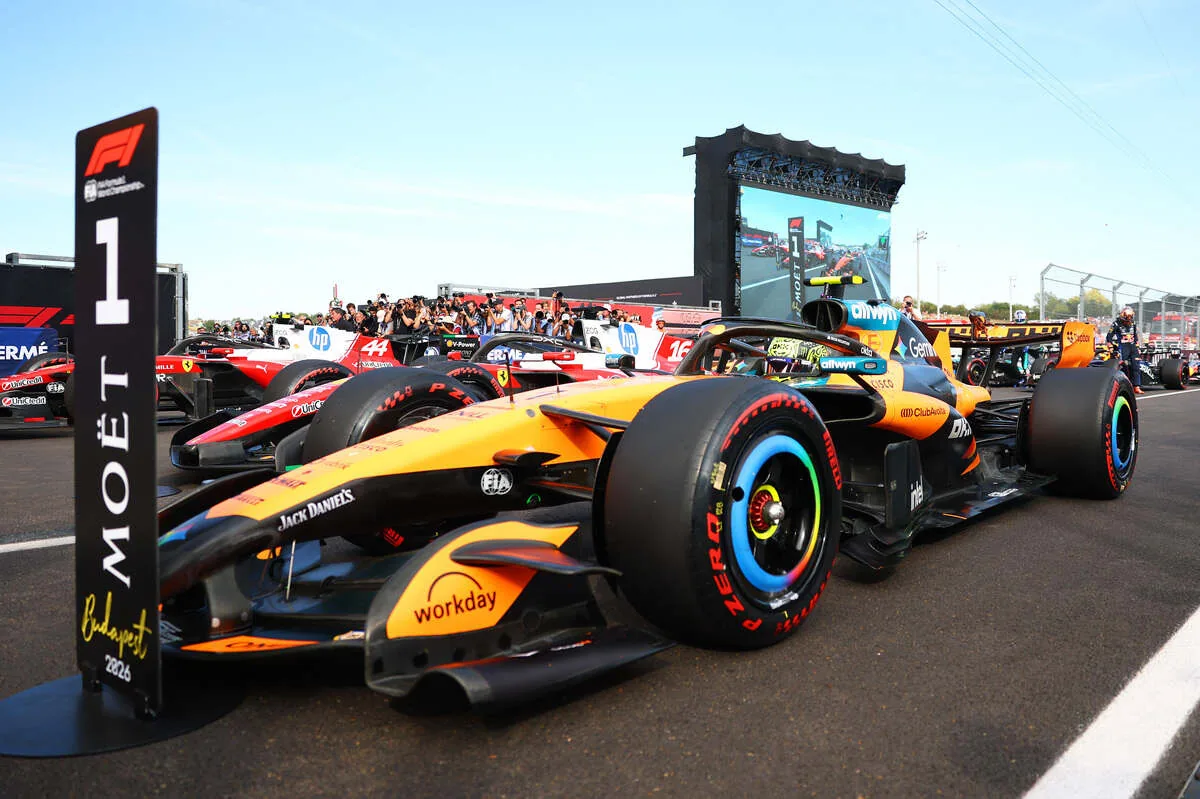
McLaren returns to the pole position in Budapest, led by a Lando Norris who is increasingly the leader of the papaya formation. The reigning world champion was able to realize the potential of the MCL40, galvanized not only by the new floor but also by the wind rotation during the night. Ferrari, which still harbors hopes for the race, but these were scaled back by execution errors, paid the consequences most.
Read more Maserati GT2 Stradale, one-off that pays homage to the MC12
The Wind’s Role
At the Hungaroring, McLaren shines again. The MCL40 had already shown itself to perform well in medium-speed corners, which are predominant at the winding Hungaroring, but expecting a papaya pole position exceeded even the most optimistic predictions. The leap forward came thanks to the new floor, which spent several months in the wind tunnel, time the team optimally used to improve performance.
Yet, even with the updates, McLaren was half a second behind Ferrari on Friday, only to turn the situation around in qualifying. The world champions, in fact, did not make radical changes to the setup, but preferred to wait for conditions to turn in their favor. And so it was, with the wind rotating 180° overnight, blowing at the end of the main straight and head-on at the entry to the last corner.
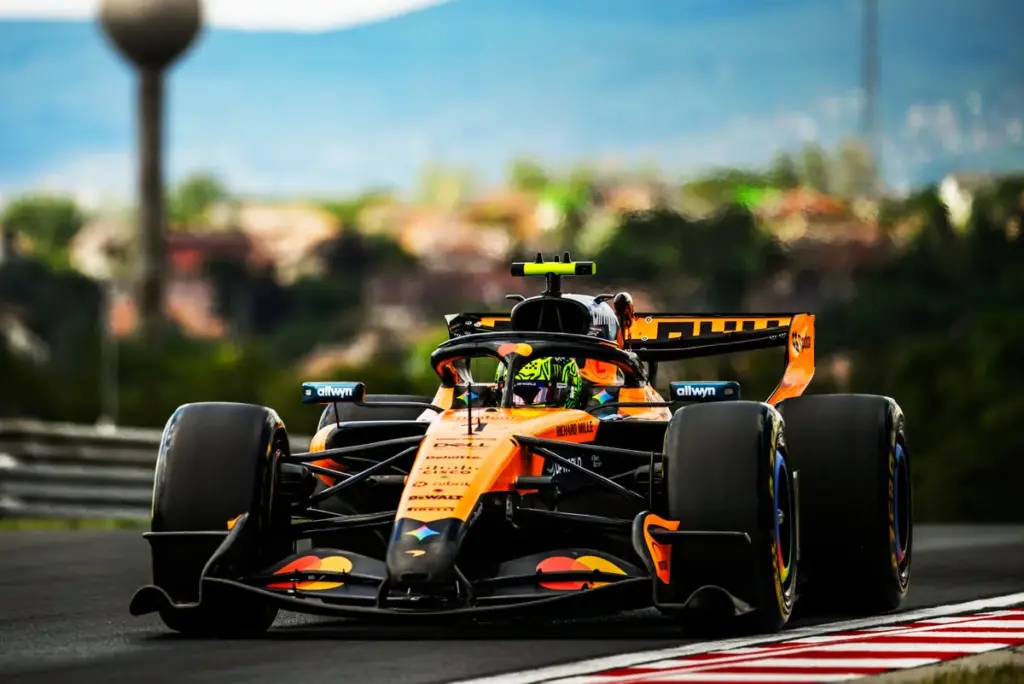
It was precisely in the third sector that McLaren accumulated the most delay from Ferrari, unable to match its mechanical grip in slow corners. Thanks to the wind reversal, however, the MCL40 began to generate more rear downforce, an area where the papaya car is more sensitive, thus instilling more confidence in both drivers. “Since we suffer with the rear much more than others, perhaps today [the wind] helped us more,” Norris analyzed. The change was such that it was noticeable even to the naked eye from the press room’s view of the third sector, where already in FP3 the McLarens appeared much more stable and glued to the curb compared to Friday. The Ferraris, on the other hand, appeared more unsettled compared to the opening day, paying for the volatility of a wind that dampened their aerodynamic qualities.
McLaren on the rise
Qualifying, however, was anything but a walk in the park for Norris. Like his rivals, the world champion had to contend with an irregular track surface, with low-grip re-asphalted areas alternating with older, grippier ones, especially at turns 1, 12, and 14, where organizers had to patch the road surface overnight. Lando described the situation as a real lottery from a driving perspective, with a variable grip level not only from lap to lap but also from corner to corner. Perhaps for this reason, his first attempt in Q3 was not exhilarating, but the Englishman said he did not lose heart, aware that the car had the potential for pole.
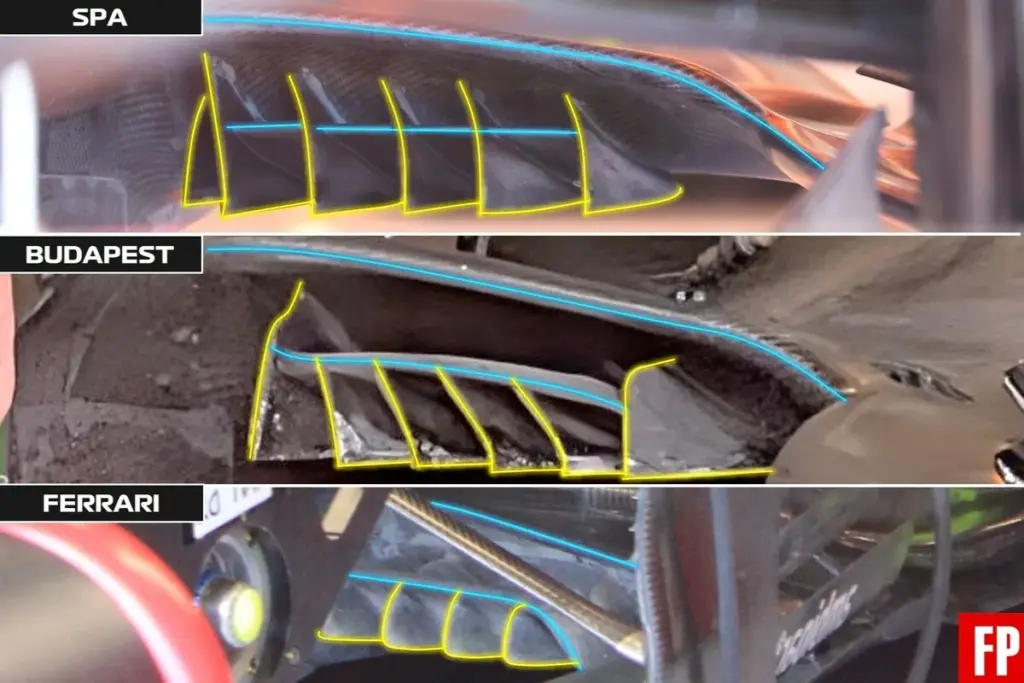
The following lap proved him right, beating the Ferraris by just 12 thousandths, such a narrow margin that the decision to go out last became decisive, benefiting from the maximum track evolution. However, the Mercedes power unit made its presence felt once again. “Although cornering performance is prevalent in Hungary, in reality, where we made the difference compared to Ferrari was on the straights,” Andrea Stella analyzed. The Team Principal nevertheless admitted that the new floor improved performance in medium-to-high-speed corners, now urging the team to improve performance in slow sections. The Italian has no illusions about the MCL40, believing that it was only thanks to execution that McLaren got the better of the Prancing Horse: “If we look at the data and take Leclerc’s and Hamilton’s best corners, I think they had the greatest potential.”
Ferrari wastes an opportunity
Ferrari is precisely the big disappointment of the day, after a start to the weekend that had set very different expectations. Both Leclerc and Hamilton did not find the same harmony with the car they tested on Friday, driving an SF-26 that, unlike the McLaren, suffered from the wind rotation. The Scuderia, however, also paid for some decisions made in qualifying, especially the one to go out first for the last attempt in Q3. It’s a move that drivers usually appreciate, as it allows for a clear track on the out-lap to best prepare the tires, but it means giving up on exploiting track evolution, which was significant at the Hungaroring throughout the weekend.
Read more Norris thanks the team: “The pole is largely due to the updates we brought”
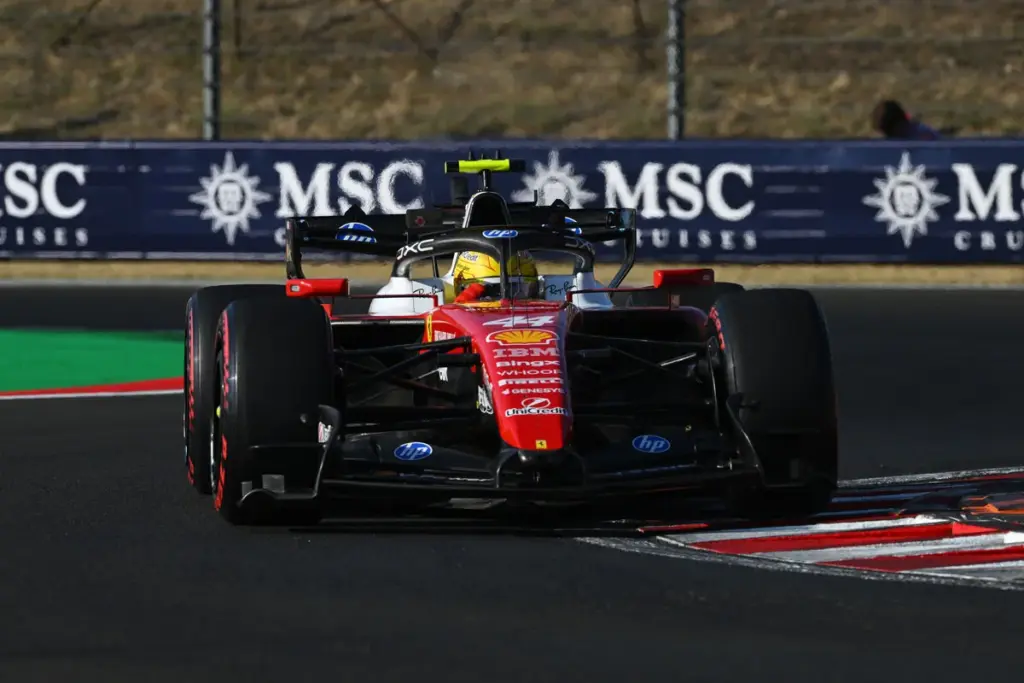
Both Hamilton and Leclerc worsened their times compared to their first attempt, but the blame might not solely lie with unfavorable conditions. Both Ferrari drivers admitted to having snaps at Turn 1, sliding and causing rear tire temperatures to skyrocket, compromising the rest of the lap. Added to this was Hamilton’s impeding of Piastri immediately after completing his lap, with an associated grid penalty.
The regret is twofold, because Sir Lewis could have exploited the extra set of softs cleverly saved in Q1, when both Ferraris were the only ones to make the cut with mediums. Unfortunately for the Prancing Horse, Leclerc then had to spend an extra set of softs to access Q3, now finding himself in the race playing at a numerical disadvantage against the two McLarens and with one less set of mediums.
Mercedes lost
The negative surprise, however, is Mercedes, never on form since Friday. Probably, without the yellow flag, Antonelli could have attacked third position, with which the W17 would still have found itself behind a McLaren and a Ferrari. The Silver Arrows struggled with balance and grip, symptoms of an incorrect setup base that the team failed to rectify.
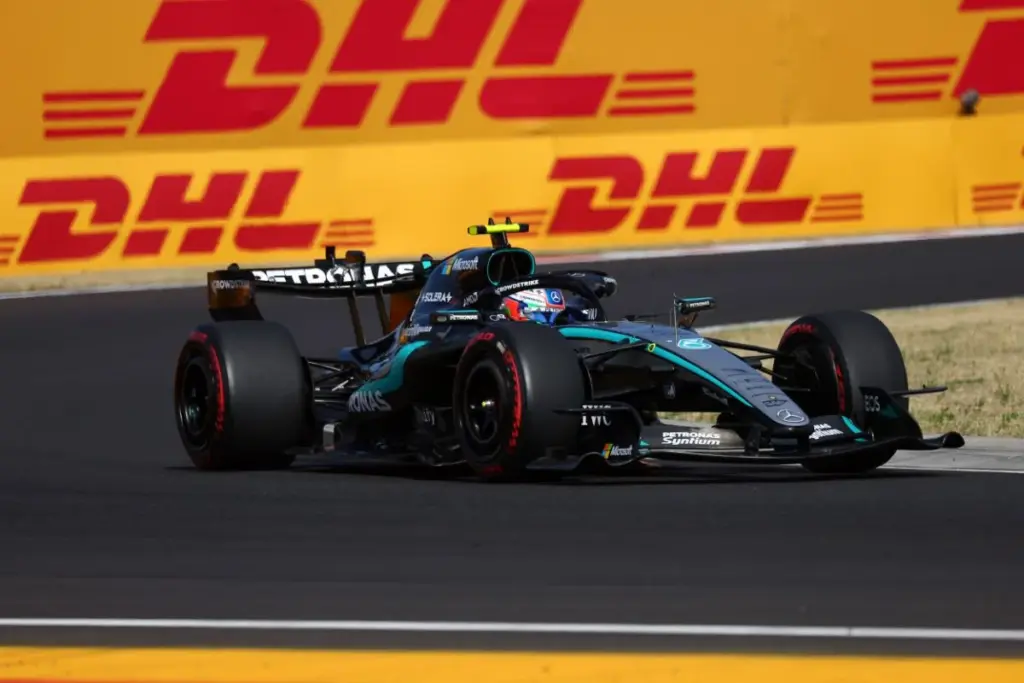
Even in difficulties, the team’s benchmark was once again Kimi, this time penalized for not respecting the yellow flag. The Italian will thus start behind Russell, who nevertheless paid an average delay of 2-3 tenths from his teammate, a sign that his problems were not all attributable to the power unit software. Certainly, the resurfacing of the Hungaroring did not play in his favor, which deprived the track of the great grip that characterized it, leading to a precarious grip condition with which George never excelled.
Starting ahead of the Silver Arrows will be Piastri’s McLaren, which paid for not contesting the first free practice session, and Verstappen’s Red Bull. The RB20 appeared to be a difficult car throughout the weekend, as evidenced by Max’s and Hadjar’s spins during qualifying. It will still be a race yet to be written, with high degradation promising lively strategies, leaving the door open for a different outcome than qualifying.