


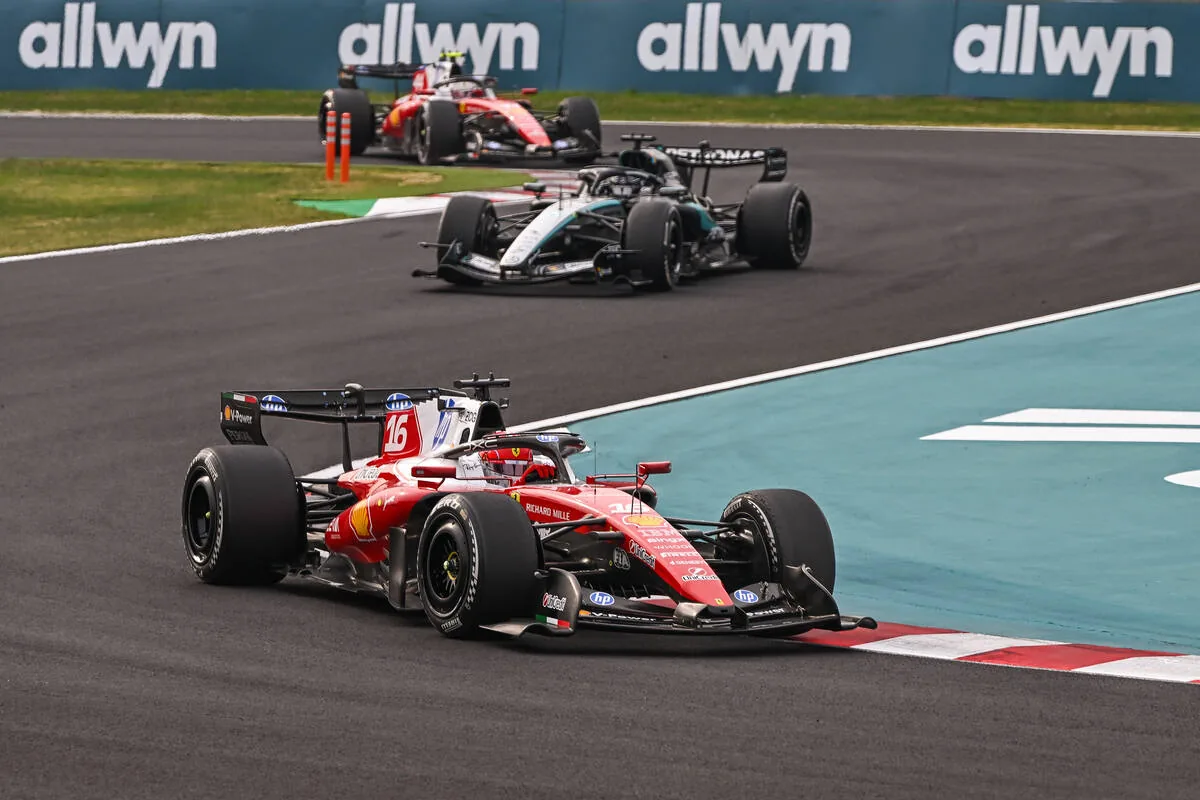
Ferrari has a great opportunity in its hands. The April break will prevent Mercedes from further capitalizing on its early-season advantage and will offer time to develop the SF-26. In Maranello, work will be done on aerodynamics, software, procedures, and obviously on the engine, even if for a new power unit, the FIA’s green light will be needed.
Read more Toto Wolff like Fred Vasseur: “A new start in Miami. Now we look like heroes, in 3 GPs who knows”
Efficiency matters more than downforce
Many have pointed to Ferrari as the car with the best chassis on the grid, a statement that is perhaps bold. To be clear, the SF-26 has shown excellent downforce, but without expressing a peremptory superiority in all corners. In this Formula 1, moreover, it is difficult to distinguish chassis qualities from other factors, given that cornering speeds and even trajectories often depend on energy management. Furthermore, never more than with the current energy-hungry power units, more than downforce, what makes the difference is aerodynamic efficiency, i.e., the ratio between vertical thrust and drag.
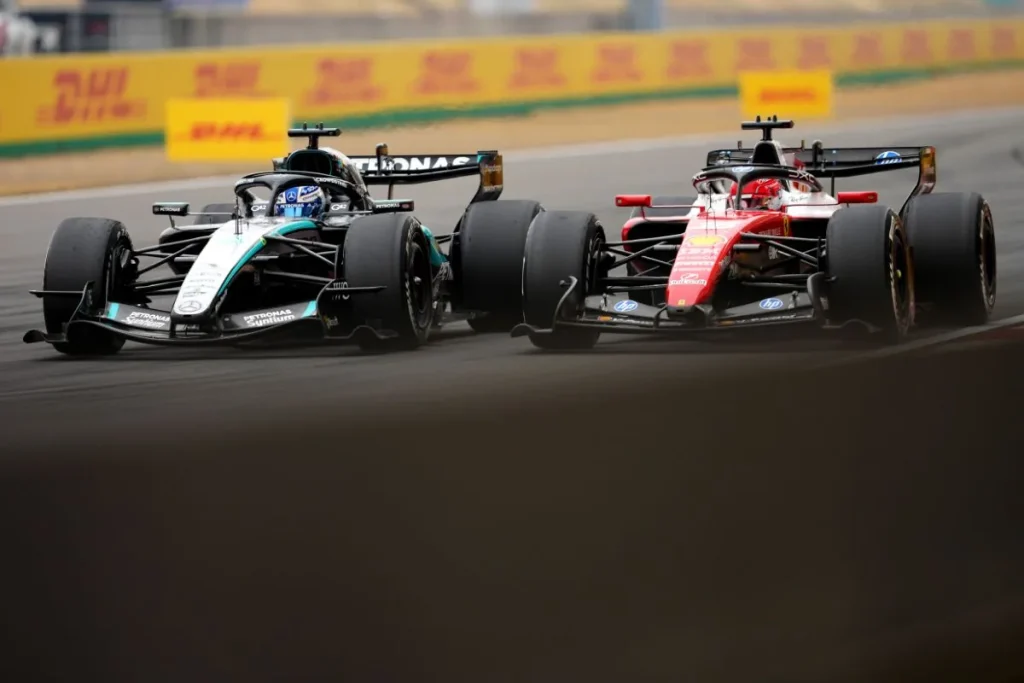
Ferrari accumulates most of its gap from Mercedes on the straights, paying for a lack of horsepower and less effective battery management that forces electrical power to be cut earlier than rivals. Even in this case, however, teams have difficulty analyzing GPS traces, as different straight-line speeds are affected by aerodynamic efficiency and not just the power unit. Even if it were confirmed that Mercedes actually releases less downforce than Ferrari, in Maranello it will be necessary to understand if this does not allow the rival to drag less resistance behind it, gaining overall on the stopwatch.
The development agenda
At Ferrari, aerodynamic updates will have to increase downforce and especially the efficiency of the SF-26. Growth on the straights will also pass through the development of active aerodynamics, starting from the inverted mobile rear. The experiment conducted with the Macarena in the Shanghai free practice sessions highlighted that there was still something to fine-tune in the closing of the profiles to ensure the right stability under braking. The Prancing Horse, however, never rejected the system and intended to propose it again in Japan, now postponing it to the Miami Grand Prix. On the same occasion, the update package initially scheduled for Bahrain will debut, plus part of the developments that were planned for Canada.
The goal will be to improve stability and balance. Since the tests, the SF-26 has shown a certain nervousness at the rear, damaging battery management in a cascade. Corrections on the throttle and rear wheel spin are all phenomena that waste energy, as well as worsening tire management. Mercedes, which in Japan told Antonelli not to push too hard in the second part of the race, showed an excellent long-distance pace, a sign of knowing how to preserve the tires well, regardless of how much downforce it can generate. On this front, for Ferrari it will be appropriate to also invest in the development of the rims. From this year, teams can develop them on their own again, which makes them a valuable tool for cooling the tires from the inside.
Read more Bearman: “I am ready for Ferrari, it is my dream. But Hamilton does not see me as a threat”
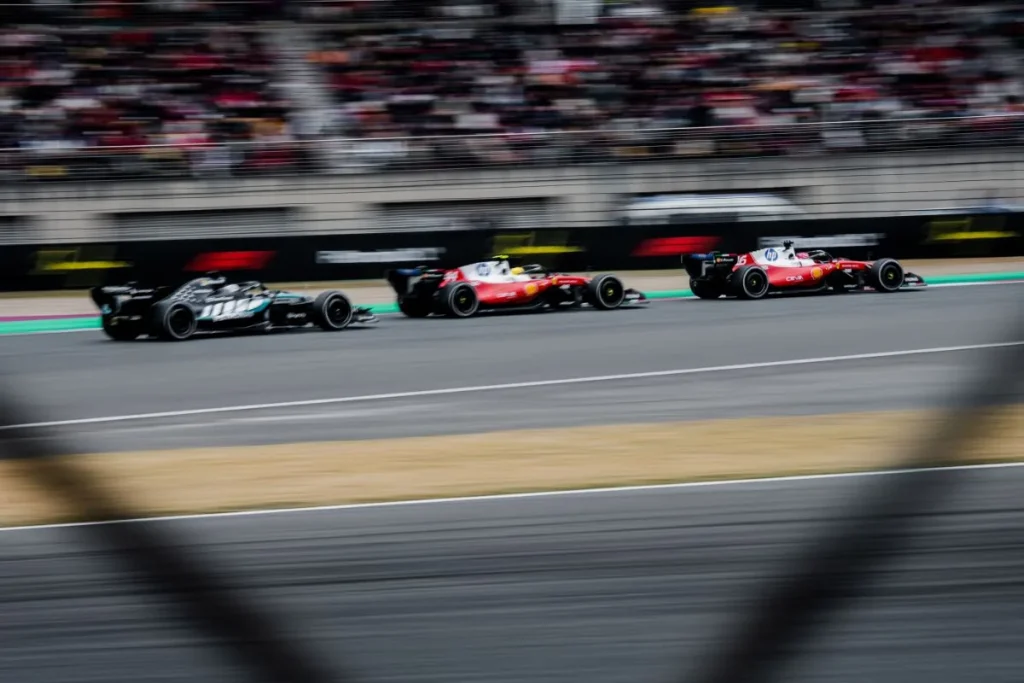
Work on the software
Parallel to aerodynamic development, Maranello will carry out software development. As Antonelli was able to observe closely during his comeback in Japan, Ferrari exploits the electrical boost at different points of the track compared to Mercedes, to which the stopwatch is proving right. The data collected in March will be used to develop better delivery and charging strategies, possibly more flexible for various scenarios. In the laps following the start, for example, some problems emerged in the use of energy, at least until the situation tends to stabilize.
Battery management will also depend on the ability to recharge it under braking, when the electric motor can regenerate at the maximum power of 350 kW. It might not be a coincidence that Mercedes spends more time on the brakes than Ferrari, a sign of a different use of the braking system. Among all the teams there is great diversity in the design of the rear brakes, a consequence of the fact that some exploit the electric brake of the MGU-K more than the discs to maximize energy recovery. The components of the hydraulic system fall into the open source category, in which the designs can be consulted by all competitors. The teams are already taking inspiration from the best, asking their respective brake material suppliers to make changes.
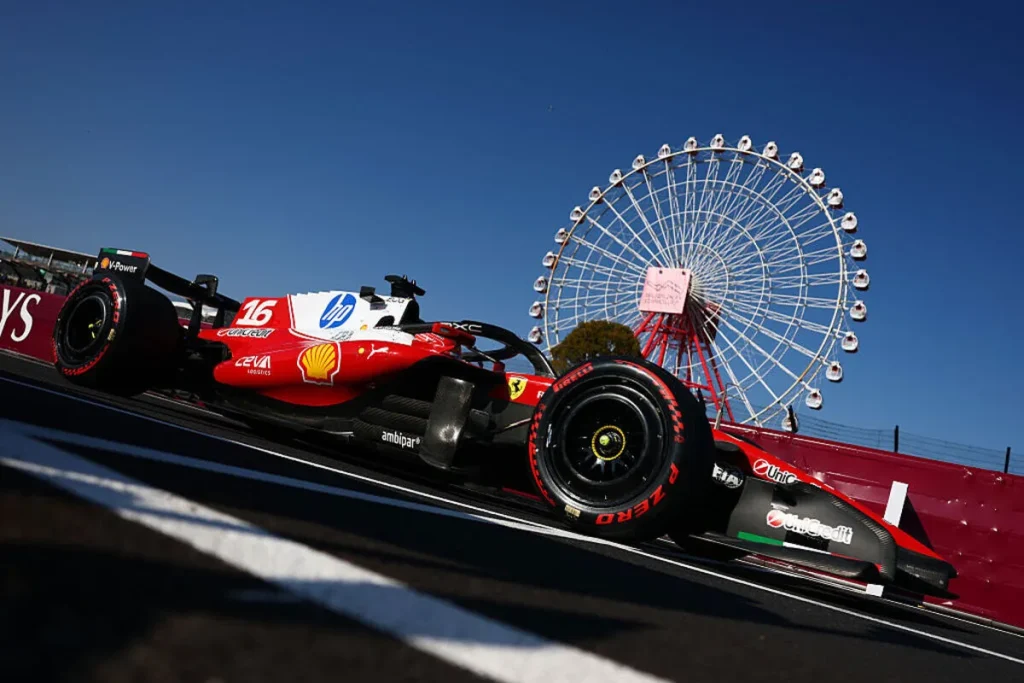
Finally, to improve energy management, Ferrari will also need to work on driver preparation. Leclerc continues to complain about the new qualifying, such that those who take more risks in corners end up wasting more energy, paying the price on the straight. These are criticisms shared with most colleagues, but until the FIA intervenes, there is nothing left but to adapt. The only choice is to adapt to the new way of driving, a technique that the Ferrari driver still does not master.
Waiting for the engine
The possibility for Ferrari to get closer to Mercedes, however, cannot transcend the reduction of the engine gap. However, in Brackley there is no particular concern regarding the introduction of the new compression ratio verification procedure from June 1st. Not even in Maranello are there great hopes in this regard, considering the maintenance of the cold test an advantage for rivals. The opportunity, if anything, could be the introduction of an updated power unit, if the FIA were to ascertain a performance gap from Mercedes of at least 2%. Reference is made not only to the Silver Arrows, but to all cars with the Brixworth engine, monitored through torque sensors on the various drive shafts. Overall, there is room for improvement for Ferrari, even if it is too early to say if a new championship can truly begin in Miami.
Read more Montezemolo: “Ferrari, it is not enough to win a few GPs or be enthusiastic about a podium”