VSC to review
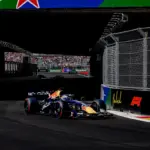
The Spanish Grand Prix leaves a sense of emptiness and incompleteness for a race and a circuit so much anticipated. There are very few takeaways from Sunday, apart from a probably to be reviewed use of the Virtual Safety Car, introduced to minimize the so-called “sporting injustice” of the Safety Car, but which, if used like this, risks creating at least as much. To be clear: the stewards used the procedure according to the rules and in the end luck and misfortune are part of racing, but it is certainly worth making a further reflection on possible improvements to the VSC usage procedure by the Federation and Teams, such as closing the pit lane or waiting until at least all drivers in the race have passed the pit entry between the start and end of the procedure.
Read more Hamilton responds to Verstappen: “I didn’t see it. The start? A good battle”
McLaren best car, but with a race like this hierarchies are impossible
The one who really got screwed this time was Lando Norris, who was leading the race authoritatively after a good start, in which he was also aggressive, and a good first lap. McLaren was probably the best car on track, although only the one in the hands of its reigning World Champion, who in the first stint, the most critical on tires, was showing his mastery in management. The Woking car now has a better chassis setup than Mercedes, and, starting to properly exploit the Power Unit, has become overall better in the race. Making real considerations on pace, however, is almost impossible: the VSC also opened the pit stop window for all drivers who started on medium and soft tires, which canceled any strategic variable, the only potential source of excitement in the race. At that point, to avoid temperature problems, all drivers were ordered to follow at a certain distance those ahead, and the race became a long and very boring procession. Adding to all this was a hard tire that was the only compound that really worked on track and that, at the same time, allowed practically the entire race to be done, as we saw with Leclerc. From a driving point of view, the Monegasque’s endless stint was definitely high level, showing what seemed to be a Ferrari good on pace and tires, but it is difficult to place the Prancing Horse car in any performance hierarchy given the anomaly of the race. The simple reality seems to be a fast Ferrari in the race, but that pays the price for the lack of a qualifying map on Saturday, and that by nature has more potential on tracks where qualifying has a greater weight, ending up never having the overall winning package. Who in the end, instead, is always winning is Antonelli: a certainly lucky driver, but who at the same time is always there to fight and, above all, does not make mistakes, even on a track where you scrape the walls (and after the celebration binge in Monza).
The only moment of action
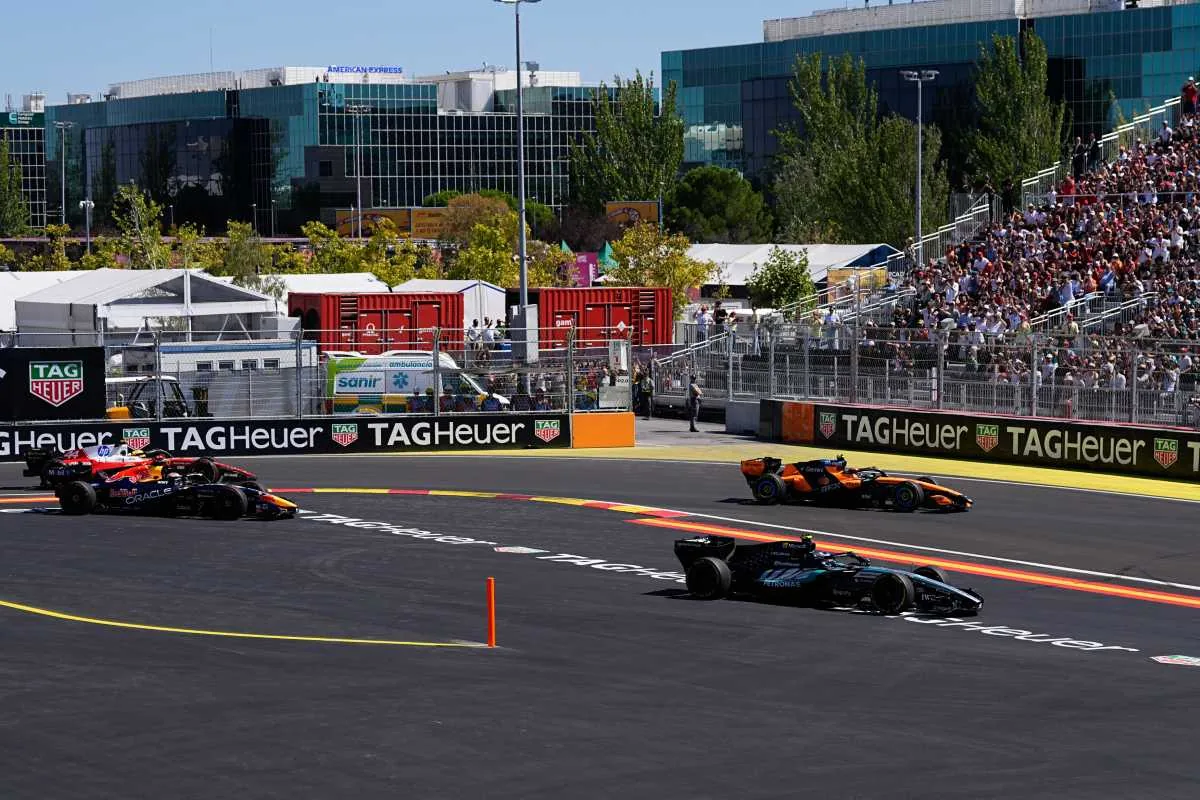
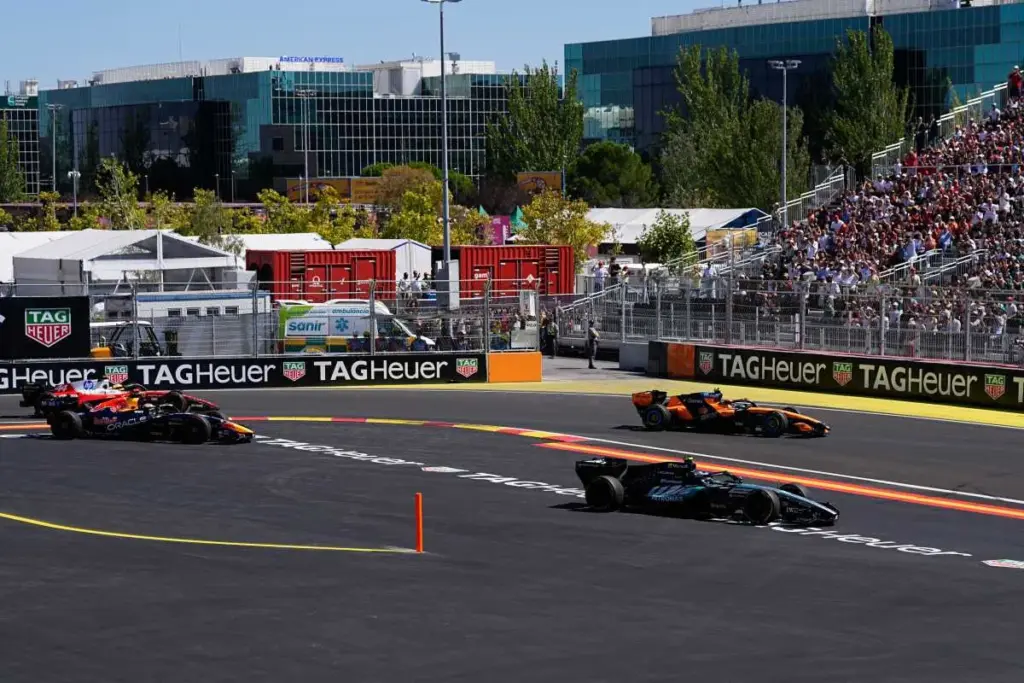
The only real moment of action was the start, with Hamilton’s attack that almost reached Norris and the complicated situation with Verstappen. RedBull’s choice to drop the Dutch champion behind Hamilton was very costly, with Verstappen having a concrete chance to win the race, since at that moment he was ahead of Antonelli, who in turn made two long slides in the first two chicanes of the track (speaking of staying out of trouble, when in doubt better to go straight in the runoff). RedBull was anyway very good together with Verstappen in qualifying to optimize the potential, then giving themselves a chance in the race, even with a pace that seemed not at least on par with McLaren and Mercedes.
Read more Alex Marquez apologizes to Acosta for the middle finger: “I lost my head, it’s not done”
Did Max have to give the position back? The stiffness issue manifests
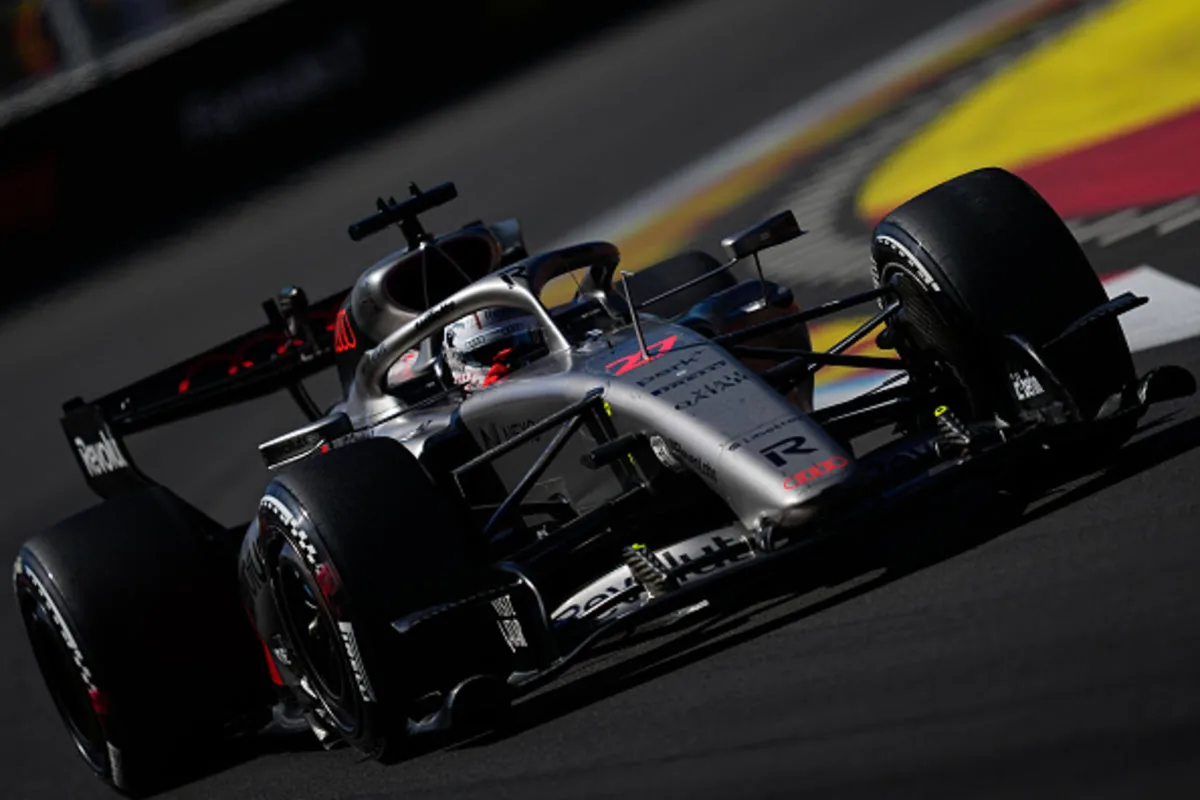
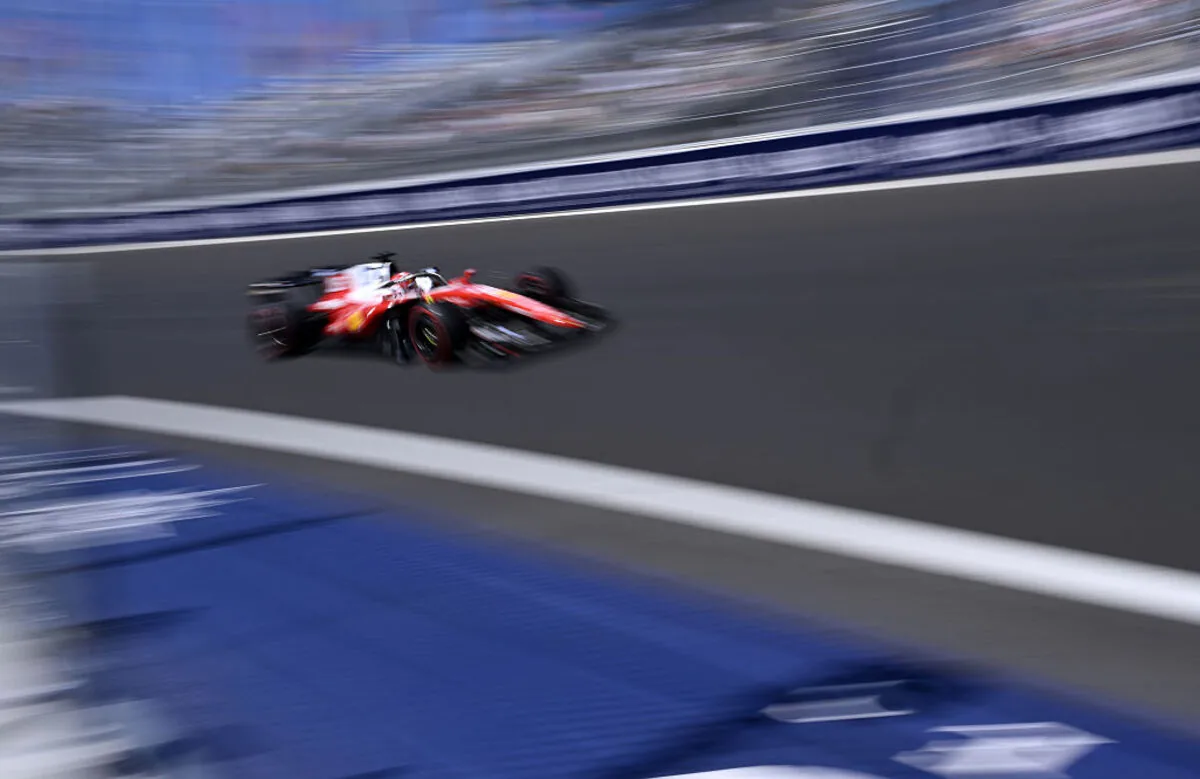
It can still be debated whether Verstappen really had to give the position back to Hamilton, and the writer has more the impression that it was not actually necessary given the dynamics of the first two corners: Hamilton was indeed very inside at the first corner, and cut the curb, but fell heavily back on track with little control of the car and unable to re-accelerate. Verstappen at that point was coming much faster and, just in case, decided to cut the second corner. It is hard to say if the Dutchman really had space in corner 2, but this whole situation gives us a convenient lead-in to introduce a theme that we consider much more interesting. It is no coincidence, in fact, that Hamilton’s car had such a violent bounce falling from the curb of corner 1, with a suspension response so marked that it even made the car bounce on all four wheels. We have indeed noticed since qualifying a particularly stiff Ferrari suspension setup. Unlike Antonelli’s Mercedes, able to aggressively cut the line of the first chicane, Hamilton and Leclerc practically had to “go around” the curbs. The first sector was the critical point for the SF26 all weekend, but not (only) because it contained the main straight of the track that exposed engine differences, but because of this very complicated passage at the first chicane, where both Prancing Horse drivers suffered most of the gap accumulated in the sector. The stiff setup (together with the strong front of the car) was very helpful in the almost 2G compression of the Monumental, but had a price to pay, both at the first chicane and in the last sector, with restarts from low speeds often not optimal and very costly in terms of lap time. After the first free practice session many teams were forced to raise the car from the ground to avoid excessive plank wear at the Monumental, but the impression is that Maranello chose to stiffen the entire suspension package. Leclerc’s last race stint on soft tires is perhaps an indirect confirmation of the will not to raise the car too much: Leclerc himself spoke of a specific well-known problem that will not reoccur on other tracks and that prevented him from pushing in the last laps with the soft compound, somewhat recalling what happened in the past with a very high tire pressure set that proved very costly especially in traction and slow corners, precisely where Leclerc was really slow in the last laps. We want to clarify that the latter is only a hypothesis, while the remarkable stiffness of the car is a matter that clearly emerges from data analysis and what was seen in the images. We will see if already in Baku the SF26 will have a more forgiving mechanical compromise.
Madrid: a track of high technical value but hugely disappointing on race dynamics
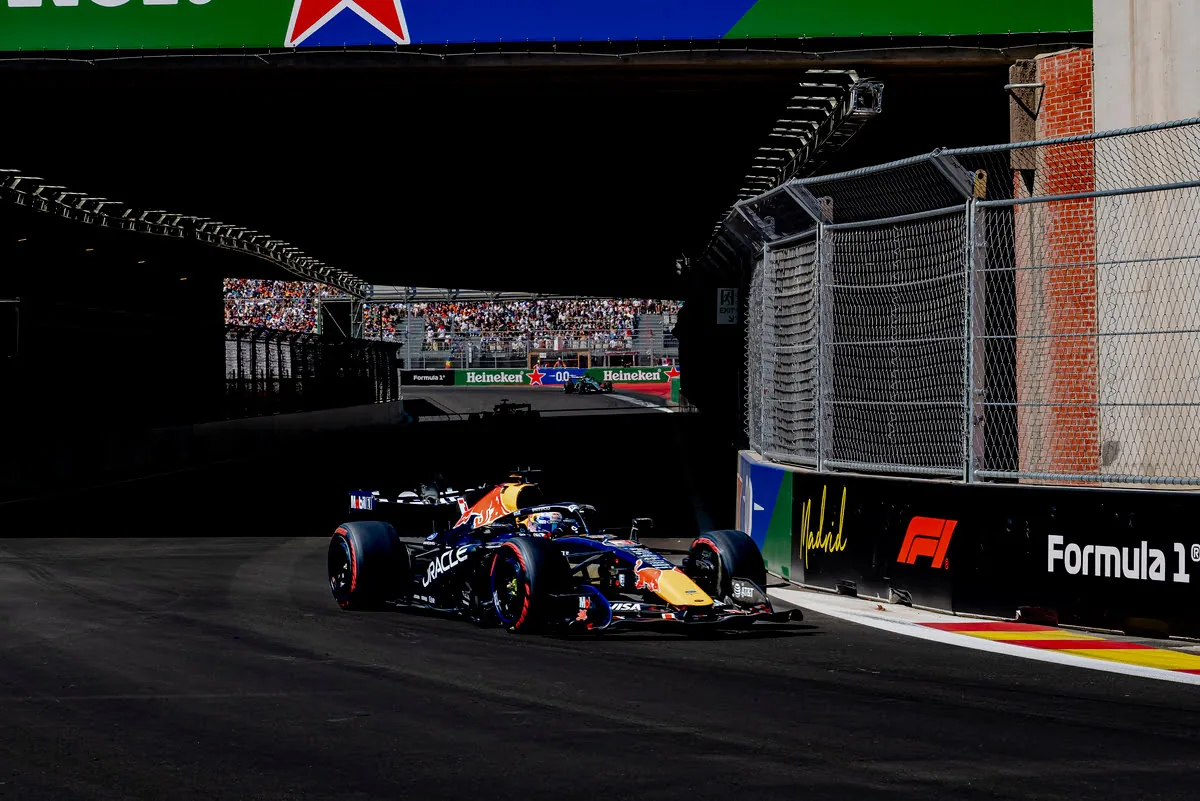
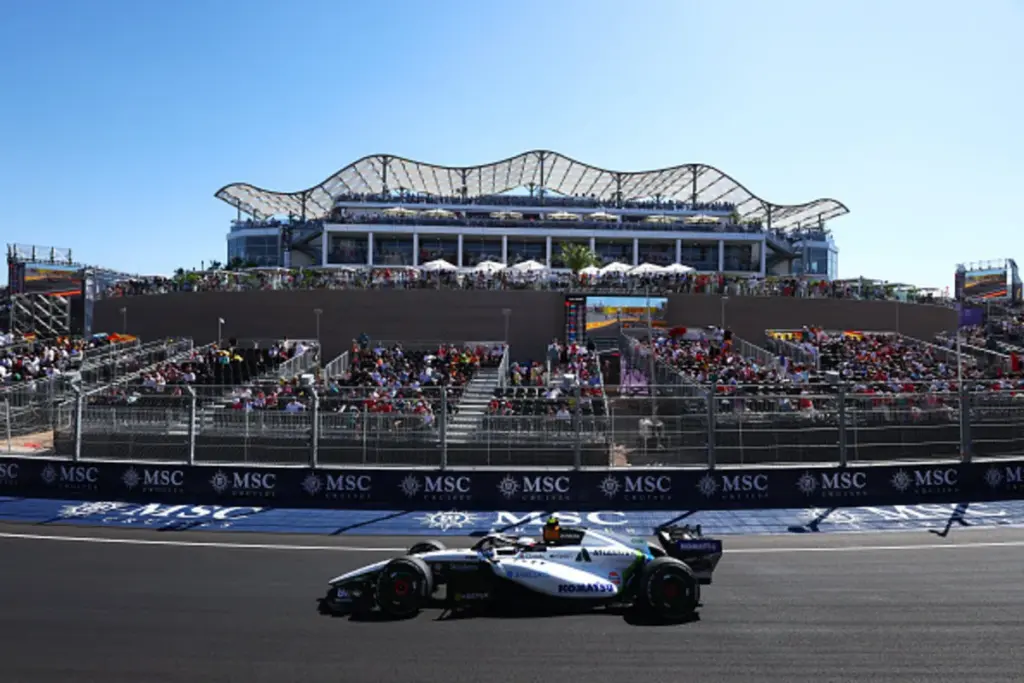
This reasoning about Ferrari suspension stiffness allows us to make one last reflection on the Madrid track. Even going against the grain, the impression is that what we saw this weekend, also listening to the drivers’ words, is the debut of a technically very valid track, but one that desperately needs changes to allow overtaking and action in the race. The corners on the circuit are practically of all types: chicanes to be aggressively cut with high curbs, fast corners in succession, the elevated Monumental, the slow final section. This forced all teams to seek a correct mechanical compromise but finding different solutions. Mercedes, for example, was very “soft” from a suspension point of view, with Antonelli aggressive on the curbs but forcedly conservative at the Monumental, opposite to Ferrari. Also in deployment strategies they only partially converged, with Mercedes unable to optimize the package and leaving a lot on the table in qualifying, with a Norris pole that potentially would have been 3 tenths faster without the last corner mistake. Finally, there was also much to work on the tires for the flying lap: the fast zones made the front work enormously, but it remained essential to arrive in the last sector with the rear still in the window to guarantee the traction necessary for a good lap time. In short, a technical puzzle of absolute level that however developed on a circuit that produced a very poor race. A not minor problem for Formula 1 itself: Madrid was a highly anticipated track, which produced an event of remarkable organization (mantra repeated by all but let us say who cares), a brand new circuit with a 10-year contract that forcibly inserted itself, displacing tracks like Spa. Layout changes are not an option for the coming years, but absolutely a must.
Read more Hülkenberg: “The Virtual Safety Car was the key moment of the race”