






Problems, insights and a near miss
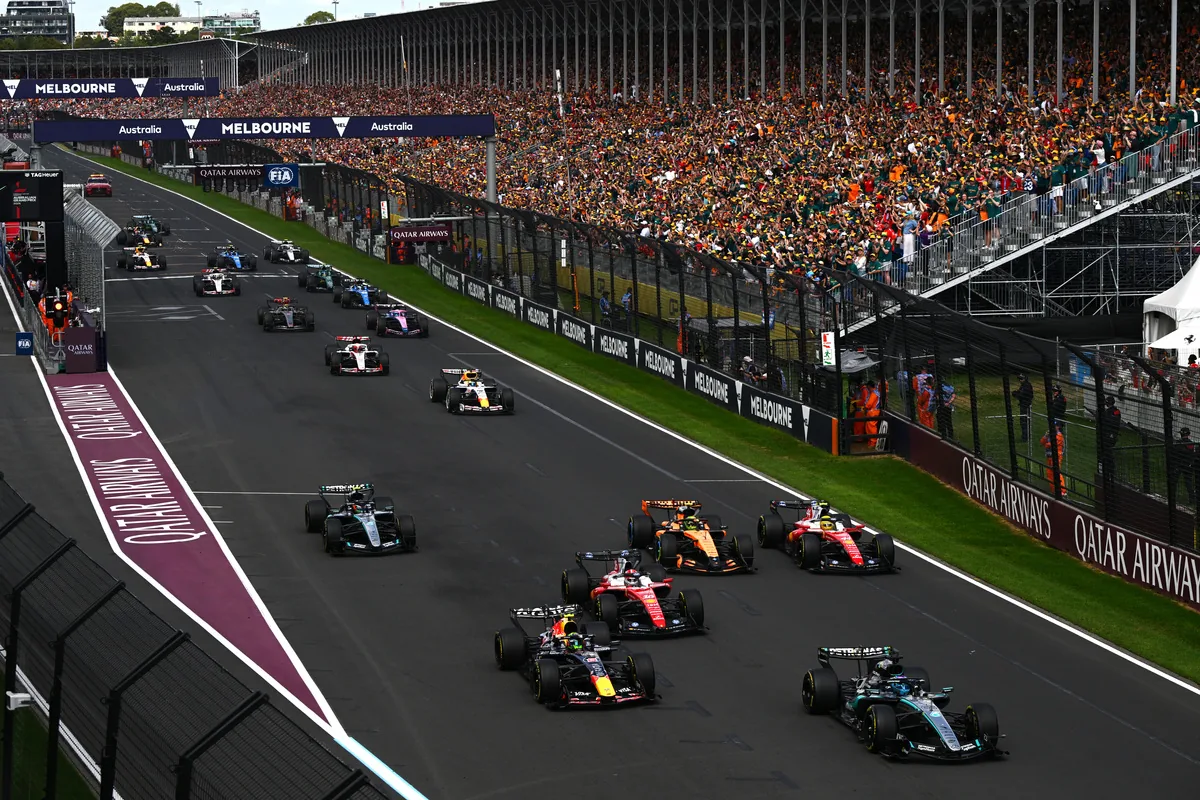
There was great anticipation to understand what would happen in Melbourne at the first start of the season with these new single-seaters after all the discussions and controversies that accompanied us in the pre-season, and the start of the Australian GP did not disappoint the expectations of those who imagined chaos.
There were cars that started very poorly – Antonelli and Lawson above all, with the New Zealander being miraculously avoided in the back of the pack by Colapinto, who with his reflexes avoided a potentially very dangerous accident – and others that instead shot off like a slingshot, gaining many positions. In this second category, the two Ferraris are certainly to be included, having confirmed the advantage that was already sensed from the tests in Bahrain. After the race, however, many drivers from different teams complained about having started from the grid with completely flat batteries, or almost.
From the front, Colapinto’s reflexes at the start are even more impressive! 🤯pic.twitter.com/9XK107bpej https://t.co/thIfz97e0w
— Señor de los Medios 🕵️♂️ (@MedF1osTV) March 8, 2026
New procedure and old discretion
For the first time, the procedure renamed pre-start was implemented, with five seconds of waiting – signaled by blue LED lights – which preceded the turning on of the first red light on the starting lights. The goal was to allow even those starting at the back – and therefore having less time on the grid available compared to others – to try to charge the batteries correctly.
The fifth light came on but it was a flash (the video is slowed down, even so it lasts very little 😅). pic.twitter.com/uhVwtjCyLe
Read more Ferrari wins even if it is third. And finally races with two drivers!
— Andrea Curci (@Curci_Andrea) March 8, 2026
Paradoxically, however, what created the most confusion was the ‘classic’ turning off of the red lights, introduced exactly 30 years ago by F1, curiously in the very first edition of the Australian GP held in Melbourne. In fact, the lights went out immediately after the fifth light came on, with a very short interval that probably caught some drivers on the grid by surprise. A small-large paradox given that the introduction of the pre-start procedure was intended precisely to extend the times.
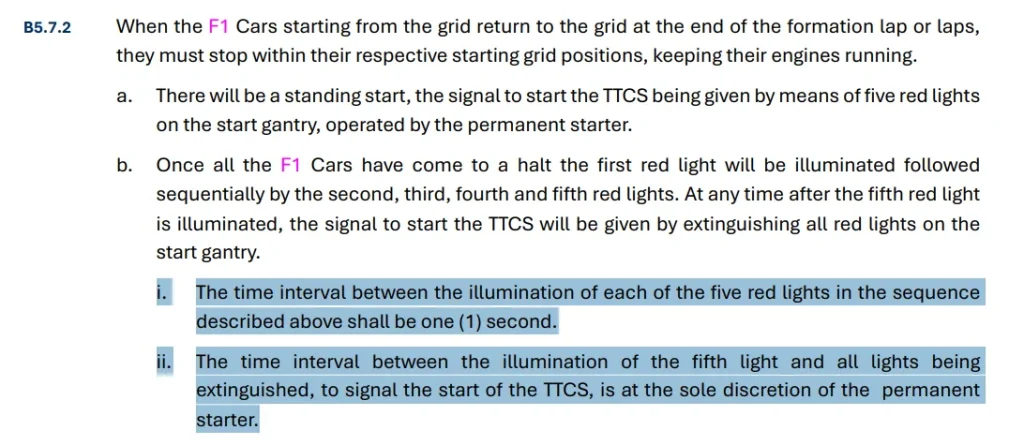
At a regulatory level, however, everything that happened at the start of the Melbourne race is absolutely regular. In the sporting regulations, in fact, in the section where the procedure that starts the Grand Prix is defined, it is specified that – while the red lights must turn on exactly one second apart from each other – their turning off is decided entirely at the discretion of the race director. “The time interval between the turning on of the fifth light and the turning off of all lights […] is at the sole discretion of the permanent starter”.
This part of the regulations, moreover, has not been modified compared to the past: the discretion guaranteed for turning off the lights is the same as in previous seasons. It remains to be seen whether such an immediate turning off of the lights was intentional or if instead it was a ‘lapse’ linked to the introduction of the new pre-start procedure that perhaps confused the starter. Now, of course, curiosity is even greater to see what will happen next Sunday in the Chinese GP.
Read more Mercedes confirms. Ferrari’s chassis is good. Party mode returns.