
Budapest McLaren victory, Norris solo at Zandvoort
Formula 1 restarts after the summer break not far from where it left off. It does so with a complicated and sometimes heavy Dutch Grand Prix, not thrilling, but at the same time full of events and relevant situations. The first, in chronological order and perhaps also in importance, is that of a fantastic Lando Norris who triumphs for the second Grand Prix in a row, and strings together yet another stunning race this season. McLaren has made huge strides with the latest updates and over the weekend the engineers led by Andrea Stella were able to gradually correct some basic problems, especially in the management of the rear, which seemed like a written sentence in race perspective, despite the pole. But instead, the reigning World Champion, after being overtaken by a very brave start from Antonelli, did not give up and put a lot of himself into it, with the rhythm and management of the car and, above all, the tires. The British driver is probably experiencing his best season in terms of driving quality, and was also able to seize the only real opportunity to return to the lead and take the victory. If in Budapest the Woking team’s one-two was a celebration of the return to competitiveness of the MCL40, at Zandvoort the over 30 seconds given to Oscar Piastri tell the story of a great solo by Norris, still too far in the standings from Antonelli to really think about the title, but who already in the post-race team radio let slip something that betrayed a hidden thought in this regard.
Mercedes not the best car, with a now very narrow suspension window
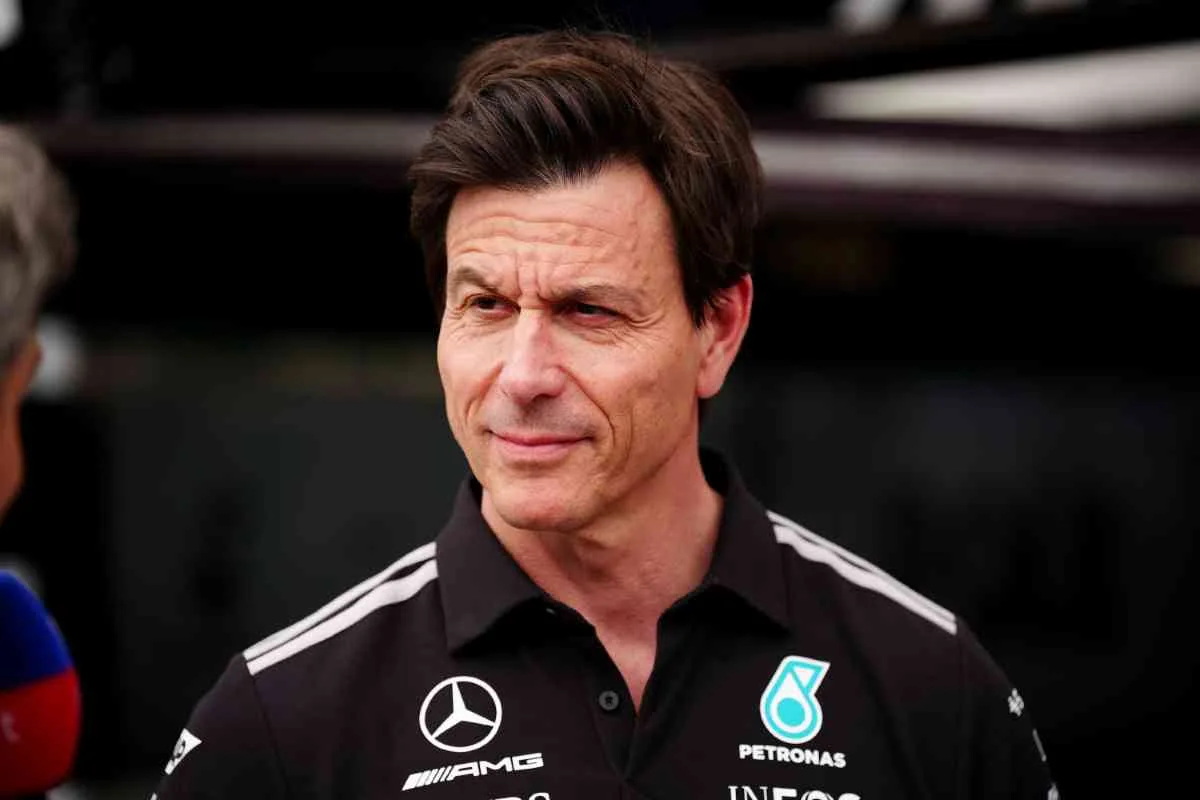
Behind the winner, Antonelli and Russell filled the podium with the colors of the Brackley team, which however at the moment seems increasingly to suffer from the lack of a concrete update package that can make the car take a further step to return to dominating on track. Toto Wolff spoke of the Malaysian race as the arrival date of this package, and the race told of a fast W17, but certainly not a top force. Antonelli’s great start had projected the young Italian into the lead, but without ever really managing to shake Norris off. The Italian went into crisis with his set of hard tires around mid-race, giving the impression of a car with a usage window that had become quite narrow, also from the suspension point of view. The change in behavior of the W17 between the Sprint phase and the actual race phase seems to also be due to a suspension stiffening, considering the start with a full fuel load. The performances of both Russell and Antonelli improved in corners with higher lateral load converging towards the perception of a stiffer car, which however went out of its ideal mechanical window once it was lightened of a significant part of the fuel weight. Kimi nevertheless fully deserved the podium, while from the pace point of view the impression is that Russell has to thank more the endless Ferrari mishaps for his third place.
Ferrari: a tough race, car with winning pace but too many unfavorable situations suffered or poorly managed
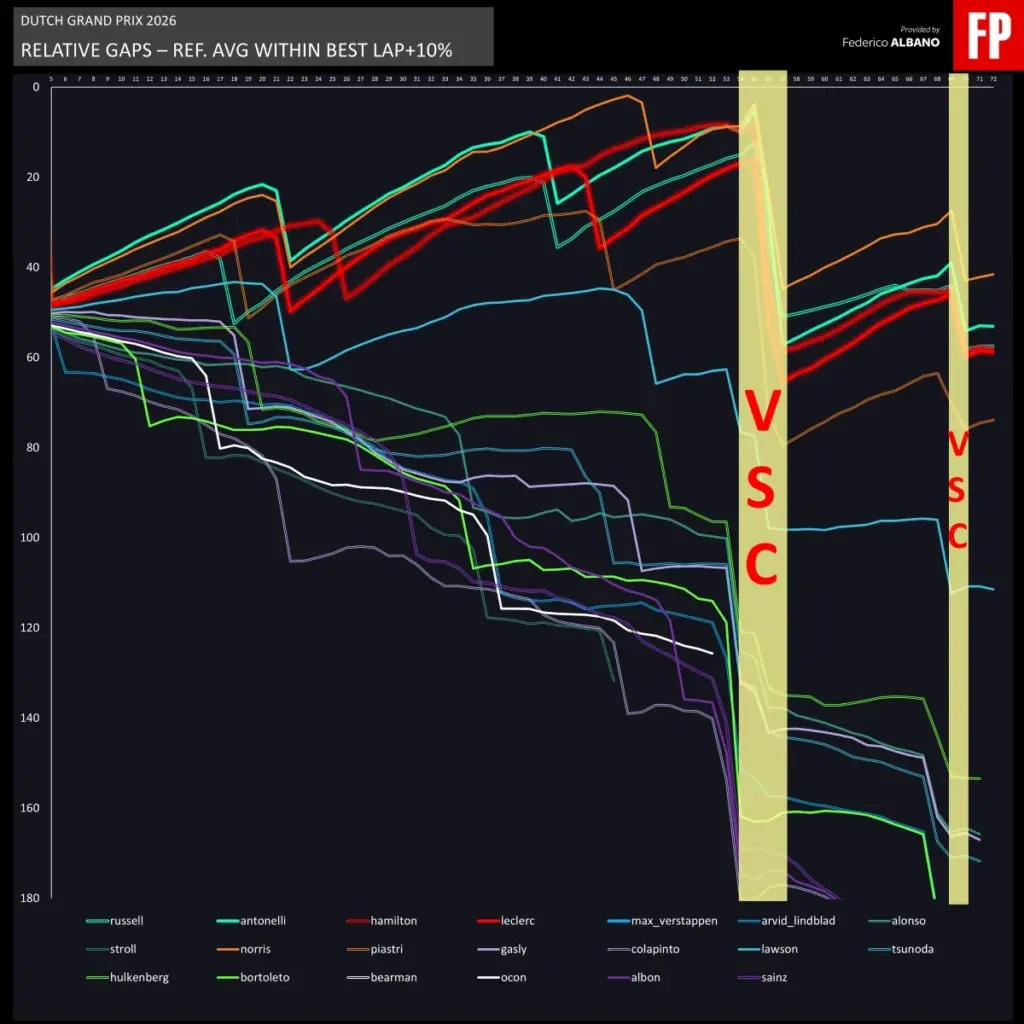
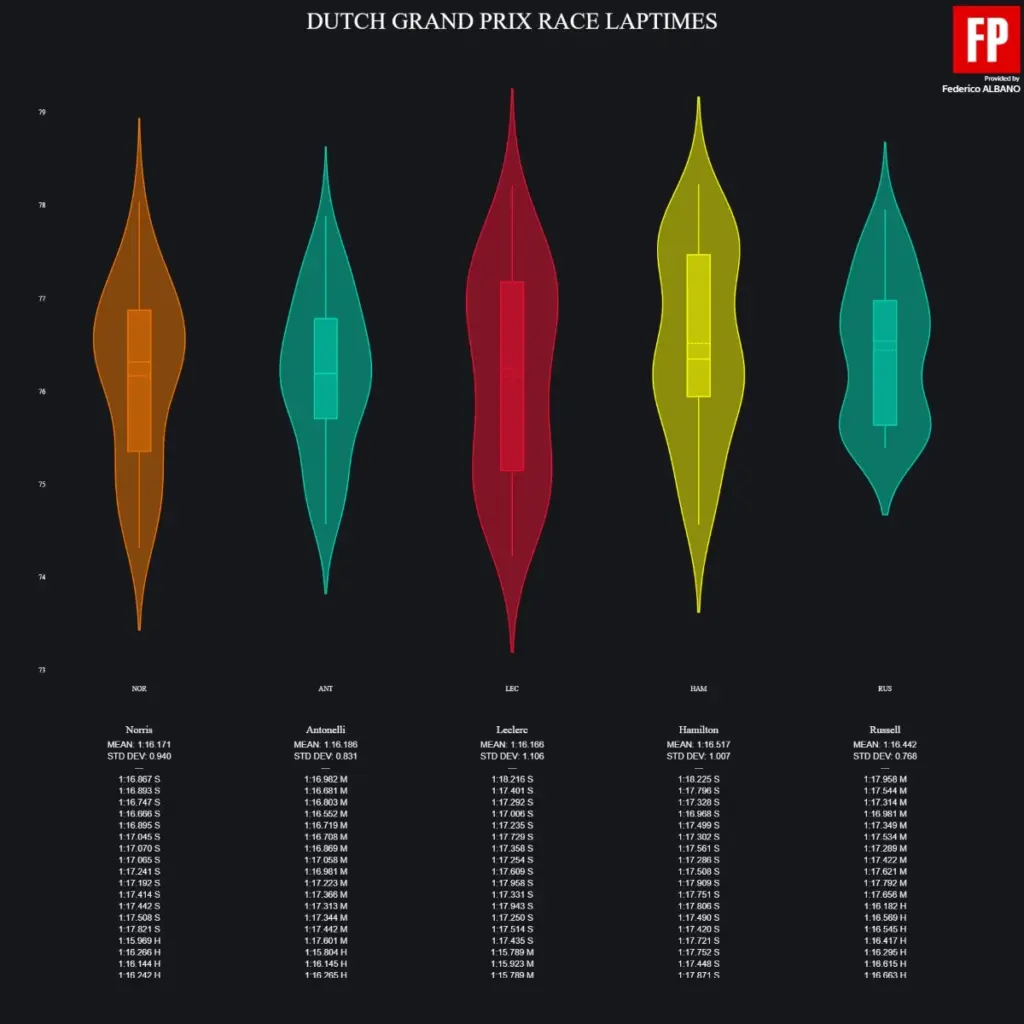
Arriving at the Maranello team, fans can only taste bitterness, for a fourth and fifth place that once again feel like unexpressed potential and a harvest far below what was sown. The pre-race predictions were somehow respected, because the SF26 showed throughout the race that it had the pace to fight for the win. Just one simple fact, namely Leclerc’s average lap times (without pit and VSC) practically identical to those of Antonelli and Norris, despite the Monegasque having spent many laps stuck behind Piastri and Russell and having extended stints in search of tire offset. The updates on the floor proved to work, with a decidedly more stable rear, but the starting position weighed heavily on a track where overtaking was almost impossible. It must be said that Leclerc had built a potentially very interesting situation with the first start and found the possibility to hook onto the head of the race with the restart on new tires. If he had managed to get into the battle with Antonelli and Norris we would probably have seen a completely different race, but instead, the poor second start saw even Piastri get back ahead with the hard tire, destroying any hope of an important result for the Monegasque. Regarding the double battle with Russell in the middle phase of the race, it is interesting that Leclerc himself stated that his strategy was to put pressure on Russell to force him to stop early, thus creating a tire offset. Given the effectiveness of the undercut, perhaps trying to anticipate one of the two pits would have been the best choice. Leclerc and the pit wall instead focused on delaying the various pit stops to create a difference in tire life at the end of the stints that could help create an overtaking opportunity, but forcing the driver each time to restart 6-7 seconds behind the rival and push to catch up, a truly frustrating situation. The impression, however, is that Ferrari was clearly aware of the significant engine deficit compared to Mercedes, such that without a significant tire offset overtaking would have been impossible on the final straight.
Read more World Dream, Norris preaches calm: “One race at a time…”
Hamilton: a great race and excellent tire management, with anger over team orders
Lewis Hamilton also had a great race, with tire management at the center of the plan and the attempt to make only one stop. The strategy was too bold, but it gave the driver a chance for the podium thanks to the great pace of the seven-time world champion (confirming a fast car) and the long VSC shortly after mid-race. The only hitch in his race was the laps spent behind Leclerc where Hamilton lost about 3 seconds. Ferrari’s embarrassment over team orders is obvious but not entirely understandable. The pit wall’s initial attempt was not to give orders and to have Leclerc pit on the first lap when Hamilton was glued to his rear. However, according to Leclerc, this went against the pre-set plan to create a significant offset with Russell and for this reason the Monegasque refused to stop immediately. At that point a discussion began between him and Bozzi about the stop which ended with a “middle way” choice and a pit after three laps, but in the meantime it made Hamilton, stuck behind, furious. It goes without saying that the Ferrari pit wall needs a bit more authority, along with more effective planning of these situations, to be resolved professionally and not with embarrassment. The VSC two laps from the end completed the work, taking away Hamilton’s only real opportunity to attack Russell, and once again leaving a Ferrari with the pace of the top 2 positions off the podium.
Monza in two weeks, between ADUO 2 and the energy drama
The competitiveness of the 2026 cars is gradually leveling out and in the Netherlands three of the four top teams were practically equal, with situations making the difference. In this perspective, Antonelli’s further gap over Hamilton and Russell, with Norris the winner but still very far away, is a great boost for the Italian. We return to the track in two weeks for the Italian Grand Prix at Monza with many expectations and more than one concern. Ferrari should bring the heavily updated engine with the second ADUO step, which could significantly change the values on track, although unlikely already from Monza. Antonelli, on the other hand, should start from the back to use a new engine while the Brianza track, with its endless straights, could highlight more than a few criticalities of the current technical regulations.
Read more Wolff: “Updates? We are up against the wall with the budget cap, they are coming in Malaysia”