





More than just a collective party
In less than a month, on September 13, F1 will hold its very first GP on the new Spanish track Madring, built in the capital of the Iberian kingdom around the IFEMA exhibition center and in the residential and commercial area of Valdebebas, where the Real Madrid training center is also located. After many delays in the initial phase, the circuit has incredibly sped up the construction work and on July 14 Ferrari with Lewis Hamilton and Charles Leclerc christened the new track by conducting a filming day.
Read more Briatore: “Gasly is among the top-6 drivers in F1. Now the priority is to have a better car”
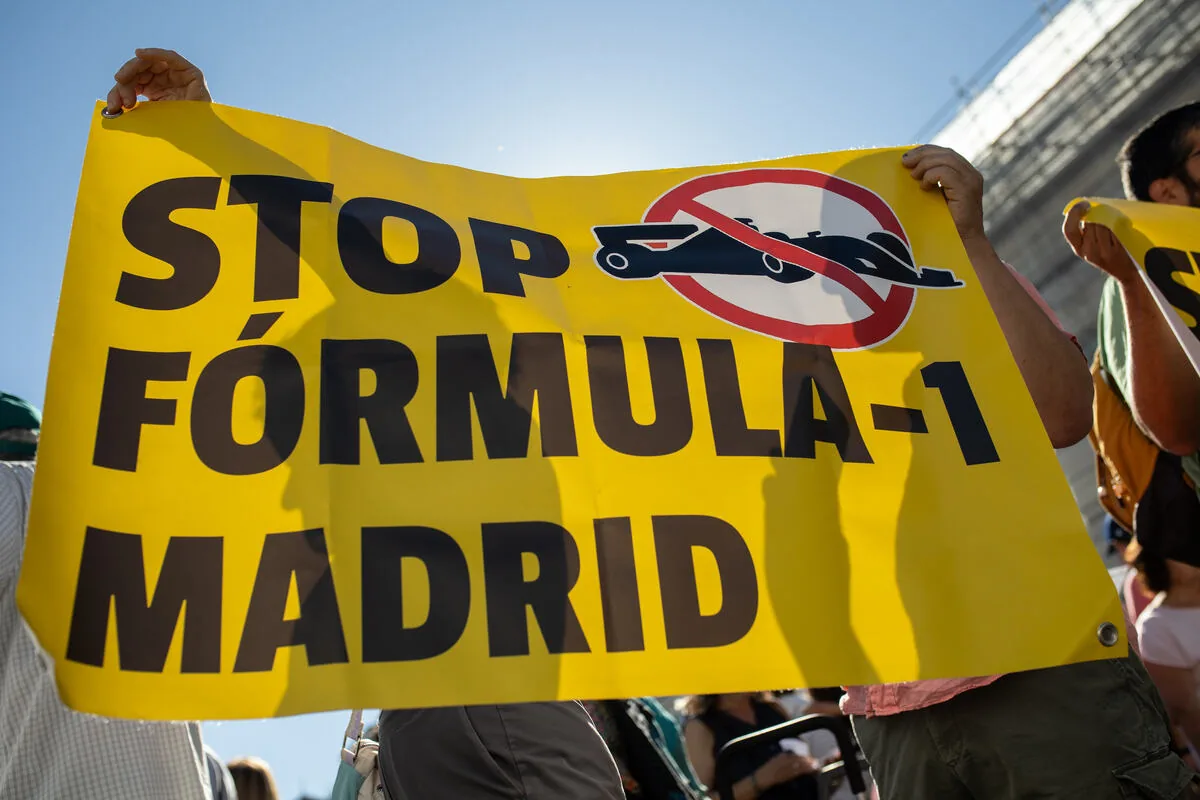
All set for a big party, then? Not exactly. The residents of the neighborhood have been protesting against holding the Spanish GP in that area for over a year and are ready to fight back. A recent report by the newspaper El Pais has shown the other side of the coin of this Grand Prix and the fury of the local inhabitants, who are ready to file a lawsuit against the Grand Prix organization. A committee has also been formed, called Stop F1 Madrid, which has set up a dedicated website and aims to oppose the event.
Like a chainsaw in the living room
The Valdebebas neighborhood was originally presented by real estate agents to new residents as “another way to build a city,” focused on greenery and sustainability. A plan that the arrival of F1 has completely erased, instead leading to the removal of some green areas. According to the environmental impact study conducted by the circuit organizers, the noise produced by the cars during the race weekend should reach 95 decibels. This is a noise equivalent to that of a chainsaw in a living room.
Constantino Blanco, spokesperson for the Stop F1 Madrid platform, emphasized to El Pais that this noise level exceeds the legal limit for residential areas: “Inside a home, noise levels should not exceed 35 decibels during the day and 30 at night. The neighborhood will be affected, because a noisy neighborhood impacts health,” he stated. The World Health Organization seems to agree with the protesters and recommends average exposure limits between 40 and 53 decibels.
Read more McLaren dreams of a repeat: more updates on the rear end coming to Zandvoort
An illegal GP and the Bernabeu precedent
The protest group, which had already demonstrated last September when the 365-day countdown to the GP started, also includes residents from the Hortaleza and Barajas neighborhoods. “We are against building a circuit in a residential neighborhood, this one or any other, because it is illegal,” proclaimed the group’s spokesperson, who awaits the race as the “day of reckoning.” The protest group’s goal is to use the race weekend to gather evidence of the damage – acoustic and otherwise – caused by the GP to present in court: “The circuit’s organizers will end up paying the price for assaulting us with noise in our homes,” he declared.
The protesters’ plan is clear and based on a very specific precedent: they will follow the same strategy used in the past by residents living near the Santiago Bernabéu stadium which led to the ban on organizing concerts inside the Real Madrid stadium, precisely for noise pollution reasons.
“As our lawyer says, there is not yet any crime because the crime’s body is not yet present, which will be the holding of the Grand Prix in September – explained to El Pais Inma Gallego, one of the residents – we think it’s terrible that a neighborhood without a health center, a sports center, or a high school will have a Formula 1 circuit before all of these.”